

Hybrid air purifiers that combine filtration with evaporative humidification require meticulous hygiene to prevent the accumulation of biofilm and musty odours. Understanding the biological and chemical processes inside these devices allows you to keep the air clean and scent-free.
The Science of Stagnant Water and Biofilm
When water sits in a reservoir, it becomes a breeding ground for microorganisms. Evaporative humidifiers draw air through a wet filter or disk stack. Airborne dust, pollen, and organic particles bypass the initial filters and settle in the water tray. This organic matter, combined with dissolved minerals from tap water, forms a nutrient-rich environment. Bacteria and fungi colonize these surfaces, creating a protective matrix called biofilm. This matrix shields the pathogens from superficial rinsing and releases volatile organic compounds (VOCs) that cause the characteristic musty, earthy smell.
Decalcification and Disinfection Chemistry
To eliminate both the mineral scale and the biological pathogens, a two-step chemical approach is necessary:
- Acidic dissolution of mineral scale: Calcium carbonate (limescale) acts as a porous anchor for biofilm. Weekly treatment with a mild acid, such as citric acid, dissolves this scale. Citric acid reacts with calcium carbonate to form soluble calcium citrate, releasing carbon dioxide gas. A concentration of 20 to 30 grams of citric acid powder per litre of lukewarm water (around 40°C) is highly effective.
- Oxidation of organic matter: Once the scale is dissolved, the remaining organic biofilm must be oxidized. Use oxygen-based bleach (sodium percarbonate) rather than chlorine-based bleach, as chlorine can degrade plastic components and leave harsh chemical residues. Sodium percarbonate breaks down in water into sodium carbonate and hydrogen peroxide. The active oxygen physically disrupts cell walls of bacteria and mold, lifting them from the plastic surfaces.
Step-by-Step Cleaning and Maintenance Protocol
Proper physical technique is just as important as the chemical agents used. Follow this sequence to clean the system safely:
- Disassembly and Inspection: Power off and unplug the unit. Remove the water tank, the humidifying tray, and the evaporative filter.
- Deep Soak: Fill a clean basin with warm water (not exceeding 40°C to prevent warping plastic parts). Dissolve citric acid in the water and submerge the tray and the humidifying wheel. Let it soak for 30 to 60 minutes.
- Mechanical Agitation: Use a soft-bristled brush or a microfiber cloth to gently scrub the corners, float mechanisms, and sensor probes inside the tray. Do not use abrasive scouring pads, which create micro-scratches where bacteria can colonize even faster.
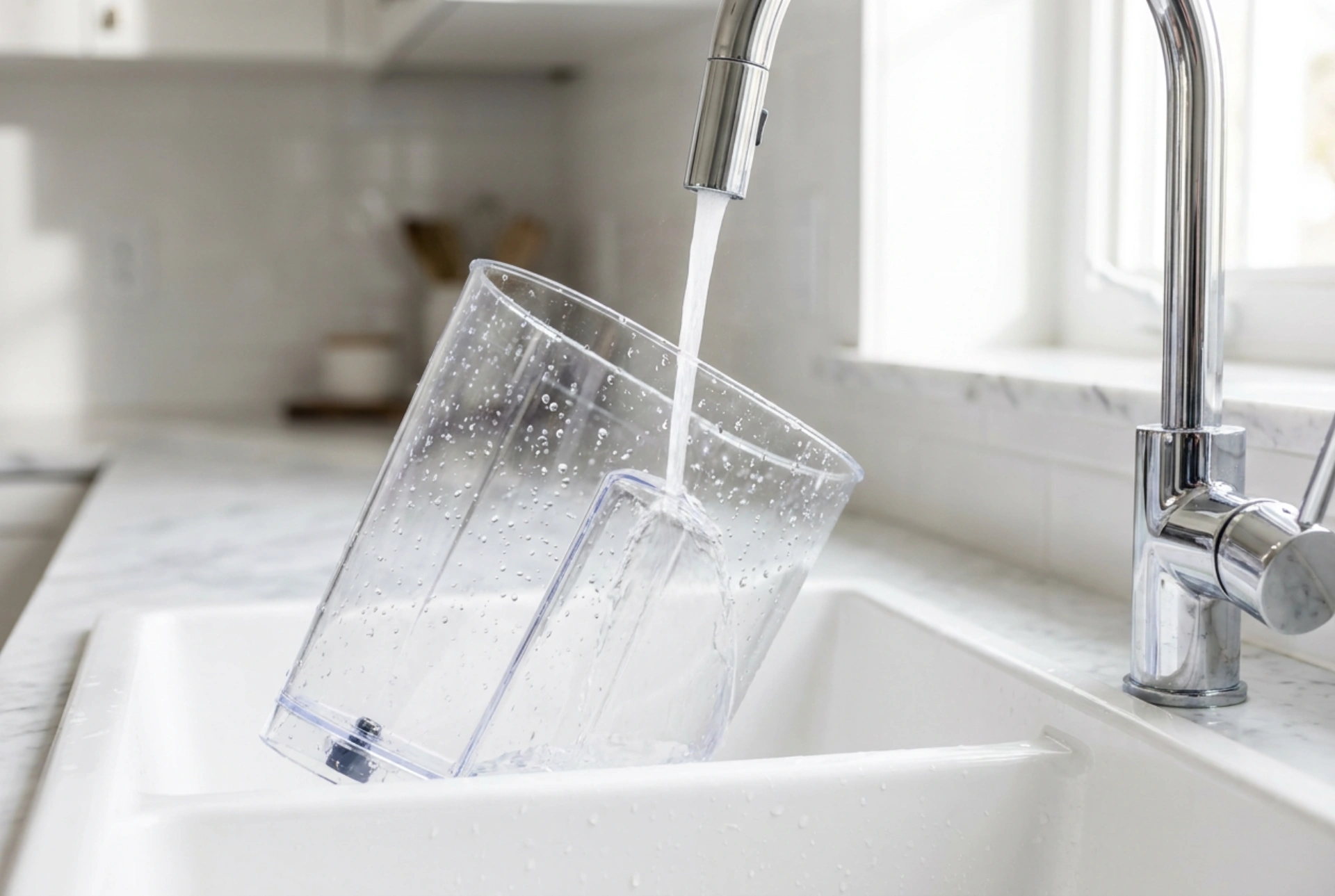
- Rinsing and Drying: Rinse all components thoroughly with running, cold water to remove all chemical residues. Before reassembling, allow all parts to air-dry completely in a well-ventilated area, away from direct sunlight.
Preserving the Evaporative Element
The humidifying element, whether a textile mat or a plastic disk stack, is highly delicate. Textile mats rely on capillary action to draw water upward. Washing them at high temperatures or squeezing them tightly can destroy this physical structure. Always wash textile elements by hand in lukewarm water. If the manufacturer permits, you can soak the mat in a mild citric acid solution to dissolve stiffness caused by calcium deposits, returning the material to its pliable, highly absorbent state. Rinse thoroughly by submerging it in clean water multiple times, pressing gently rather than wringing.
Daily Habits to Stop Odour Formation
Prevention is the most effective tool against musty smells. If the device will not be used for more than 24 hours, empty the water tank and the tray completely, wipe them dry, and leave the unit disassembled to air out. Always use cold, fresh tap water, as warm tap water often contains more dissolved minerals and heavy metals from home plumbing. Additionally, enable the post-operation drying function if your unit has one, which runs the fan after the water tank is empty to dry out the humidifying filter.