

Cleaning an electric meat grinder immediately after use is crucial to prevent the coagulation of meat proteins and the rapid multiplication of foodborne pathogens. Utilizing the correct chemical temperature thresholds and physical clearing techniques ensures the appliance remains hygienic and free from surface oxidation.
The Mechanical Clearing Pre-wash
Before disassembling the appliance, it is highly effective to employ a physical purging agent to remove residual fat and meat fibers from the internal chamber. Feeding a few pieces of dry, stale bread or a dry bun through the running grinder acts as a mechanical sponge. The dry, porous structure of the bread absorbs liquefied fats and pushes out the remaining soft tissue lodged between the auger, cutting blade, and grinding plate. This simple step drastically reduces the manual scrubbing required later and prevents grease from clogging your sink drains.
The Science of Fat and Protein Removal
To clean the disassembled components, you must address two distinct organic substances: proteins and lipids. Each reacts differently to water temperature and chemical solutions:
- Water Temperature: Wash the components in warm water between 45°C and 50°C. Do not use boiling water or water hotter than 60°C for the initial rinse, as high heat denatures and coagulates myofibrillar proteins, effectively baking them onto the metal surfaces. Warm water, however, is essential to melt animal fats, which have melting points ranging from 35°C to 45°C.
- Surfactants: Use a standard liquid dish soap containing anionic surfactants. These molecules possess a hydrophilic head and a lipophilic tail, allowing them to emulsify the melted fats, encapsulating them into micelles that can be easily rinsed away with water.
Material Compatibility: Aluminum vs. Stainless Steel
Understanding the metallurgy of your grinder is vital to prevent irreversible damage. Most household grinders feature components made of either cast aluminum, stainless steel, or carbon steel:
Cast Aluminum Parts
The hopper, feed tube, collar, and auger are frequently made of cast aluminum. You must never wash aluminum parts in a dishwasher. Dishwasher detergents are highly alkaline (pH typically above 11) and contain sodium silicate or sodium carbonate. When exposed to this environment at high temperatures, the protective aluminum oxide layer dissolves, leading to rapid oxidation (dark grey or black residue that rubs off on hands and food). Wash aluminum exclusively by hand using pH-neutral dish soap and a soft brush.
Carbon Steel Blades and Plates
The cutting blade and the perforated grinding plates are often made of high-carbon steel to maintain a sharp edge. Carbon steel is highly susceptible to rust (iron oxide) when exposed to moisture and oxygen. These parts must be dried immediately after washing and never left to air-dry.
Step-by-Step Manual Washing Procedure
Always unplug the electric motor unit before cleaning. The motor housing must never be submerged in water or sprayed directly, as moisture will damage the electrical coils and pose a short-circuit hazard. Clean the exterior of the motor block with a damp microfiber cloth and dry it immediately.
Disassemble the grinding head completely, separating the collar, grinding plate, cutting blade, auger, and hopper. Submerge the metal components in warm, soapy water. Use a cylindrical bottle brush to clean the internal threads of the collar and the deep spiral channels of the feed tube. Pay special attention to the center hole of the grinding plate and the square mounting hub of the auger, where dense pockets of fat tend to accumulate.
Sanitizing and Rust Prevention
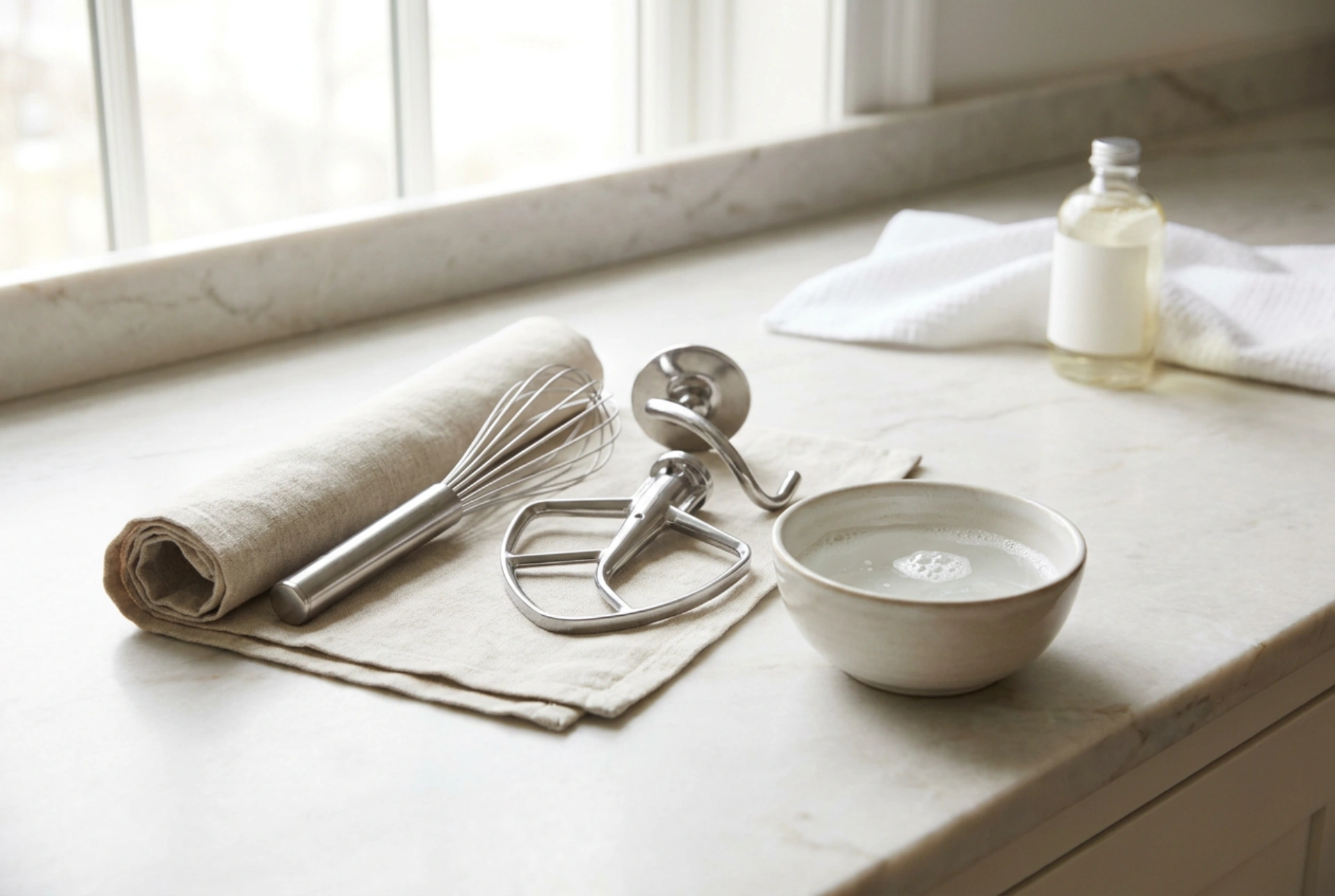
For added hygiene, rinse the washed metal components in a mild solution of oxygen bleach (sodium percarbonate dissolved in warm water) or spray them with a 5% white vinegar solution to eliminate any remaining bacterial spores. After rinsing thoroughly with clean water, dry every component instantly with a lint-free kitchen towel or dry microfiber cloth.
To protect carbon steel blades and plates from atmospheric moisture, apply a microscopic barrier. Lightly coat these parts with a few drops of food-grade mineral oil or a high-smoke-point vegetable oil before storage. This hydrophobic layer prevents oxygen from reacting with the iron, ensuring the cutting edges remain sharp and rust-free for the next use.