

Positioning an air purifier correctly is just as important as its filtration rating when managing indoor allergens. Understanding the physics of indoor airflow ensures that airborne particles are captured before they settle on carpets, bedding, and upholstery.
Fluid Dynamics and the 360-Degree Clearance Rule
Air purifiers operate on the principle of forced convection. The internal fan creates a low-pressure zone at the intake, pulling air in, while generating a high-pressure stream at the exhaust to push clean air back into the room. For this system to function optimally, the device requires unobstructed access to the surrounding air mass.
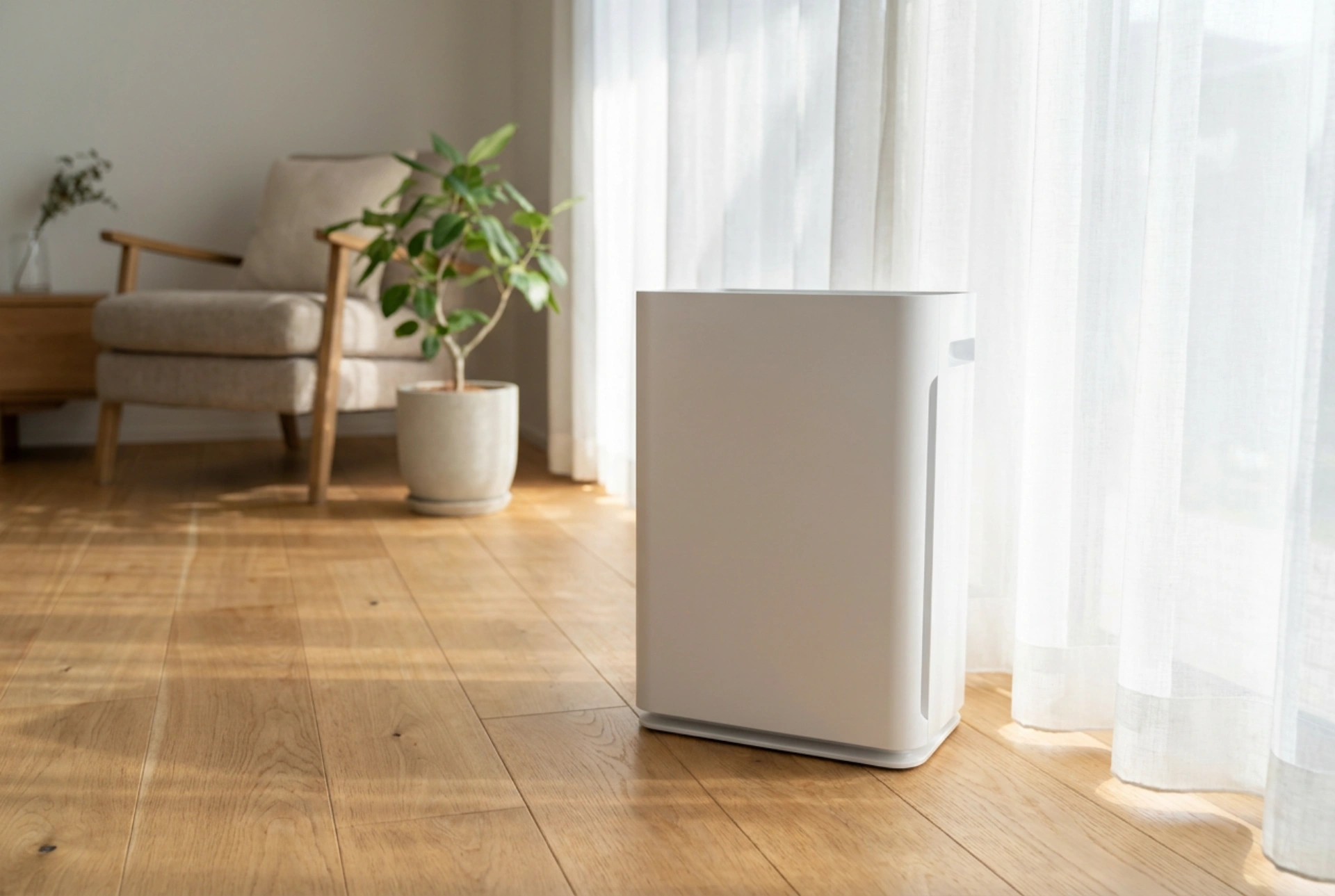
Placing an air purifier flush against a wall or tucked behind a sofa restricts intake velocity. This creates a localized air loop, where the device repeatedly filters the same small volume of air while leaving the rest of the room stagnant. To prevent this, maintain a minimum clearance of thirty to fifty centimetres around all sides of the unit. This clearance allows the intake grilles to draw air from a full hemisphere, maximizing the volume of air processed per hour.
The Physics of Particle Mass and Height Placement
Not all allergens behave the same way in the air. Their aerodynamic diameter and mass dictate how long they remain suspended and where they tend to accumulate. For example, large pollen grains and dust mite faecal pellets are relatively heavy, settling quickly onto floors and low surfaces once undisturbed. Conversely, cat dander and fine mould spores are lightweight and can remain suspended for hours on minor thermal currents.
To capture heavier allergens, the purifier should ideally be placed on the floor or a low platform. This positions the intake close to the boundary layer where settled particles are easily kicked back into the air by foot traffic. If your primary concern is lightweight dander or airborne dust, elevating the purifier to table height (about one metre) can intercept these particles directly within your breathing zone before they drift downward.
Strategic Room Placement for Allergic Sleepers
Since we spend a third of our lives in the bedroom, this area requires precise aerodynamic planning. The goal is to establish a clean air current that flows across the sleeping zone without creating an uncomfortable draft. Avoid placing the purifier directly at the head of the bed, as the continuous air movement can dry out nasal passages and exacerbate allergy symptoms.
Instead, position the device two to three metres away from the bed, ideally opposite the bedroom door or near a window. Placing it near the entry point of fresh air allows the purifier to intercept outdoor pollen as it enters the room. Ensure the exhaust stream is directed parallel to the bed rather than directly at it, creating a gentle, circulating loop of clean air that sweeps over your sleeping area.
Navigating Thermal Currents and Obstacles
Indoor air is constantly in motion due to convection currents created by temperature differences. Radiators, electronic equipment, and even human body heat generate upward thermal plumes, while cold windows create downward drafts. Understanding these natural pathways helps in placing the purifier where these currents naturally carry airborne dust.
Avoid placing the purifier near open windows or external doors if you suffer from seasonal pollen allergies, as the incoming volume of air will overwhelm the filtration capacity of the device. Instead, place it slightly offset from these draft zones to capture particles as they diffuse into the room. Similarly, keep the unit away from air conditioning vents or radiators, which can disrupt the purifier’s designed intake pattern and disperse unheated, unfiltered air inefficiently.
Quick Reference for Purifier Placement
- Clearance: Maintain at least thirty to fifty centimetres of open space around all sides.
- Elevation: Place on the floor for heavy pollen and dust mites; elevate slightly for fine pet dander.
- Acoustics and Drafts: Set the unit two to three metres away from your head in the bedroom to prevent dryness.
- Thermal Zones: Keep away from radiators and direct air conditioning pathways to maintain a steady convection loop.