

Maintaining precise indoor air humidity in a nursery is essential for protecting a newborn's sensitive respiratory system and delicate skin barrier. Understanding the physics of relative humidity and implementing controlled evaporation techniques allows parents to create a stable, healthy environment without relying on chemical additives or high-risk setups.
The Biological Need for Humidity Control
Newborn infants possess an underdeveloped epidermal barrier that is highly susceptible to transepidermal water loss (TEWL). When the surrounding air is dry, moisture is rapidly drawn from the baby’s skin into the atmosphere through simple diffusion. This process leads to micro-cracking, irritation, and atopic conditions. Furthermore, the mucosal lining of a newborn’s narrow nasal passages relies on a delicate layer of mucus to trap airborne particulates and pathogens. If the relative humidity drops below the threshold of 40%, this mucus thickens, and the microscopic cilia responsible for clearing the airway become sluggish. Conversely, relative humidity exceeding 60% creates a breeding ground for dust mites and mould spores, which can trigger early-onset respiratory sensitivities.
The Physics of Relative Humidity and Temperature
Relative humidity (RH) is not an absolute measure of water in the air, but rather the ratio of the current water vapour pressure to the saturation vapour pressure at a specific temperature. Because warm air has a higher capacity to hold water vapour than cold air, temperature and humidity are intrinsically linked. In a nursery kept at the recommended temperature of 18°C to 20°C, maintaining an RH of 40% to 60% is optimal. If the room is overheated to 24°C without adding moisture, the relative humidity will plummet, even if the absolute amount of water in the air remains constant. To manage this balance, always adjust the room temperature first before attempting to calibrate the moisture levels.
Humidification Techniques: Choosing the Safest Mechanism
To safely increase moisture, two primary mechanical methods are used, each relying on distinct physical principles:
- Evaporative Humidification: This method pulls dry room air through a saturated wick filter. Water evaporates naturally into the air stream based on the room's current deficit. Because it relies on natural evaporation, it cannot over-saturate the air, and minerals or impurities in the water remain trapped in the wick rather than being airborne.
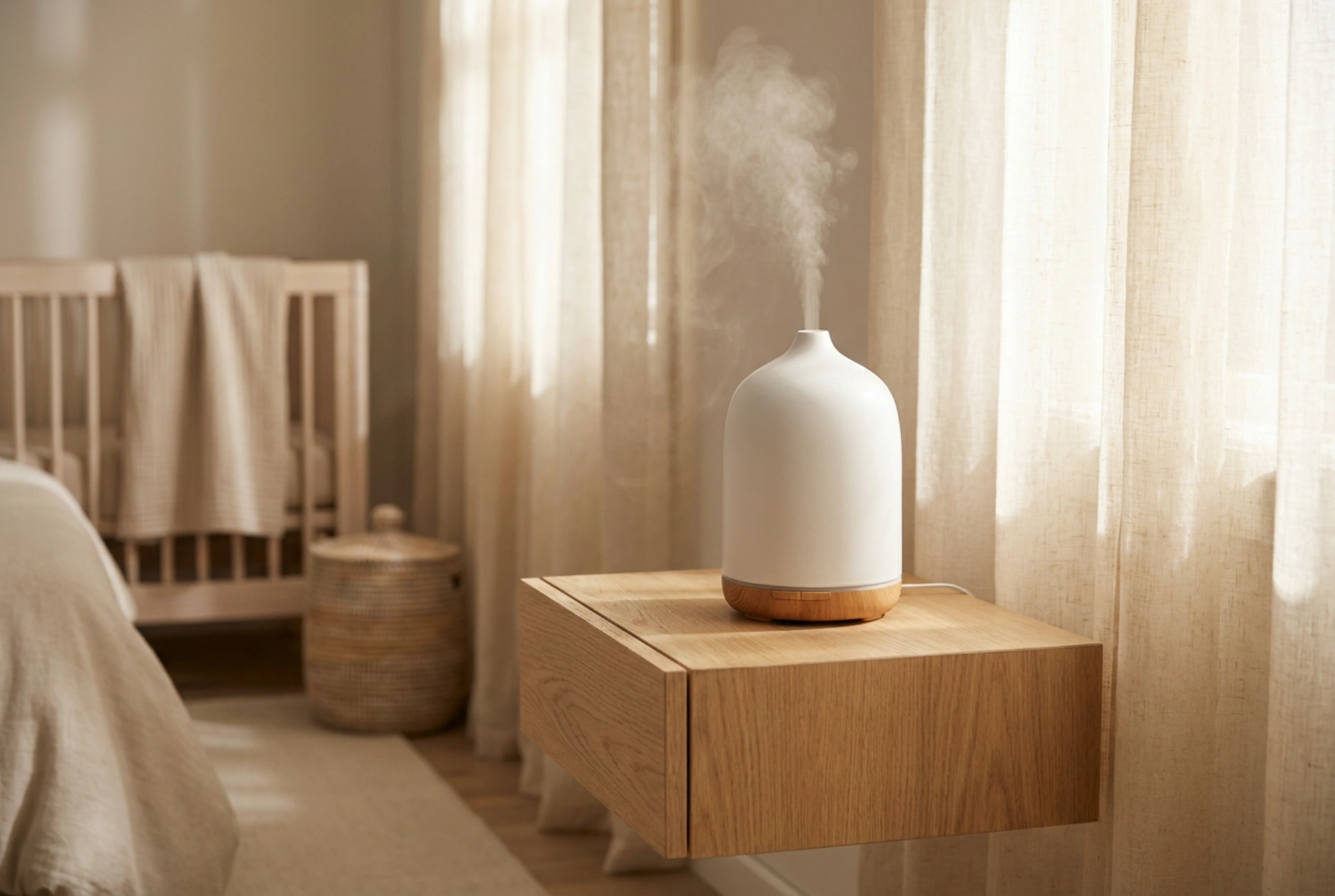
- Ultrasonic Humidification: This device uses a metal diaphragm vibrating at ultrasonic frequencies to split liquid water into microscopic droplets, creating a cool mist. While quiet and efficient, ultrasonic waves aerosolise everything in the water reservoir, including minerals and dissolved solids. This can result in a fine layer of calcium carbonate dust on nursery surfaces. To prevent this, always use distilled or demineralised water.
Sanitisation Protocol to Prevent Aerosol Pollution
Standing water in any humidification device is a biohazard. To prevent the proliferation of Gram-negative bacteria and endotoxins, a strict cleaning schedule must be followed. Once a week, empty the reservoir completely. To descale mineral buildup, apply a solution of food-grade citric acid or white vinegar (acetic acid) to dissolve calcium deposits. To sanitise and eliminate microbial films, rinse the tank with a 3% hydrogen peroxide solution, allowing it to sit for ten minutes before thoroughly flushing with clean water. Never use synthetic detergents, chlorine bleach, or artificial fragrances, as residual chemicals can be aerosolised directly into the infant's breathing zone.
Passive Environmental Control and Monitoring
Active humidifiers should always be paired with passive environmental management. Air exchange is vital; use the "shock ventilation" method by opening windows fully for five minutes twice a day. This rapidly replaces stale, particulate-heavy indoor air with fresh outdoor air without significantly cooling the thermal mass of the walls. To monitor the room accurately, place a digital hygrometer on a level surface near the crib, but away from direct mist output or heat sources. Because sensors can drift over time, calibrate your hygrometer annually using the salt-test method: place the sensor in a sealed container alongside a bottle cap filled with a damp salt slurry, which creates a precise 75% relative humidity environment for calibration verification.