

Establishing a rigorous cleaning schedule for a commercial espresso machine is not merely a matter of aesthetic hygiene; it is a critical process governed by organic chemistry and fluid dynamics. When coffee beans are extracted under high pressure (typically 9 bars) and high temperatures (90°C to 95°C), they release insoluble lipids, proteins, and essential oils that quickly coat all contact surfaces, oxidize, and polymerize into a bitter, rancid film.
The Chemistry of Coffee Oil Polymerization
During extraction, the hot water emulsifies the oils present in coffee grounds. These oils adhere to the stainless steel portafilters, basket ridges, and dispersion screens. If left untreated, heat causes these lipids to undergo thermal oxidation, turning them into sticky, insoluble polymers. To break down these organic compounds, you must use an alkaline backflushing powder (specifically containing active oxygen agents like sodium percarbonate). When dissolved in hot water, these agents release hydrogen peroxide, which chemically cleaves the lipid bonds, allowing the residue to be easily rinsed away. A daily backflushing routine with a blind filter basket is essential to force this cleaning solution through the three-way solenoid valve, preventing internal clogs.
Daily Maintenance: Group Heads and Portafilters
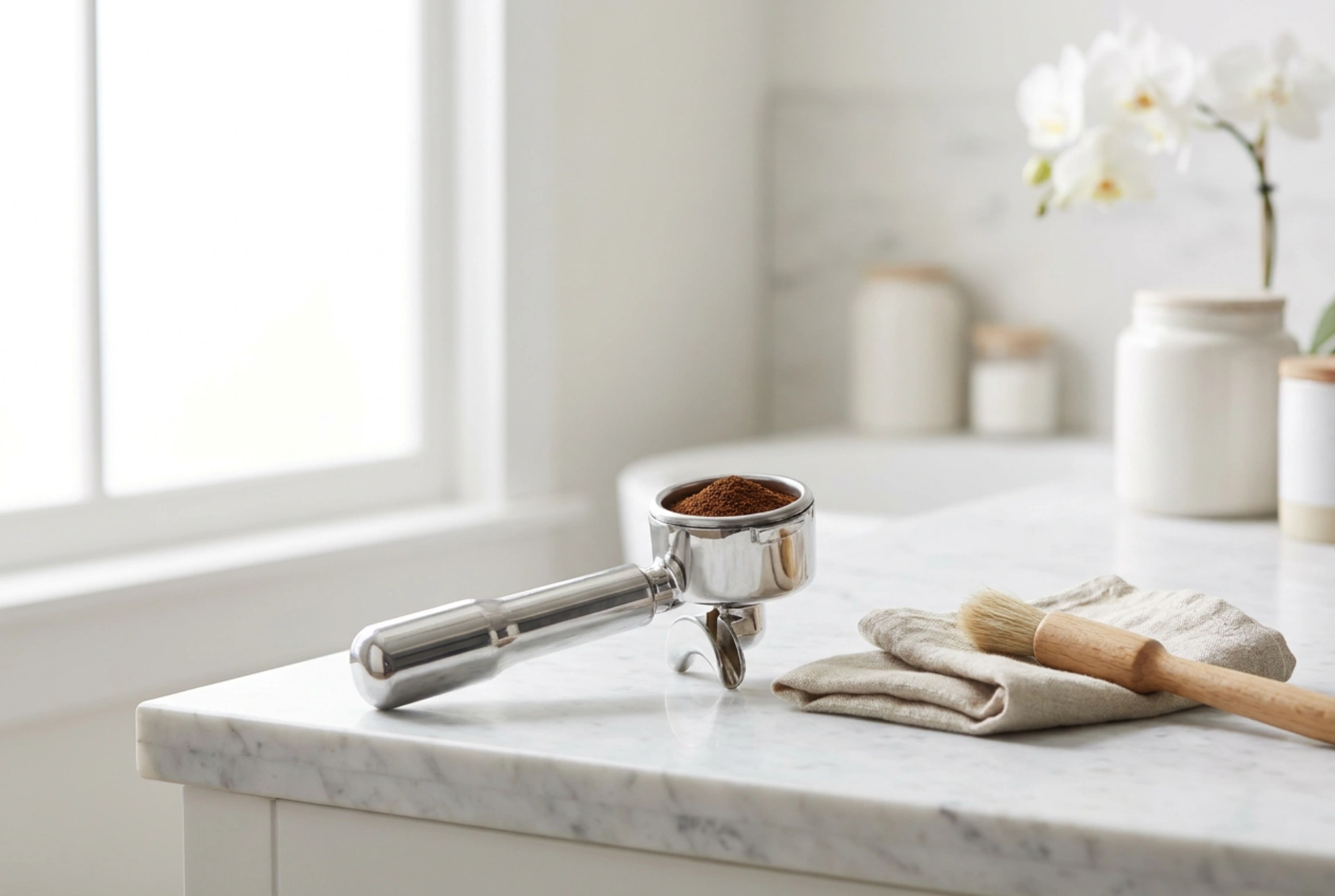
At the end of every operating day, a systematic sequence of operations must be executed. First, the portafilters and baskets must be disassembled. Baskets should be popped out of the portafilter bodies to expose the hidden brass or stainless steel surfaces where oils accumulate. Soak these components in a solution of hot water and oxygen-based espresso cleaner for 15 to 30 minutes. Meanwhile, use a specialized group brush to scrub the group head gaskets, removing trapped carbonized coffee particles that can prevent a proper pressure seal. Follow this with the backflushing procedure: run five cycles of ten seconds on and five seconds off with the cleaning powder, followed by ten cycles with clean water to rinse the internal plumbing thoroughly.
Steam Wand Hygiene and Milk Protein Denaturation
Milk texturing involves heating proteins (casein and whey) and fats. When milk exceeds 65°C, these proteins denature, forming strong structural bonds that adhere tightly to the steam wand's metal exterior. Furthermore, when the steam valve is closed, a rapid drop in pressure inside the wand creates a partial vacuum, which can suck liquid milk up into the steam tip. To prevent bacterial growth and blockages, the steam wand must be purged with a short blast of steam and wiped with a clean, damp cloth immediately after every use. Daily, the wand tip should be soaked in an alkaline milk system cleaner designed to target and dissolve milk proteins and calcium deposits, followed by a thorough flush with clean water.
Water Quality and Preventative Scale Management
Water heated in espresso boilers precipitates dissolved calcium and magnesium ions as calcium carbonate (scale). This mineral scale acts as a thermal insulator, slowing down heat transfer, increasing energy consumption, and narrowing the water pathways, which disrupts pressure regulation. While daily cleaning targets organic coffee oils, monthly maintenance must address inorganic mineral deposits. Using a controlled descaling agent, such as citric acid or sulfamic acid, dissolves the mineral matrix without damaging the copper or brass boiler elements. This process must be calibrated to the local water hardness, which should ideally be managed by an ion-exchange or reverse osmosis filtration system to minimize scale formation from the outset.
Weekly Inspection and Component Replacement Checklist
To ensure consistency, integrate a weekly deep-cleaning protocol. Unscrew the dispersion screens from each group head using an appropriate stubby screwdriver to avoid stripping the brass threads. Inspect the screen mesh for microscopic tears and soak both the screen and the brass dispersion block in the oxygen cleaner solution. Check the elasticity of the group gaskets; rubber gaskets naturally harden over time due to constant heat exposure, losing their sealing capability. Replacing these gaskets every three to six months prevents catastrophic pressure loss during extraction. By establishing these precise mechanical and chemical protocols, a cafe can guarantee cup quality, preserve equipment longevity, and maintain impeccable hygiene standards.