

Hardened caramel on a cotton candy machine can seem virtually impossible to remove, but understanding the physical properties of sucrose makes the cleanup process straightforward and safe for the appliance. By utilizing water temperature and thermal solubility, you can dissolve stubborn sugar crusts without damaging the delicate heating elements.
The Science of Caramelisation and Solubility
To clean a cotton candy maker efficiently, it helps to understand what happens to sugar at a molecular level. When sucrose is heated inside the spinning head, it melts and, if overheated, undergoes caramelisation. This thermal decomposition process removes water molecules and rearranges the atoms into complex, sticky polymers. As the machine cools, this syrup solidifies into a hard, amorphous glass-like state that bonds tightly to metal surfaces.
Attempting to chip or scrape this glass-hard caramel off the metal will only scratch the surface, creating microscopic grooves where sugar will stick even more stubbornly next time. Fortunately, sucrose is highly hydrophilic. While its solubility is high at room temperature, it increases exponentially as water temperature rises. Hot water quickly breaks down the hydrogen bonds holding the solid sugar molecules together, dissolving the caramel back into a liquid state without any physical force.
Safe Disassembly and the Soaking Method
Before beginning any cleaning procedure, always disconnect the appliance from the electrical outlet and allow the heating element to cool down completely to prevent thermal shock and burns.
- Remove the outer bowl: Most domestic and commercial cotton candy machines feature a large stainless steel or plastic bowl secured by clips. Release these clips and lift the bowl away.
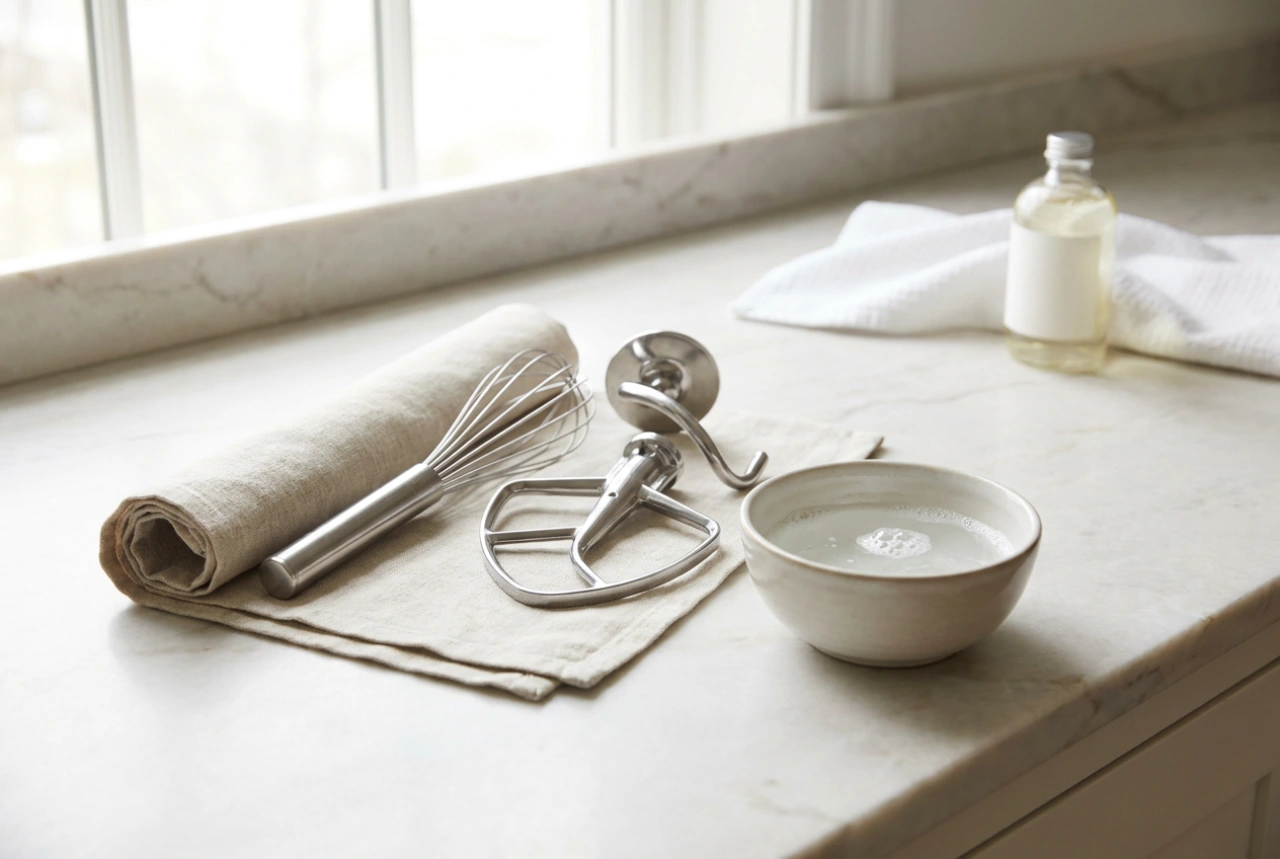
- Submerge and soak: Place the bowl in a clean sink filled with hot water. There is no need for soap; the thermal energy of the water is the active agent. Let it soak for 15 to 20 minutes until the sugar residue dissolves completely.
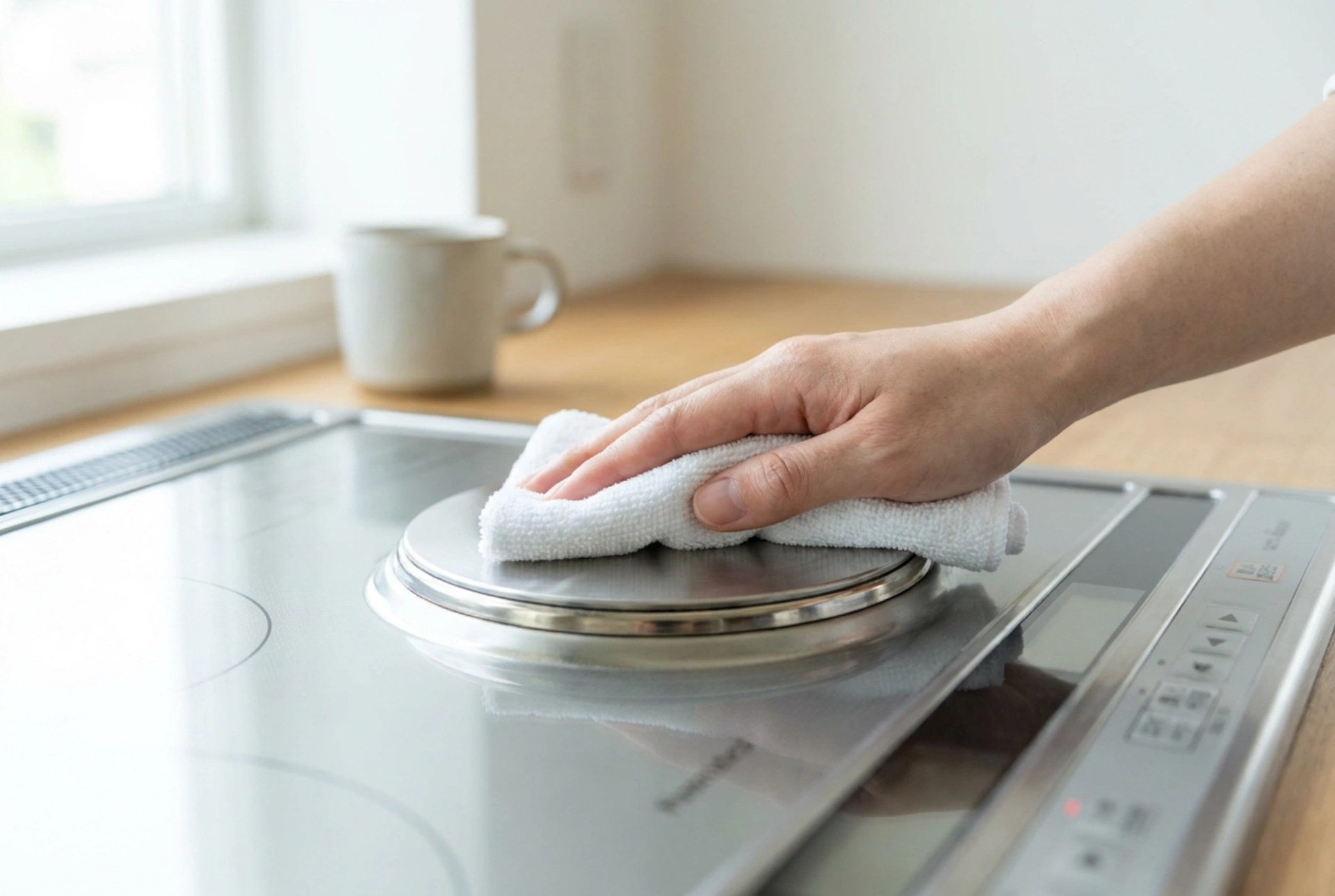
- Rinse and inspect: Run warm water over the bowl to wash away the dissolved syrup. Wipe with a soft microfiber cloth to ensure no sticky film remains.
Cleaning Non-Detachable Heating Elements
The central spinning head containing the heating element must never be submerged in water, as moisture entering the motor housing will cause irreversible electrical damage. Instead, use a controlled thermal transfer technique.
Soak a thick, clean microfiber cloth in hot water and wring it out thoroughly so that it is damp but not dripping. Drape this warm, damp cloth directly over the cold spinning head and heating element. The trapped heat and moisture will create a localized humid zone under the cloth, gradually softening the hardened caramel. After 10 minutes, use the cloth to gently wipe away the liquefied sugar. For tight crevices and slots where the cotton candy web is extruded, use a cotton swab moistened with warm water, rotating it gently to lift the residue.
Why to Avoid Abrasives and Harsh Chemicals
It is tempting to reach for steel wool, abrasive scouring powders, or strong chemical degreasers when dealing with burnt sugar, but these should be strictly avoided. Abrasive materials ruin the polished finish of stainless steel and can permanently damage brass or aluminum heating heads. Furthermore, chemical detergents leave microscopic residues. When the machine is heated to nearly 200°C during the next operation, these chemical residues will burn, releasing unpleasant odors, potentially toxic fumes, and ruining the taste of your next batch of cotton candy. Pure, hot water is chemically optimal and entirely sufficient.
Crucial Drying and Reassembly Protocol
Water is the ideal cleaning solvent, but it is highly destructive to the internal electrical components of the cotton candy machine if not managed correctly. After all caramel has been dissolved and wiped away, use a dry, lint-free microfiber cloth to thoroughly dry every surface. Pay close attention to the central spindle and the areas around the heating element screws. Allow the disassembled components to air-dry in a well-ventilated room for at least two hours before reassembling. This ensures that any micro-condensation inside the housing evaporates completely, protecting the motor from short circuits and corrosion.