

Maintaining a professional espresso machine requires more than a quick wipe-down; it demands a systematic approach rooted in chemistry and thermodynamics to prevent coffee oils and milk proteins from ruining the flavor profile. Implementing a strict cleaning protocol ensures consistent extraction quality and extends the operational lifespan of high-end commercial brewing equipment.
The Chemistry of Coffee Oils and Residues
During extraction, hot water under high pressure (typically 9 bars) forces lipids, essential oils, and soluble solids out of the coffee grounds. Over time, these organic compounds accumulate on the group heads, shower screens, and portafilter baskets. When exposed to heat and oxygen, these lipids undergo oxidation and polymerization, turning into a sticky, bitter resin that spoils subsequent extractions. Because coffee oils are hydrophobic, plain water cannot dissolve them. Effective cleaning requires specialized alkaline backflush detergents, usually containing sodium percarbonate. When dissolved in hot water, this compound releases active oxygen and creates a high pH environment that saponifies the oils, transforming insoluble lipids into water-soluble soaps that can be easily flushed away.
Daily Backflushing: Step-by-Step Mechanical Protocol
The backflushing process redirects hot water and cleaning agents backward through the brew group and the three-way solenoid valve to clear internal pathways. To execute this safely and effectively, follow a precise order of operations. First, brush the group head gasket with a stiff, heat-resistant brush to remove loose grinds. Next, insert a blind filter basket into the portafilter and add the designated amount of oxygen-based cleaning powder. Lock the portafilter into the group head and initiate the brew cycle for 10 seconds, allowing pressure to build and the chemical solution to dissolve the residues. Stop the cycle for 10 seconds to let the solution react within the group. Repeat this cycle five times. Afterward, remove the portafilter, rinse the blind basket, reinsert it, and run the cycle five more times with clean water to purge any chemical traces.
Managing Milk Protein Accumulation on Steam Wands
Milk contains proteins (primarily casein and whey) and fats that react rapidly to heat. When steaming milk, temperatures exceeding 60 degrees Celsius cause proteins to denature and bind to the stainless steel steam wand, forming a tough, insoluble layer often referred to as milk stone. If left untreated, these proteins clog the steam tips and create a breeding ground for bacteria. To prevent this, the wand must be purged and wiped with a damp microfiber cloth immediately after every use. For daily deep cleaning, submerge the wand tip in a solution of alkaline milk system cleaner designed to break down proteins and fats. Never leave the wand soaking overnight, as this can siphon dirty water back into the boiler when the machine cools down and creates a vacuum.
Weekly Component Disassembly and Inspection
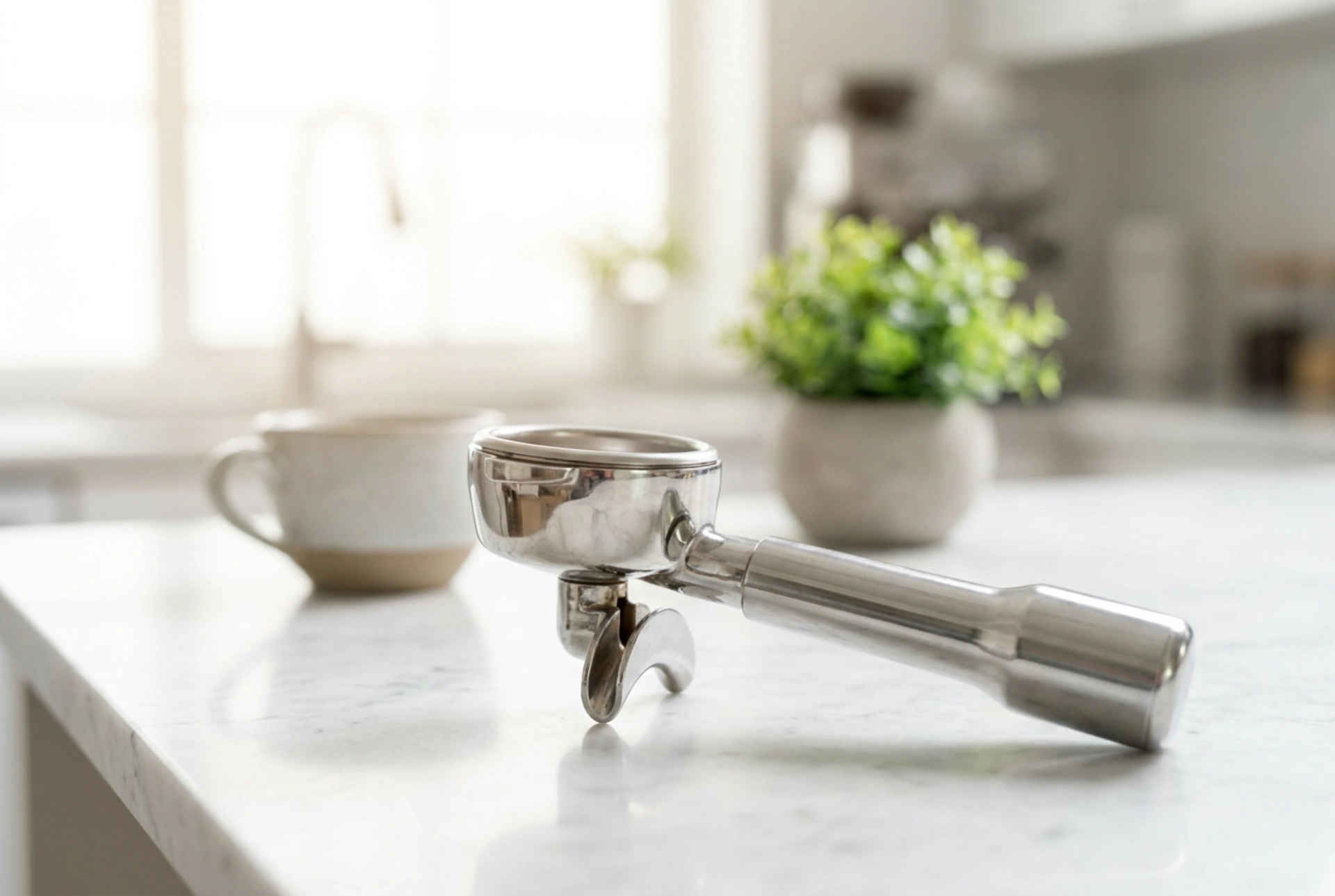
A thorough weekly maintenance routine involves disassembling the external parts of the brew group. Remove the shower screens and brass distribution plates using a short screwdriver. Soak these components, along with the stainless steel portafilter baskets, in a hot bath of dissolved backflush detergent for 15 to 20 minutes. Avoid soaking the plastic or rubber handles of the portafilters, as strong alkaline solutions can degrade these materials over time. Once soaked, scrub the metal parts with a non-abrasive pad to remove softened carbon deposits. Inspect the rubber group gaskets for elasticity; stiff, brittle, or cracked gaskets must be replaced immediately to prevent pressure leaks during extraction.