

Maintaining a battery-powered portable cooler during a trip requires a solid understanding of thermodynamics, battery chemistry, and moisture management. By optimizing energy consumption and thermal transfer, you can extend your battery life and ensure safe food preservation throughout your journey.
Pre-Cooling and the Physics of Thermal Mass
One of the most common mistakes in operating a portable cooler is loading it with ambient-temperature items. From a thermodynamic perspective, introducing warm objects forces the cooling unit to run continuously at maximum capacity, rapidly depleting the battery. To minimize energy consumption, always pre-cool both the appliance and its contents beforehand. Plug the cooler into a mains power source at home at least twelve hours before departure to lower the internal temperature of its insulation walls.
Additionally, maximize the thermal mass inside the chamber. Liquids have a high specific heat capacity, meaning they retain cold temperatures exceptionally well and help stabilize the internal microclimate. If the cooler is partially empty, fill the vacant space with frozen gel packs or pre-chilled reusable bottles. This prevents warm air from rushing in and filling the void every time the lid is opened, significantly reducing the duty cycle of the compressor or thermoelectric element.
Optimizing Airflow and Minimizing Thermal Conduction
Heat transfer occurs through conduction, convection, and radiation. To combat these forces, place the cooler in the vehicle's cabin where air conditioning is active, rather than in a hot boot. Avoid direct sunlight at all costs, as solar radiation heats the outer casing, accelerating heat transfer through the polyurethane insulation layer.
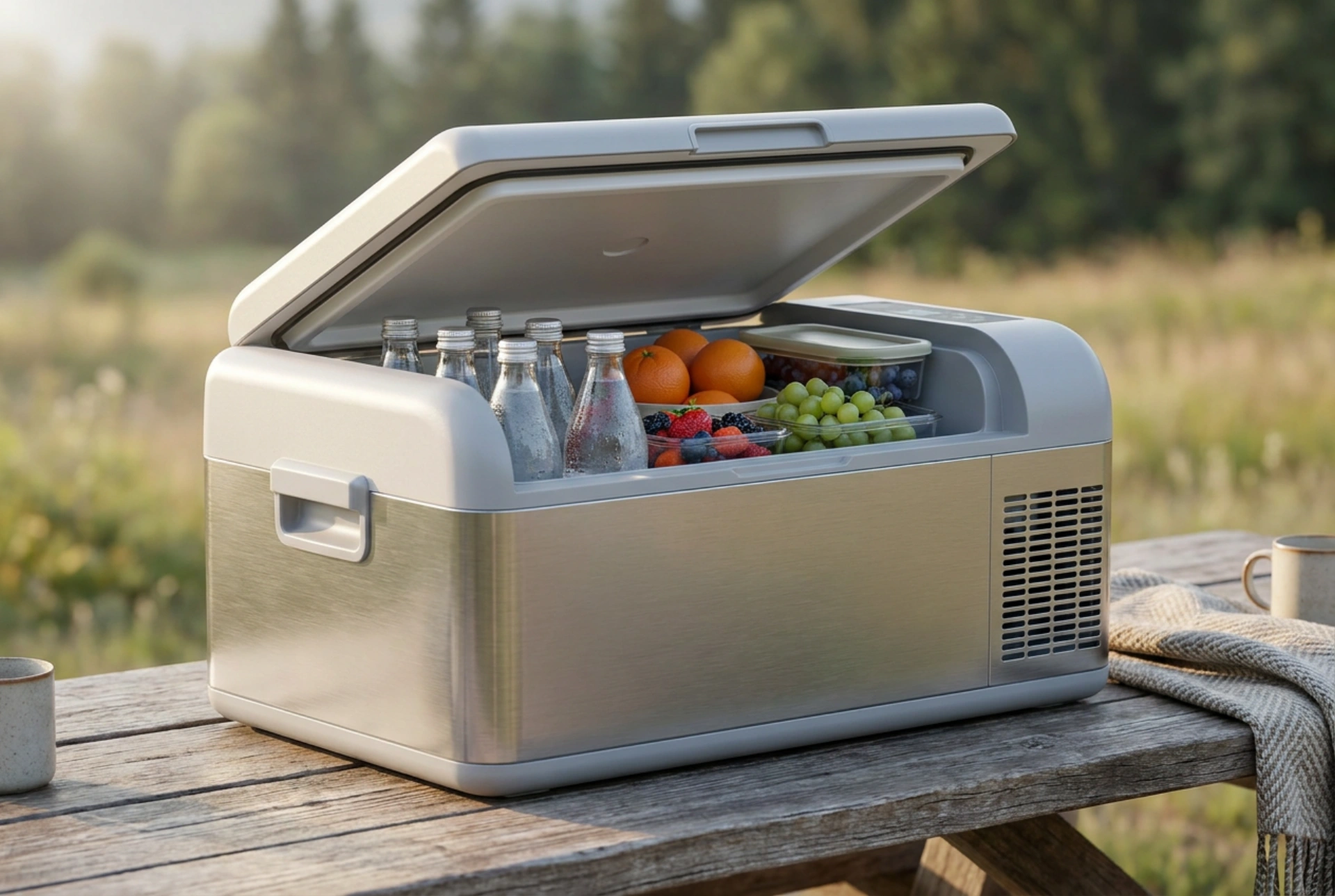
Air circulation around the exterior of the cooler is equally critical. Battery-powered coolers rely on active heat dissipation through vents. Blocking these vents with luggage or blankets restricts airflow, causing the heat exchanger to overheat. This drop in efficiency forces the cooling unit to draw more current, stressing both the electronics and the battery. Keep a clearance of at least ten centimeters around all ventilation grills to allow unrestricted convective cooling.
Battery Conservation and Voltage Management
Most modern portable coolers feature adjustable low-voltage protection settings. This mechanism monitors the input voltage to prevent the cooler from completely draining a vehicle's starter battery if connected to a 12V socket. When running solely on an integrated or external lithium-ion battery pack, keep the cooler at its most efficient eco-mode setting once the target temperature is reached.
Keep in mind that ambient temperatures directly affect battery performance. Lithium-ion batteries experience decreased capacity and efficiency in extreme heat (above 35 degrees Celsius). Shading the battery compartment and utilizing reflective thermal covers can help maintain battery cells within their optimal operating temperature range, maximizing discharge efficiency and longevity.
Condensation Control and Material Maintenance
As warm, humid air enters the cooler, it encounters the cold inner surfaces, causing the moisture to condense into water. Accumulating water not only reduces thermal efficiency but also creates a breeding ground for bacteria and mould. Wipe down the interior surfaces daily with a clean, dry microfibre cloth to remove moisture and prevent capillary action from pulling water into seals.
Before packing, clean the interior with a mild solution of warm water and sodium bicarbonate (baking soda). This acts as a mild amphoteric compound, neutralizing acidic and basic odor-causing substances without degrading the plastic liners or rubber gaskets. Inspect the lid gasket regularly; a dirty or compressed seal allows warm air to leak inside, driving up power consumption and creating localized frost zones.
Key Trip Checklist
- Pre-cool the unit at home for 12 hours using mains power.
- Keep vents completely unobstructed for efficient heat exchange.
- Pack high-density thermal masses like frozen gel packs to fill voids.
- Keep the cooler shaded and ventilated within the vehicle cabin.