

Creating a highly effective, natural dishwashing liquid at home relies on understanding basic surface chemistry: specifically, how surfactants lower the surface tension of water to trap and wash away greasy residues. This guide explains how to formulate a simple, non-toxic dish soap using plant-derived ingredients that emulsify lipids and rinse clean without leaving chemical films on your tableware.
The Science of Surfactants in Grease Cleaving
To clean a dirty plate, water alone is insufficient because water molecules are highly polar and cohesive, forming tight bonds with one another rather than mixing with non-polar substances like animal fats. Surfactants (surface-active agents) are essential to bridge this gap. A plant-based surfactant, such as liquid Castile soap made from saponified olive or coconut oil, features molecules with dual affinity.
Each surfactant molecule possesses a hydrophilic (water-attracting) head and a lipophilic (fat-attracting) tail. When introduced to greasy dishware, the lipophilic tails embed themselves into the lipid molecules, while the hydrophilic heads remain anchored in the surrounding water. As you scrub, these molecules organize into spherical clusters called micelles, trapping grease at the core. When rinsed, the outer water-soluble shell of the micelle allows the entire structure—including the trapped fat—to wash away easily.
Balancing pH for Maximum Degreasing Power
Animal fats and vegetable oils are chemically classified as triglycerides. To break these complex esters down into manageable, water-soluble fatty acids, an alkaline environment is highly beneficial. Adding a small amount of sodium bicarbonate (baking soda) raises the pH of your homemade liquid, mimicking the action of commercial alkaline detergents. This elevated pH initiates a mild saponification reaction directly on the surface of the greasy dish, converting stubborn grease into soluble soap salts.
However, a pH that is too high can irritate the skin. Incorporating vegetable glycerin into the formula acts as a powerful humectant. Glycerin draws moisture into the skin barrier, offsetting the drying effects of alkaline salts without compromising the soap's fat-cleaving efficiency.
Formulation and Thickeners for Practical Usability
One common issue with basic soap-and-water mixtures is their watery consistency, which runs off sponges too quickly. To achieve a commercial-like gel texture, you can introduce a natural binder such as xanthan gum or a simple saline solution. Sodium chloride (common table salt) can naturally thicken certain anionic surfactant formulations by reducing the electrostatic repulsion between surfactant micelles, causing them to pack closer together and increase viscosity.
When formulating your liquid, always use distilled or boiled water. Tap water contains dissolved minerals like calcium and magnesium (hard water), which readily bind with soap molecules to form an insoluble precipitate known as soap scum. Distilled water ensures that every surfactant molecule remains active and available for binding with oil and grease.
The Step-by-Step Preparation Protocol
To prepare your natural dishwashing liquid, gather your ingredients and follow this precise order of operations to prevent premature foaming:
- Prepare the water base: Measure 350 ml of warm distilled water. Warmth increases the kinetic energy of the molecules, allowing solid additives to dissolve completely.
- Dissolve the alkaline agent: Stir in one teaspoon of sodium bicarbonate. Stir continuously until the water is completely clear, indicating the salt has fully dissolved.
- Introduce the surfactant: Slowly pour in 150 ml of liquid Castile soap. Pouring slowly down the side of your mixing vessel prevents the introduction of air pockets, which would create excess foam.
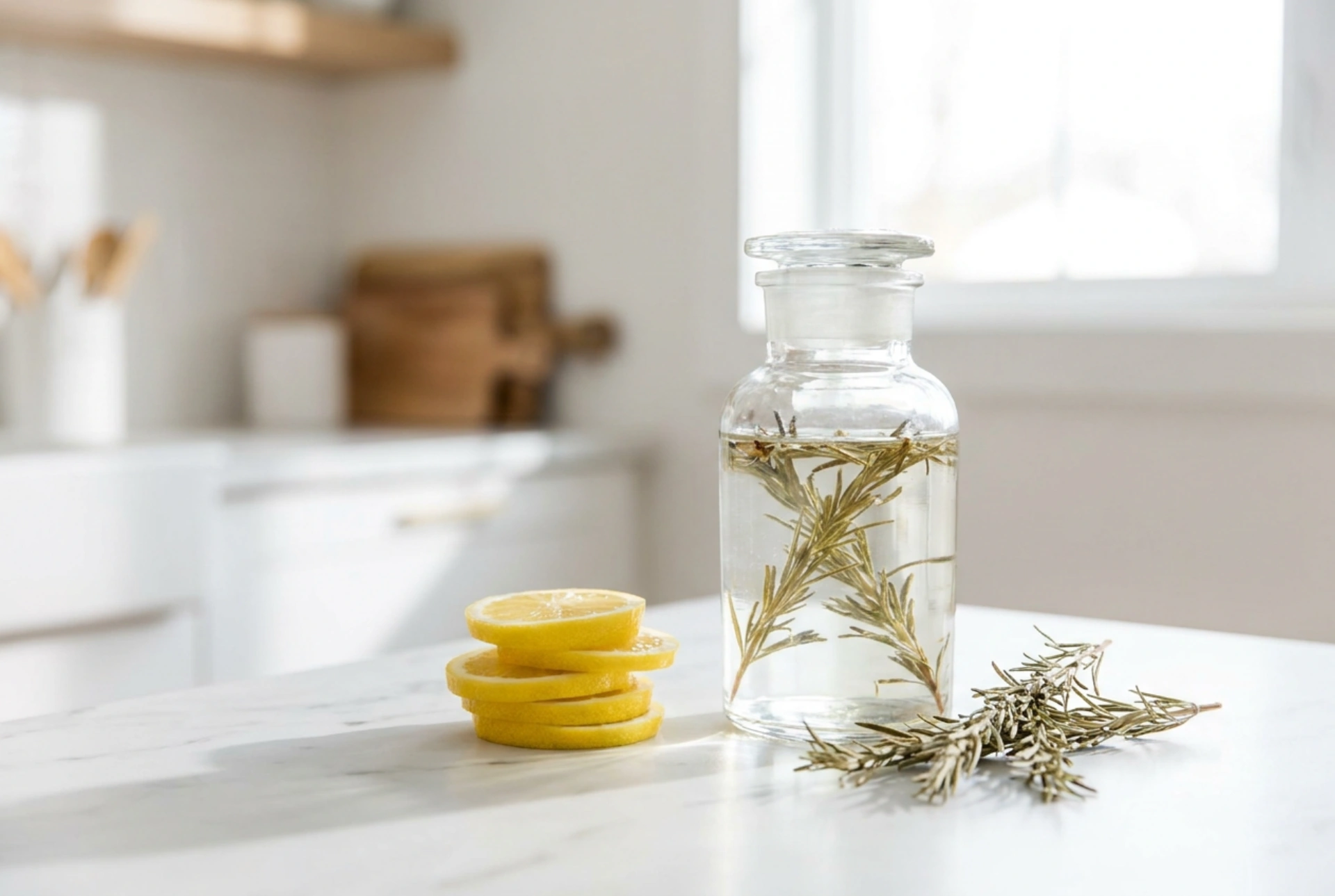
- Add the humectant and scent: Add one tablespoon of vegetable glycerin and 10 drops of pure essential plant oils (such as lemon or tea tree oil, which offer natural antimicrobial properties).
Transfer the finished product into a glass pump dispenser. Glass is highly resistant to essential oils, which can degrade low-grade plastics over time.