

Thoroughly cleaning a gas-powered absorption camping fridge requires a systematic approach to protect both its sensitive physical components and the internal plastic lining from chemical degradation.
Understanding Absorption Fridge Physics and Safety Preparation
Unlike standard compressor-based domestic refrigerators, gas camping fridges operate on the thermodynamic principle of absorption refrigeration, utilizing a mixture of ammonia, water, and hydrogen gas heated by a small LPG flame. Before starting any maintenance, the gas supply must be completely shut off at the cylinder, and the gas hose disconnected to eliminate the risk of fuel leaks. It is crucial to allow the unit to sit idle for at least two hours; the condenser coils and boiler casing at the rear of the appliance reach extremely high temperatures during operation, and premature contact with cold water can cause thermal shock, warping the metal or fracturing the sealed pressurized cooling circuit.
The Chemistry of Interior Sanitization
The interior lining of camping fridges is typically constructed from Acrylonitrile Butadiene Styrene (ABS) or high-impact polystyrene (HIPS). These polymers are highly susceptible to micro-scratching from abrasive scouring pads and chemical stress cracking from aggressive solvents, such as acetone or strong chlorine-based disinfectants. To clean these surfaces safely and effectively, rely on the chemical properties of sodium bicarbonate (baking soda).
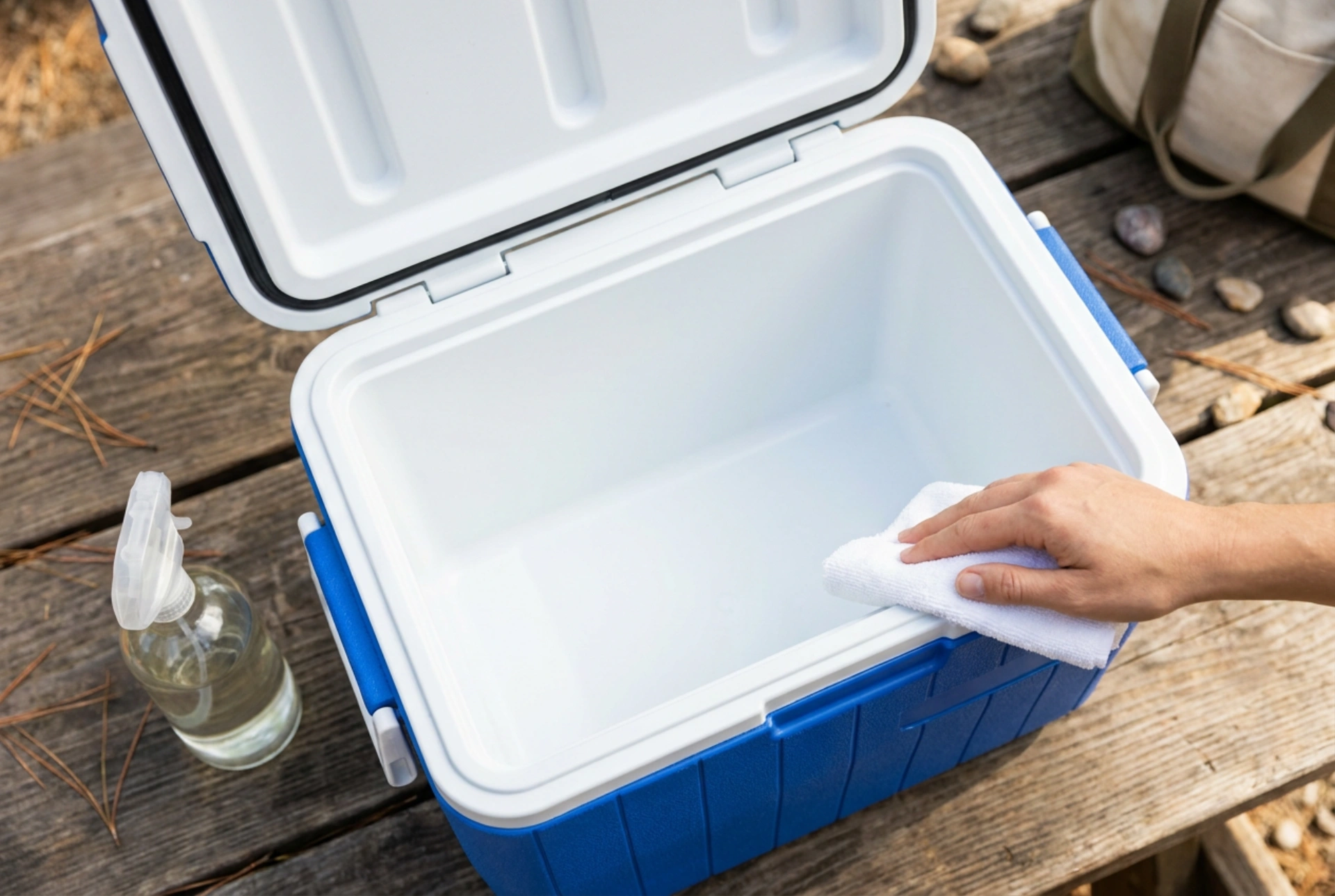
Create a solution by dissolving thirty grams of sodium bicarbonate in one litre of warm water (ideally around forty degrees Celsius). The mild alkalinity of sodium bicarbonate (pH 9) works via mild saponification to break down organic greasy residues and neutralize volatile acidic food odours without damaging the polymer structure of the interior walls. Wipe the surfaces using a soft microfibre cloth in a linear, non-circular motion to prevent concentrating any trapped grit into deep scratches. For persistent stains, avoid physical force; instead, apply a paste of sodium bicarbonate and water directly to the spot, letting it sit for ten minutes to soften the residue before wiping it clean.
Maintaining the Gas Burner and Ventilation Flue
The efficiency of a gas-powered fridge depends on the unobstructed flow of heat and exhaust through the flue pipe and burner assembly. Liquid water must never enter the gas nozzle or burner jet, as moisture blockages can disrupt the gas-air stoichiometric ratio, causing irregular combustion, soot accumulation, or dangerous carbon monoxide production. To clean this area, use a soft-bristled brush or low-pressure compressed air to remove dust, soot, spiderwebs, and debris from the cooling fins and burner cover. If the exterior casing requires cleaning, use a damp cloth wrung out almost completely, ensuring no water drips down into the control valves or ignition electrodes.
Preserving Elastomer Seals and Preparing for Storage
The magnetic rubber door gasket is critical for maintaining the thermal barrier of the fridge. Over time, exposure to acidic food residues and harsh cleaning agents can cause the elastomer to dry out, stiffen, and crack. Clean the gasket using a dilute solution of warm water and a few drops of mild dishwashing liquid. Gently wipe the folds using a cotton swab. Once dry, apply a very thin coat of pure vegetable glycerine or talcum powder to the gasket surface; this preserves the flexibility of the rubber and prevents it from sticking and tearing during future use.
The final step in the maintenance cycle is thorough dehydration. Moisture left inside a closed, dark environment creates a perfect breeding ground for anaerobic bacteria and mould. Dry all surfaces using a clean, lint-free cloth, and leave the lid or door propped open by at least two centimetres during storage to ensure continuous atmospheric equilibrium and prevent stagnation.