

Removing intense pigments like betalains from beetroot and beta-carotene from carrots from vegetable grinders requires understanding their chemical solubility rather than relying on abrasive scrubbing. By applying basic household chemistry, you can lift stubborn stains from both plastic housings and metal components without damaging the materials.
The Science of Orange and Red Food Stains
To clean a vegetable grinder effectively, we must look at the molecular structure of the pigments. Carrots owe their vibrant orange hue to beta-carotene. Beta-carotene is a highly lipophilic (fat-soluble) compound, which means it is virtually insoluble in water but dissolves readily in fats and oils. Trying to wash carrot residue with cold water and soap often fails because the soap molecules cannot efficiently emulsify the pigments bound directly to the polymer chains of plastic parts.
Beetroots, on the other hand, contain betalains—water-soluble pigments that are highly sensitive to pH changes and oxidation. While they dissolve in water, they easily penetrate micro-scratches in plastic and react with raw metal surfaces, leaving deep red or brown discolouration. Addressing these two distinct chemical profiles requires a two-step approach: lipid dissolution for carrots and pH manipulation or mild oxidation for beets.
The Oil-First Technique for Carrot Stains
Because beta-carotene dissolves in lipids, the most effective way to remove orange stains from plastic augers, housings, and plungers is by using a neutral vegetable oil. Applying water first actually creates a barrier, making it harder for oil to penetrate the pigment. Follow this sequence for the best results:
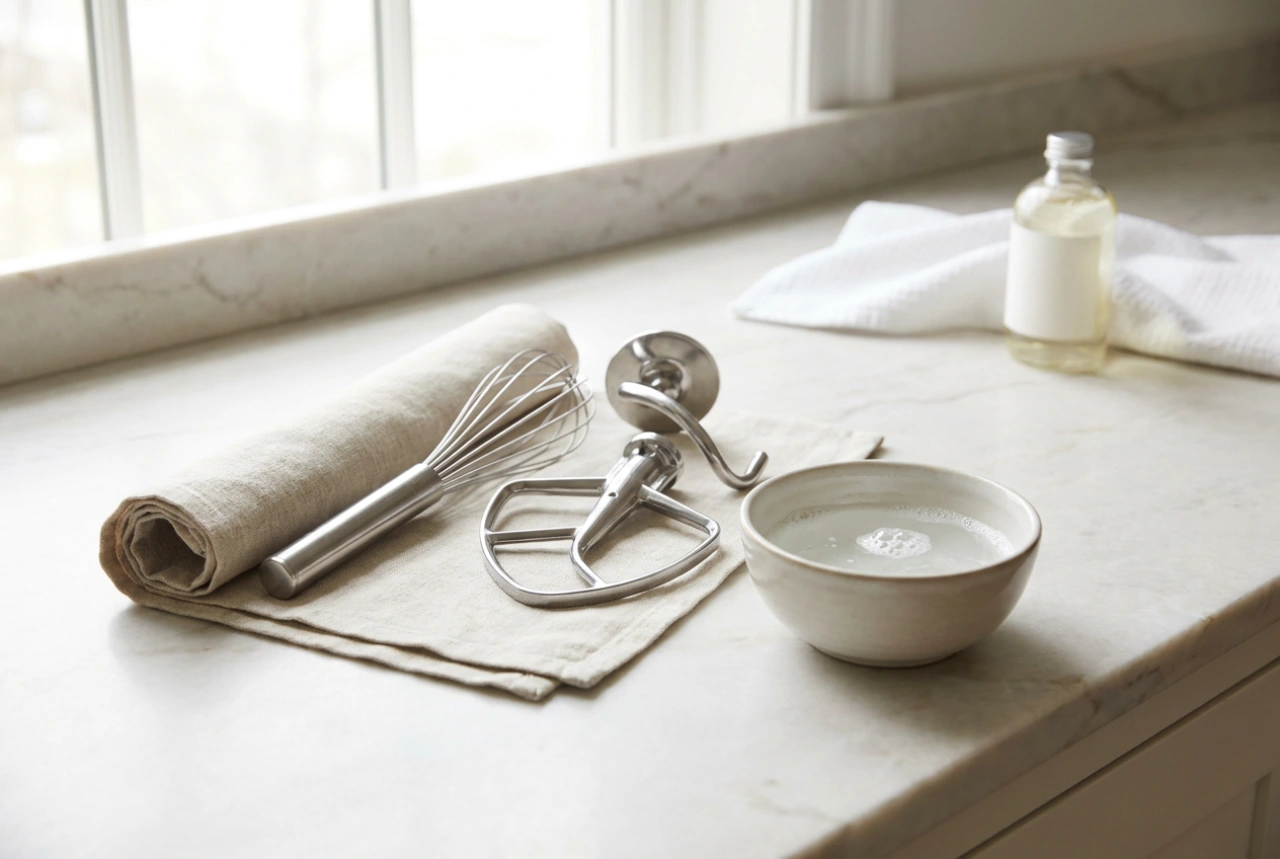
- Apply oil to dry parts: Disassemble the grinder completely. Ensure the stained plastic parts are completely dry. Rub a few drops of standard cooking oil (such as sunflower or rapeseed oil) onto the stained areas using a soft cloth or paper towel.
- Dwell time: Allow the oil to sit on the surface for three to five minutes. You will observe the oil turning orange as it dissolves the beta-carotene.
- Wipe and emulsify: Wipe away the orange-tinted oil with a clean paper towel. Next, wash the components in warm water (around 45°C to 50°C) with a high-quality dishwashing liquid. The surfactants in the soap will encapsulate the remaining oily residue, leaving the plastic clean and grease-free.
Neutralizing Beet Pigments with Acids and Oxygen Bleach
Red beetroot stains require a different strategy. Since betalains are sensitive to acidic environments, weak household acids can break down the pigment molecules, neutralizing their colour. For plastic and high-grade stainless steel parts, a concentrated solution of citric acid or white vinegar is highly effective.
For deep, stubborn stains on plastic parts, oxygen-based bleach (sodium percarbonate) is the safest and most efficient tool. Dissolve one tablespoon of oxygen bleach powder in hot water (not boiling, to prevent plastic warping) and submerge the plastic pieces for 15 to 30 minutes. The active oxygen breaks the chemical bonds of the chromophores in the betalain pigments, rendering them colourless. Avoid using chlorine bleach, as it degrades plastics over time and causes pitting corrosion on stainless steel components.
Preserving Material Integrity: What to Avoid
The physical method of cleaning is just as important as the chemical one. Coarse scouring pads, steel wool, or abrasive cleaning creams should never be used on kitchen plastics or polished metal. These tools create microscopic scratches on the surfaces. While the grinder might look clean initially, these micro-grooves will trap pigments even more deeply during future use, making subsequent cleaning nearly impossible.
Instead, use soft microfiber cloths, natural bristle brushes to clean the tight crevices of the grinding plates, and a paste made from sodium bicarbonate (baking soda) and water for very mild mechanical agitation when needed. Baking soda acts as a gentle, water-soluble abrasive that dissolves before it can scratch resilient plastics or metals.
An Optimized Cleaning Protocol
To maintain your vegetable grinder in pristine condition, establish a strict order of operations immediately after use:
- Immediate rinse: Disassemble the unit immediately after grinding. Do not let the vegetable residue dry out, as dehydration binds the pigments permanently to the substrates.
- Pre-treat: Wipe down plastic parts with oil to lift carrot pigments.
- Acid wash: Rinse metal cutting discs and screens in a warm citric acid bath to dissolve beet residues and prevent mineral build-up.
- Final wash and thorough dry: Wash all parts in warm soapy water, rinse with clean water, and dry immediately with a soft towel to prevent oxidation or water spots.