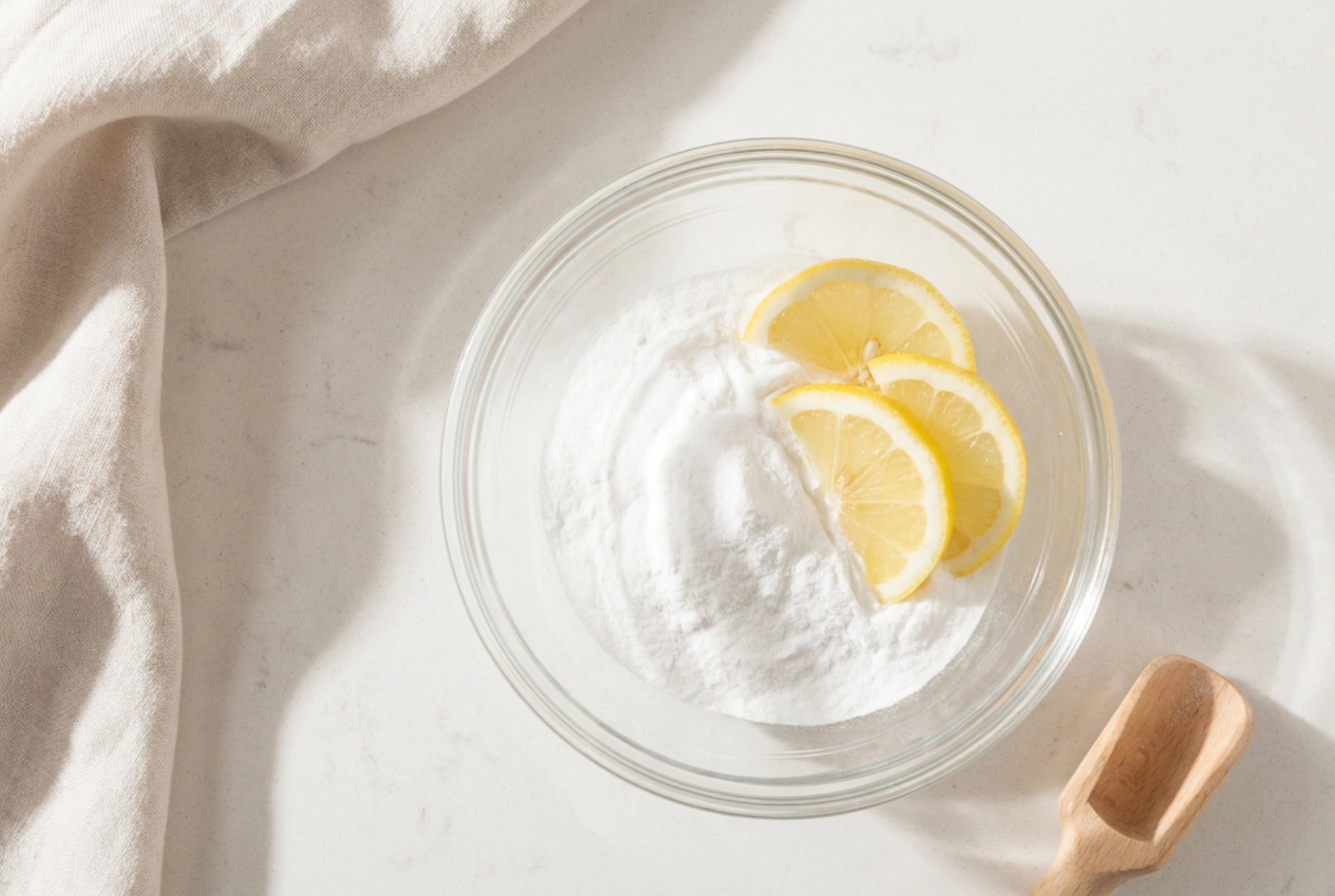


Cleaning a burnt pot does not require abrasive wire sponges that permanently scratch metal surfaces, nor does it necessitate harsh chemical cleaners. By leveraging basic household chemistry and thermal energy, you can dissolve and lift carbonised food residues safely and effectively without damaging your cookware.
Understanding the Bond: Why Food Sticks
When organic matter is subjected to high heat, sugars caramelise and proteins undergo polymerisation. This process creates a complex, carbonised matrix that chemically bonds to the metal surface of your cookware. Attempting to scrape this layer off mechanically with a wire sponge often strips away the passive chromium oxide layer of stainless steel, leaving it vulnerable to rust and pitting. To clean the pot safely, you must break the chemical bonds holding the carbon to the metal rather than physically grinding it away.
The Alkaline Method: Saponification with Sodium Bicarbonate
Sodium bicarbonate (baking soda) is a mild alkali with a pH of around 8 to 9. When mixed with water and heated, it facilitates a process similar to saponification, breaking down fats and acidic organic compounds into water-soluble salts. This makes it highly effective against greasy, heavily carbonised deposits.
How to Apply the Alkaline Technique
To use this method, cover the burnt area at the bottom of the pot with a generous layer of sodium bicarbonate. Add enough water to submerge the burnt residue by at least two centimetres. Place the pot on the hob and bring the mixture to a gentle boil. As the water temperature rises, the thermal energy accelerates the alkaline breakdown of the polymerised proteins. Let the solution simmer for 15 to 20 minutes. Turn off the heat and use a wooden spatula to gently scrape the bottom; the softened carbon should lift off in large flakes.
The Acidic Method: Citric Acid for Mineral and Dairy Burns
If the burn is the result of milk, cheese, or other mineral-rich foods, an acidic treatment is more effective than an alkaline one. Acidic solutions work by protonating organic molecules, altering their solubility and breaking down the complex protein structures that bind the burn to the metal surface.
The Citric Acid Simmer
Fill the pot with water to cover the burnt area, add two tablespoons of citric acid powder (or half a cup of white vinegar), and bring it to a boil on the stove. The combination of heat and acid hydrolyses the protein chains holding the soot together. Once the liquid has boiled for 10 minutes, remove the pot from the heat source and let it cool completely. The acidic environment will have weakened the bond between the carbon and the cookware, allowing you to wipe it clean with a standard, non-abrasive sponge.
The Power of Thermal Shock
Physics can also assist where chemistry leaves off. Metals and carbonised residues expand and contract at different rates when exposed to sudden temperature changes. This difference in thermal expansion rates can be used to break the physical bond between the burn and the pot.
Safely Inducing Thermal Tension
After boiling an alkaline or acidic solution in the pot, empty the hot liquid and immediately rinse the hot pot under cold running water. This technique is highly effective for heavy-bottomed stainless steel cookware, though it should be avoided for thin enamel pots to prevent cracking. The rapid contraction of the metal causes the rigid, inelastic carbon layer to crack, buckle, and detach from the surface, making it easy to wash away.
Prevention and Cookware Maintenance
To prevent severe sticking in the future, follow these fundamental rules of kitchen physics:
- Preheat your stainless steel pan before adding oil to allow the microscopic pores in the metal to expand and close, creating a naturally non-stick surface.
- Deglaze the pan with room-temperature liquids immediately after cooking to lift caramelised sugars before they have a chance to cool and solidify.
- Avoid using high heat for prolonged periods with thin-bottomed cookware, which distributes heat unevenly and creates concentrated hot spots prone to burning.