

Limescale deposits in kettles act as thermal insulators, reducing heating efficiency and altering the taste of your beverages. Descaling with citric acid provides a highly effective, completely odourless alternative to pungent vinegar and synthetic chemical agents.
The Science of Limescale and Citric Acid
Tap water contains dissolved minerals, primarily calcium and magnesium hydrogen carbonates. When water is heated inside a kettle, these soluble compounds undergo thermal decomposition, transforming into insoluble calcium carbonate. This solid precipitate adheres to the heating element and internal walls, forming a hard, chalky crust known as limescale.
Citric acid, a naturally occurring weak organic acid, is highly effective at breaking down this mineral matrix. When citric acid meets calcium carbonate, a chemical reaction occurs. The acid donates hydrogen ions to the carbonate, breaking it down into water-soluble calcium citrate, carbon dioxide gas, and water. Unlike acetic acid (vinegar), citric acid has a very low vapour pressure at household temperatures, meaning it does not evaporate into the air to produce a sharp, choking smell during the heating process.
Determining the Right Concentration and Temperature
For optimal descaling without damaging the internal components of your appliance, the concentration of the acidic solution must be balanced. A ratio of 20 to 30 grams of crystalline citric acid (approximately two tablespoons) per 500 millilitres of water is sufficient for moderate to heavy scale buildup.
The speed of this chemical reaction is highly dependent on temperature. While cold citric acid will eventually dissolve limescale, heating the solution significantly accelerates the process. Raising the temperature to around 70°C to 80°C increases the kinetic energy of the molecules, allowing the acid to penetrate the crystalline structure of the scale rapidly. However, boiling the solution completely should be avoided to prevent acidic foam from bubbling out of the spout.
Step-by-Step Odourless Descaling Protocol
To safely restore your kettle to peak efficiency, follow this precise sequence of steps:
- Preparation: Unplug the kettle and rinse out any loose particulate matter. Ensure the heating element or the scale-covered base is fully submerged.
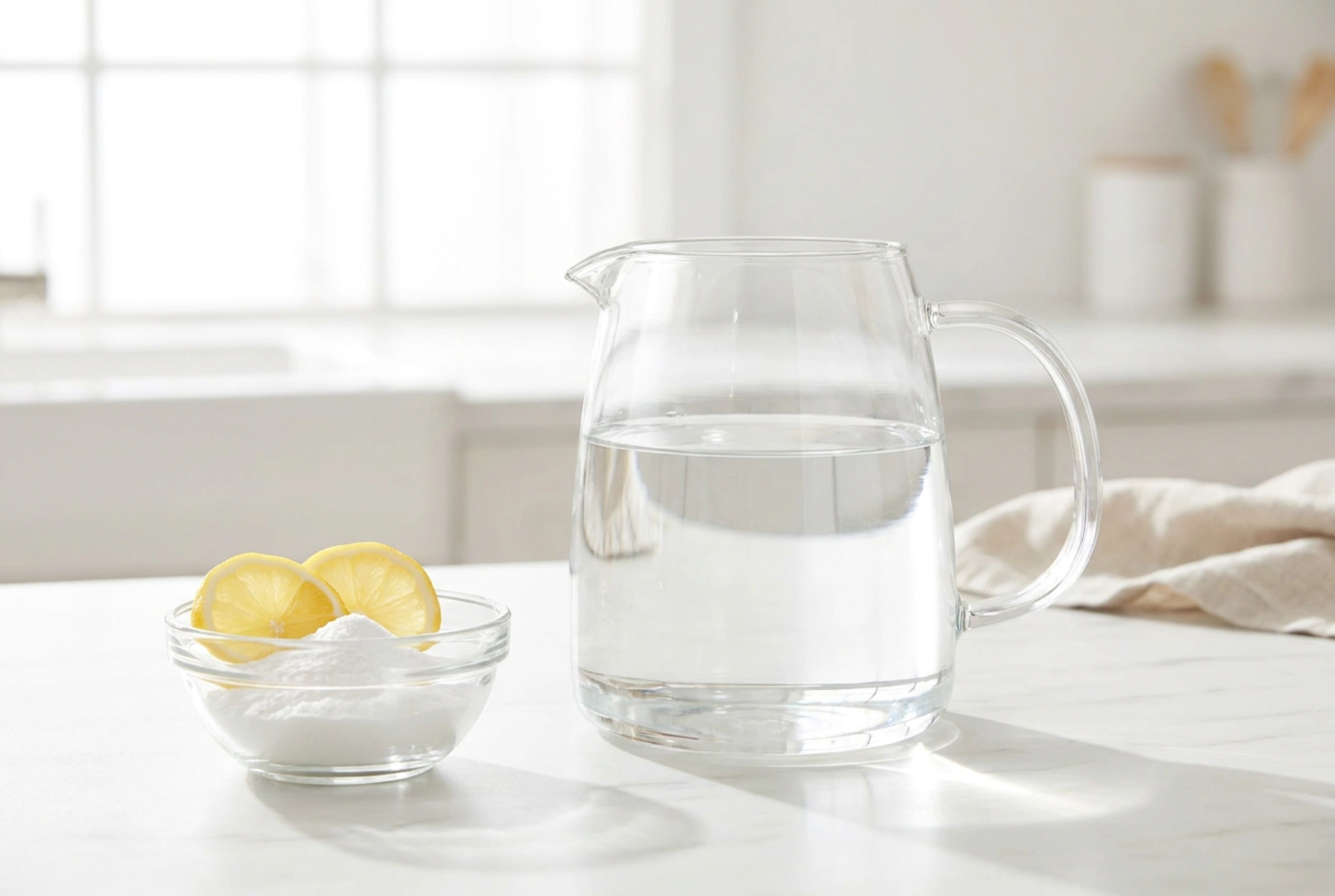
- Solution creation: Fill the kettle with 500ml of cold tap water. Add two tablespoons of citric acid crystals directly to the water.
- Controlled heating: Switch the kettle on. Monitor the process closely and switch the appliance off manually just before the water reaches a rolling boil. You will observe effervescence, which is the carbon dioxide gas being released as the acid breaks down the scale.
- Dwell time: Allow the hot solution to sit in the kettle for 15 to 20 minutes. For severe scale accumulation, leave the solution to act for up to 45 minutes as the water cools down.
- Rinsing: Pour the solution down the sink. Rinse the interior of the kettle thoroughly with cold water to remove any dissolved calcium citrate residue.
- Final purge: Fill the kettle with clean water, bring it to a boil, and discard this water. This ensures no residual acidity remains to affect the taste of your next hot drink.
Long-Term Appliance Maintenance and Material Compatibility
Citric acid is exceptionally gentle on the materials typically found in modern kettles, including borosilicate glass, high-grade stainless steel, and food-grade silicone seals. Regular descaling—ideally once a month in hard water regions—prevents thick mineral crusts from developing. Thick scale forces the heating element to work harder to transfer heat to the water, which can cause the element to overheat and fail prematurely. By maintaining a clean heating surface, you ensure optimal heat transfer, reduce boiling times, and lower energy consumption.