

Maintaining a small automatic coffee machine requires a systematic approach to temperature, chemistry, and physics to prevent scale buildup and oil rancidity. Regular maintenance ensures consistent heat transfer and preserves the precise pressure required for optimal espresso extraction.
The Chemistry of Decalcification: Managing Calcium Carbonate
Water hardness is determined by the concentration of dissolved calcium and magnesium ions. When water is heated inside the thermoblock of an automatic coffee machine, soluble calcium bicarbonate undergoes thermal decomposition, converting into insoluble calcium carbonate. This scale acts as a thermal insulator, drastically reducing heat transfer efficiency and forcing the heating element to work longer, which eventually leads to thermal fatigue and component failure.
To dissolve calcium carbonate, you must introduce a mild organic acid. Citric acid or lactic acid are highly effective options. These acids react with the alkaline scale to form highly soluble calcium citrate or calcium lactate, along with water and carbon dioxide gas. The reaction rate is highly temperature-dependent; running the descaling cycle at lukewarm temperatures (approximately 40°C to 50°C) optimises the dissolution rate without causing rapid gas evolution that can lock the hydraulic system. Avoid strong mineral acids like hydrochloric acid, as they actively corrode the brass, copper, and rubber seals inside the machine.
Combating Rancid Lipids in the Brew Group
Coffee beans contain natural oils and lipids that are extracted during the brewing process under high pressure. These hydrophobic substances coat the internal surfaces of the brew group, the shower screen, and the dispensing spouts. Over time, exposure to heat and oxygen causes these lipids to oxidise and turn rancid, which severely degrades the flavour profile of your coffee and creates a sticky, abrasive paste that increases friction on moving mechanical parts.
Cleaning the brew group requires a dual approach. Weekly, the brew group should be physically removed and rinsed under running, lukewarm water (around 30°C). This temperature is warm enough to soften and rinse away loose coffee grounds and fresh oils, but cool enough to preserve the food-grade silicone grease that lubricates the mechanical gears and O-rings. Monthly, a surfactant-based cleaning tablet or a dilute oxygen bleach solution should be used to emulsify the hardened, oxidised fats. This chemical process breaks the molecular bonds holding the oil to the plastic and metal surfaces, allowing it to be flushed away completely.
Milk System Hygiene: Preventing Protein Denaturation
The milk texturing system poses a unique hygiene challenge due to the complex structure of milk, which consists of water, fats, and proteins (predominantly casein and whey). When milk is heated above 60°C to create microfoam, these proteins denature, changing their physical structure and bonding tightly to the stainless steel steam wand or internal plastic frothing tubes.
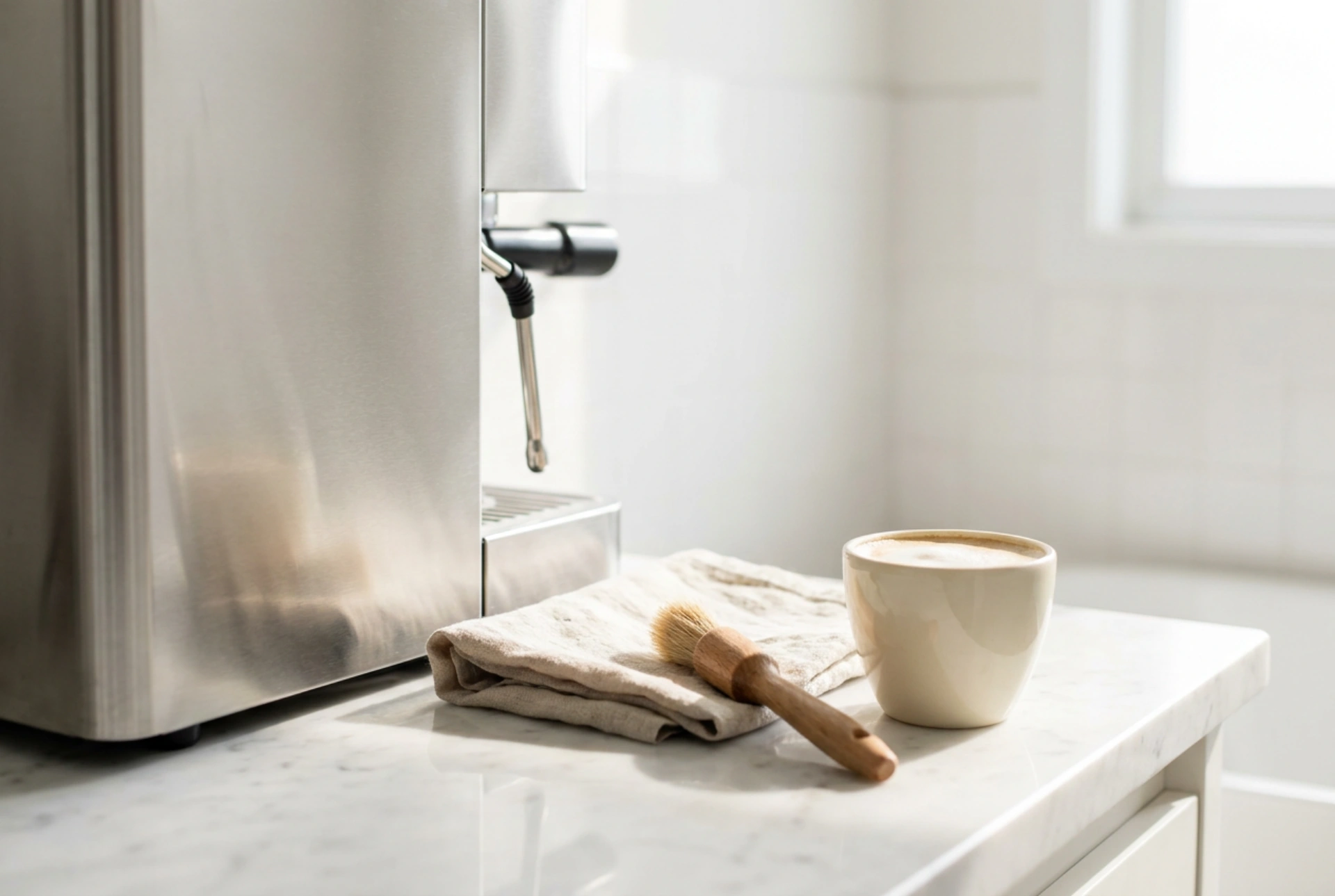
To clean these components effectively, the order of operations and temperature are critical. Always flush the system with cold water immediately after use. Hot water will instantly coagulate the remaining proteins, baking them onto the surfaces. Follow this with an alkaline cleaning solution designed to hydrolyse the protein bonds and emulsify the milk fats. Finally, rinse thoroughly with clean, cold water to remove any chemical residue. Physical scrubbing with a soft, non-abrasive brush helps clear the tiny air-intake holes that dictate steam velocity and foam texture.
Moisture Control and Mold Prevention
The interior of an automatic coffee machine is a warm, dark, and highly humid environment—ideal conditions for fungal spores. The drip tray and coffee grounds container must be emptied and dried daily. Residual heat from the thermoblock accelerates mold growth on wet coffee pucks. Wiping down the interior cavity with a dry microfibre cloth and leaving the service door slightly ajar when the machine is powered off allows air circulation, dropping the relative humidity below the threshold required for mold propagation.