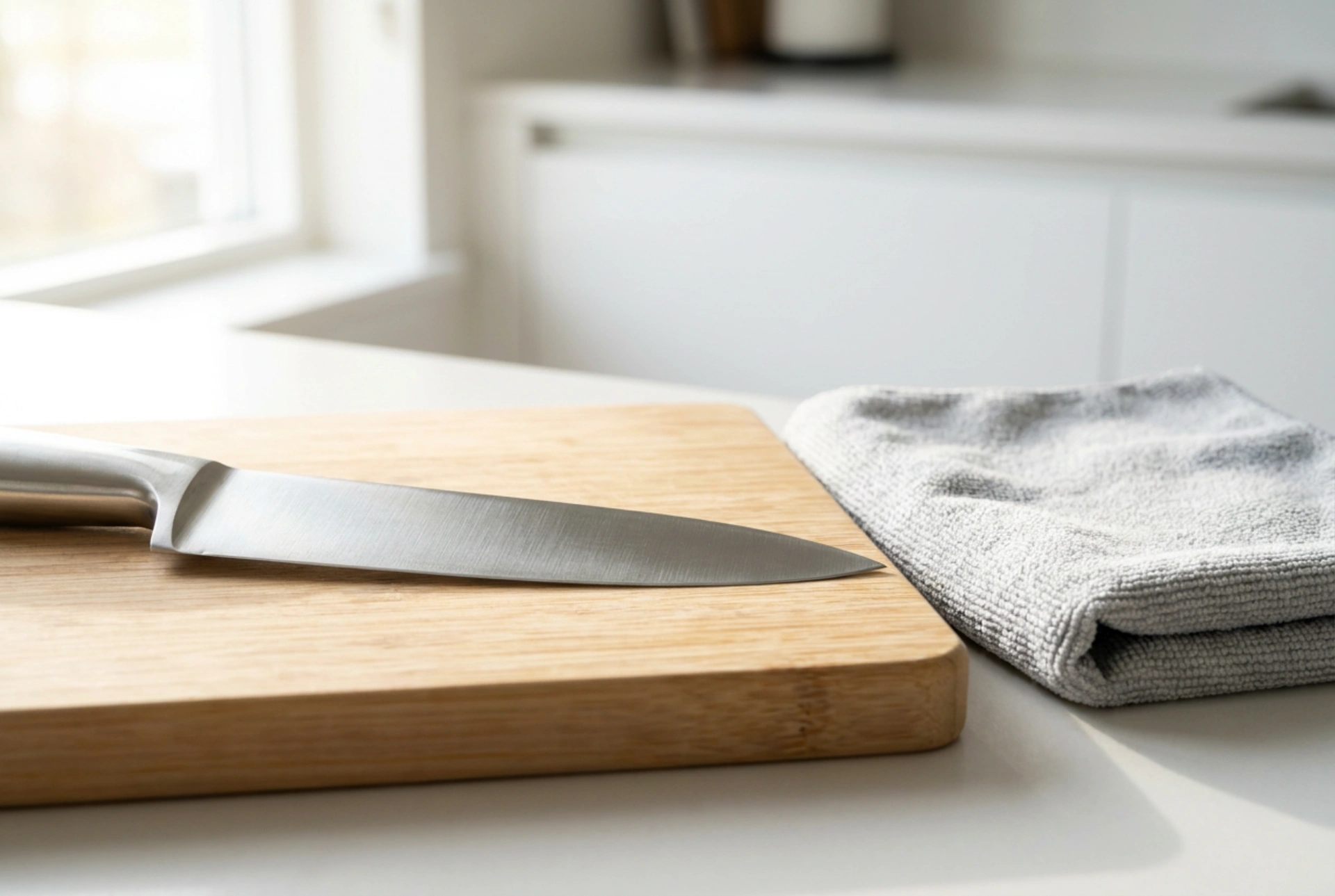


Cleaning an electric carving knife requires a systematic approach that prioritises mechanical safety, electrical insulation, and precise hygiene to prevent biological contamination. Because these devices handle raw proteins and fats, residual organic matter can quickly form resilient biofilms in the tight tolerances of interlocking blades and drive shafts.
The Physics of Disassembly and Electrical Safety
Before any cleaning begins, the appliance must be completely isolated from its energy source. Unplug the power cord from the wall socket; relying solely on the device's safety switch is insufficient, as physical contact with the trigger mechanism during cleaning can cause accidental blade oscillation. Electric knives operate using a dual-blade system that reciprocates at high speed, meaning even a minor slip can result in deep lacerations.
Locate the blade release button on the side or top of the handle housing. Depress this button fully to disengage the internal locking pins from the tangs of the blades. When extracting the blades, always grasp them by the plastic safety guards or the dull spine, never by the serrated cutting edge. Slide the blades carefully out of the motor body, keeping them pointed away from your body.
The Chemistry of Protein and Fat Removal
Meat residues consist primarily of lipids and proteins. Cleaning these substances requires an understanding of how temperature affects their molecular structures. A common error is rinsing greasy blades directly with hot water. High temperatures coagulate proteins, binding them firmly to the micro-crevices of the serrated steel. Instead, initiate the cleaning process with a cold water rinse to flush away loose blood and loose protein strands.
Once the initial rinse is complete, transition to warm water (approximately 40°C to 50°C) and a concentrated surfactant, such as a standard grease-stripping dishwashing detergent. Surfactants work by lowering the surface tension of water, allowing it to emulsify hydrophobic fats. Use a soft-bristled nylon brush rather than an abrasive metal scourer. Abrasive pads create microscopic scratches on the stainless steel surface, providing ideal anchoring sites for future bacterial colonisation.
Separating and Cleaning Interlocking Blades
Most electric carving knives utilise two blades that interlock via a keyhole rivet system. These blades must be separated before washing. Leaving them joined traps moisture, animal fat, and moisture-loving pathogens in the capillary space between the flat steel plates, leading to corrosion and bacterial growth.
- Slide the blades relative to each other until the rivet aligns with the larger opening of the keyhole slot, then gently pull them apart.
- Wipe each blade individually, moving the cleaning cloth or brush from the thick spine outward toward the serrated edge to avoid cutting the cleaning material or your fingers.
- Pay specific attention to the interlocking rivet and the keyhole slot; use a cotton-tipped swab dipped in soapy water to clear these hard-to-reach areas.
Decontaminating the Motor Unit and Drive Shaft
The motor housing contains electrical windings and delicate switch contacts that must never come into direct contact with liquid water. Immersion will ruin the motor and create a severe risk of electric shock upon subsequent use. Instead, sanitise the exterior surface using a highly wrung-out microfibre cloth dampened with a mild detergent solution or a solution of water and isopropyl alcohol (70% concentration).
The blade receptacle slot on the front of the handle is particularly vulnerable to collecting grease and meat juices during use. To clean this area safely:
- Wrap a thin, lint-free cloth around a wooden toothpick or a plastic scraper.
- Gently insert it into the slot to sweep out any accumulated debris.
- Sanitise the internal track using a cotton swab lightly moistened with isopropyl alcohol, which evaporates rapidly without leaving moisture behind to corrode the internal drive pins.
Drying, Lubrication, and Long-Term Protection
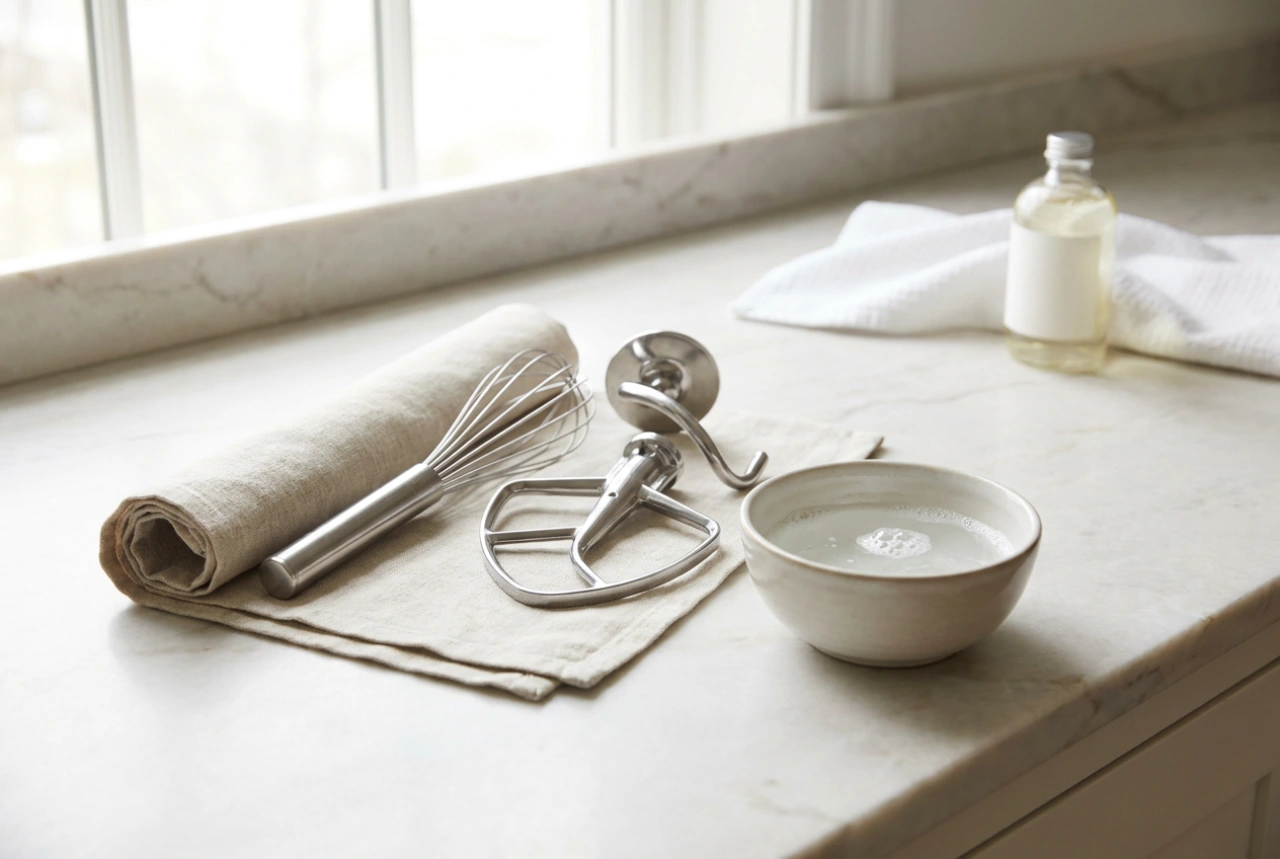
Even high-grade stainless steel can undergo spot oxidation if stored wet. Dry the separated blades immediately with a clean, lint-free towel. Once dry, lay them flat on a drying rack for an hour to ensure any residual moisture in the rivet mechanisms evaporates completely.
To keep the sliding mechanism operating smoothly, apply a single drop of food-grade mineral oil to the interlocking rivet and the metal tangs that insert into the motor unit. Do not use vegetable oils (such as olive or rapeseed oil), as these organic fats oxidise and polymerise over time, turning into a sticky, gummy residue that binds the blades and strains the motor. Reassemble the dry, lubricated blades and store them in their protective sleeves or case, out of reach of moisture and children.