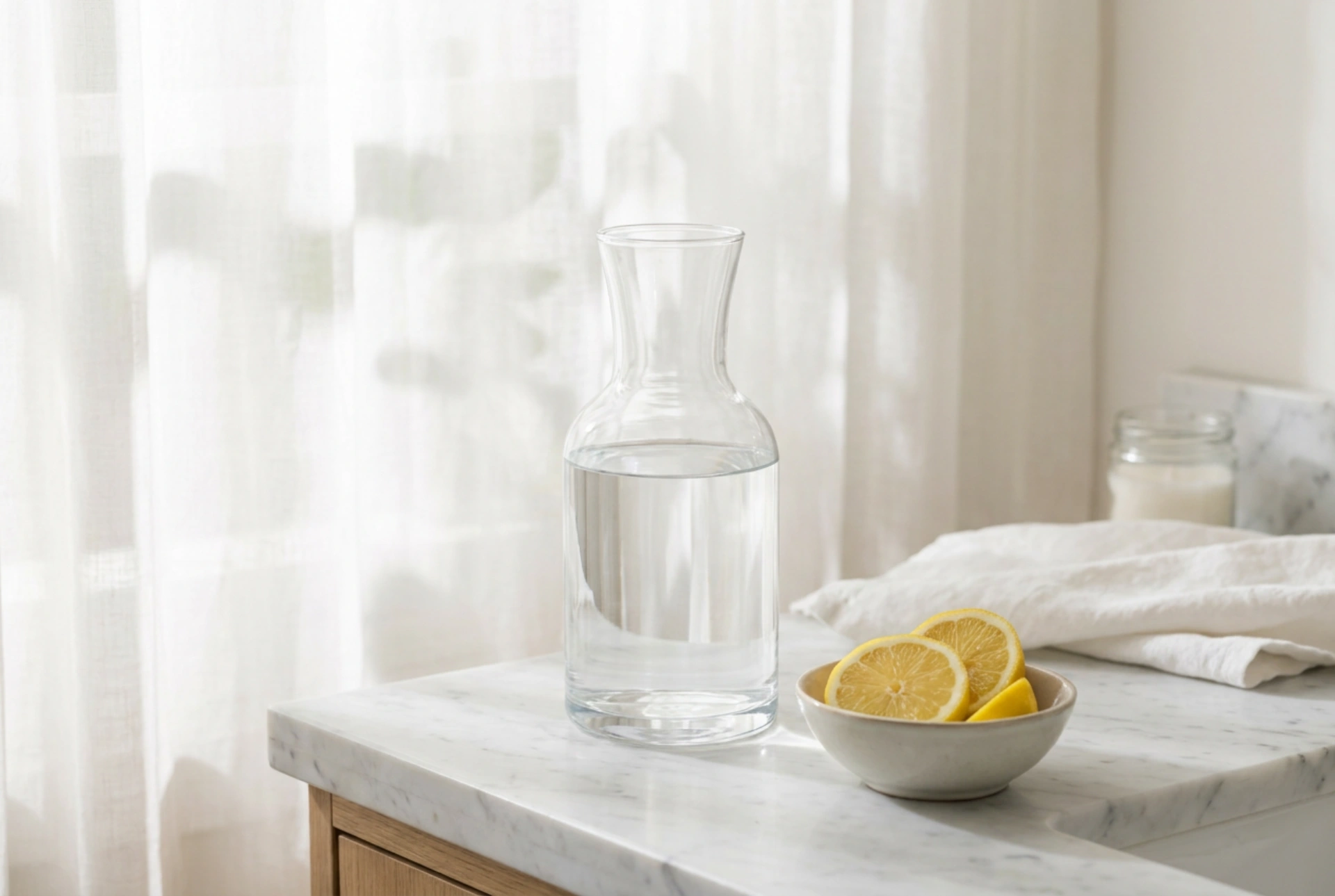


Glass water carafes often develop a persistent, musty smell over time due to microscopic biofilm accumulation and mineral scaling that traps organic compounds. Eliminating these stubborn odours requires targeting both the inorganic scale on the glass and the porous materials of the lid using simple chemical principles.
Understanding the Science of Carafe Odours
While glass itself is non-porous and highly resistant to absorbing smells, it easily accumulates a thin layer of limescale (calcium carbonate) from tap water. This rough, microscopic mineral structure acts as an anchor for organic matter, bacteria, and yeasts, creating an invisible biofilm that emits unpleasant musty or sour smells. Lids, on the other hand, are often made of plastic, silicone gaskets, or wood. These materials are semi-porous and readily absorb lipid-soluble odour molecules from the environment or backwash, making them much harder to deodorise with standard dish soap alone.
Step 1: Dissolving Inorganic Scale with Mild Acids
To access and eliminate the odour-causing bacteria, you must first dissolve the mineral matrix holding them to the glass. Standard surfactants (dish soaps) cannot break down calcium carbonate, which requires an acid-base reaction.
- The Solution: Prepare a warm solution of citric acid (two tablespoons per litre of water) or a 1:1 mixture of warm water and distilled white vinegar.
- The Mechanism: The hydrogen ions in the acid react with the calcium carbonate scale, converting it into soluble calcium ions, water, and carbon dioxide gas. This reaction dissolves the scale, lifting away the trapped biofilm.
- The Technique: Fill the carafe with the warm acidic solution and let it sit for 15 to 30 minutes. Gently swirl the liquid to ensure full contact with the upper walls. Avoid using boiling water, as sudden thermal expansion can crack thermal-shock-sensitive glass.
Step 2: Neutralising Organic Compounds with Sodium Bicarbonate
Once the mineral scale is dissolved, any remaining organic odour molecules—which are often acidic in nature—need to be neutralised using a mild alkaline agent. Sodium bicarbonate (baking soda) is highly effective because it acts as an amphoteric buffer, neutralising both acidic and highly basic odour compounds.
- The Technique: After rinsing the acidic solution, add two tablespoons of sodium bicarbonate to the bottom of the carafe. Add just enough warm water to form a loose paste.
- Mechanical action: Use a non-scratch, long-handled bottle brush to work the paste gently over the inner glass surface. The fine particles of sodium bicarbonate provide a mild abrasive action that physically detaches remaining biofilm without scratching the glass. Rinse thoroughly with clean, warm water.
Step 3: Sanitising the Lid and Gaskets
The lid and its sealing rings are the most common sources of persistent smells. Mould and bacteria thrive in the damp crevices of silicone gaskets.
Deconstructing the Lid
Always disassemble the lid completely. Remove the silicone or rubber gasket from the plastic or wooden core. Attempting to clean a fully assembled lid allows dirty water to remain trapped in the joints, fueling anaerobic bacterial growth.
Sanitising Gaskets and Seals
Soak the silicone gaskets in a warm bath of water mixed with a tablespoon of oxygen-based bleach (sodium percarbonate). This compound releases hydrogen peroxide in water, oxidising organic matter and killing bacteria without leaving chemical perfume residues. Alternatively, a soak in warm water with dissolved sodium bicarbonate will draw out trapped volatile organic compounds from the porous silicone. Avoid using chlorine-based bleach, as it can degrade silicone over time and leave a strong, unwanted chemical smell.
Treating Wooden Lids
If your carafe has a wooden lid, do not soak it, as wood absorbs water, swells, and cracks. Instead, wipe it down with a cloth dampened with a mild citric acid solution, rinse quickly under running water, and dry it immediately with a clean towel.
The Crucial Step: Proper Drying and Ventilation
Even a perfectly sanitised carafe will develop a musty smell if sealed while damp. Moisture trapped inside an airtight container creates a high-humidity environment ideal for the rapid proliferation of airborne fungal spores and bacteria.
After rinsing your carafe and lid with clean water, place the carafe upside down on a clean, dry, lint-free cloth or a dedicated drying rack that allows air to circulate inside. Leave the lid components completely disassembled to dry separately. Store the carafe with the lid off or slightly ajar to ensure constant airflow, preventing any stagnant air from becoming trapped inside.