

Milk and cocoa residues pose a unique challenge for coffee machines, transforming from rich liquids into stubborn, baked-on deposits within seconds. Understanding the molecular behaviour of these organic compounds is key to keeping your equipment hygienic and fully functional.
The Chemistry of Milk and Cocoa Residue
When milk is heated, its proteins—primarily casein and whey—undergo denaturation. At temperatures above 65 degrees Celsius, these protein chains unfold and form strong chemical bonds with the hot metal surfaces of steam wands and internal pipes. If left to cool, this organic film hardens into a lacquer-like layer. When you add hot chocolate into the mix, the situation becomes more complex. Cocoa powder contains starches and sugars that caramelise under heat, acting as a binding agent that glues the milk proteins even more firmly to the surface. Furthermore, milk fats do not dissolve in water; they require specific surfactant actions to emulsify and wash away.
The Immediate Action: Purging and Thermal Shock
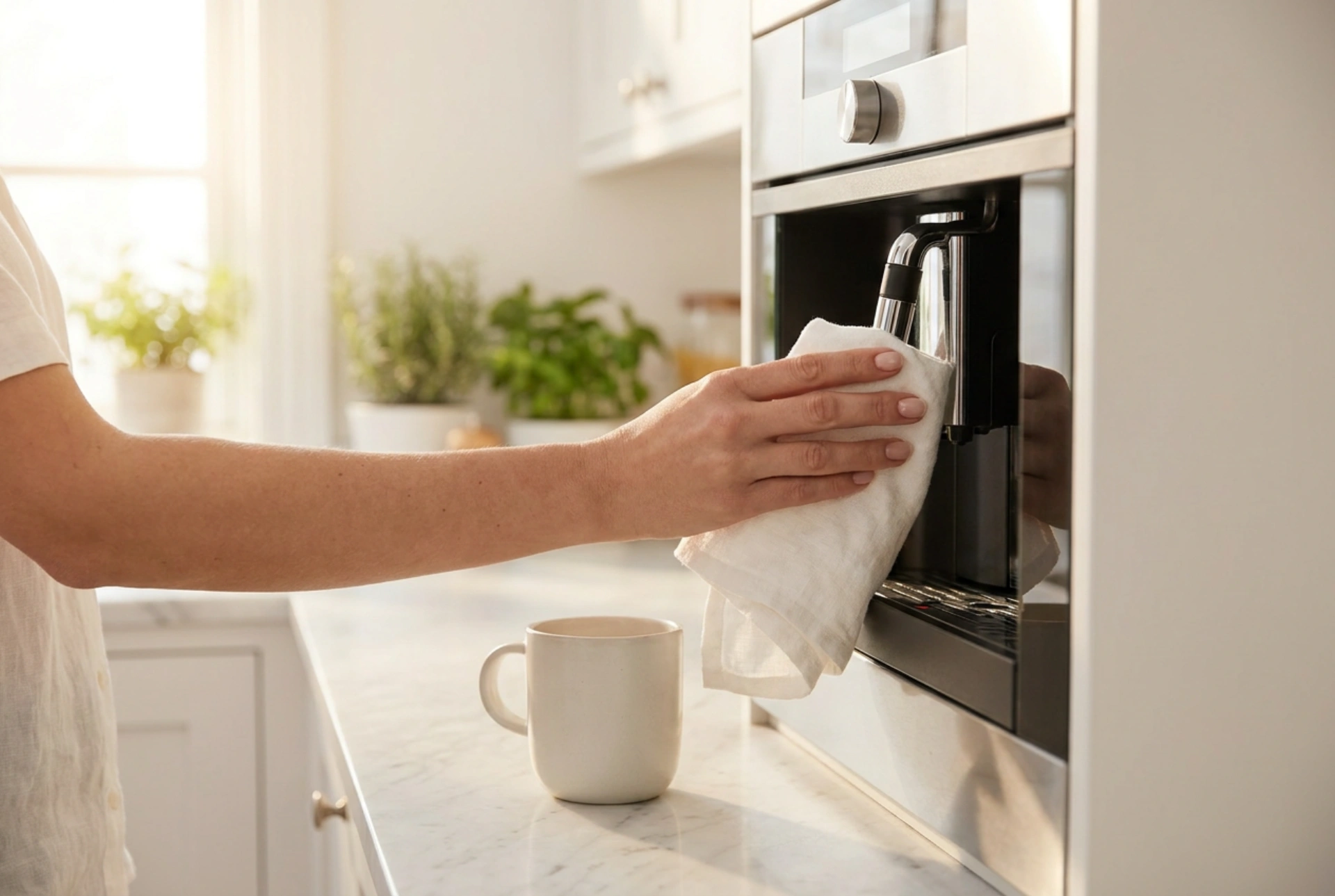
The most effective defence against protein coagulation is immediate action. As soon as you finish steaming milk or dispensing a chocolate drink, you must perform two steps: a steam purge and a physical wipe. Opening the steam valve for two seconds forces out any liquid that has been drawn back into the wand due to the vacuum created when the steam flow stops. Following this with a damp microfiber cloth leverages thermal shock. The moisture on the cool cloth rapidly cools the hot metal wand, causing microscopic contraction that helps break the bond between the denatured proteins and the stainless steel, allowing the residue to slide off effortlessly before it can cure.
Deep Cleaning the Steam Wand and Frother
For automatic frothers or wands with accumulated build-up, a deeper chemical intervention is required. To break down polymerised milk fats and proteins, you need a mild alkaline solution. Specialised non-branded milk system cleaners utilise targeted surfactants and alkaline salts to hydrolyse proteins, breaking them down into water-soluble amino acids. To clean a steam wand, submerge it in a container filled with water and the recommended ratio of alkaline cleaner. Allow it to soak for fifteen minutes to let the surfactants penetrate the lipid layers. Afterward, purge the wand thoroughly with clean steam and rinse with potable water to ensure no chemical residue remains.
Clearing Cocoa Blockages in Automatic Circuits
Unlike milk, cocoa powder does not completely dissolve; it forms a suspension of fine particulate matter. In automatic machines with integrated chocolate carafes or powder hoppers, these fine solids can settle in narrow tubes and valves, creating physical blockages. If these pathways are not flushed immediately, the dried cocoa paste acts like cement. To clear these circuits, run a dedicated hot water cycle immediately after every chocolate drink. This physical flushing action uses hydraulic pressure to sweep the suspended solids out of the narrow channels before they settle. If a blockage has already occurred, disassemble the removable components and use a soft, non-abrasive brush under warm running water to manually clear the passages.
Maintaining Hygiene and Flavor Quality
- Daily: Purge steam wands before and after every use; wipe immediately with a clean, damp cloth.
- Weekly: Soak frothing attachments in an alkaline cleaning solution to dissolve hidden fat deposits.
- Monthly: Disassemble all removable parts of the milk circuit to inspect for physical cocoa blockages and clean manual pathways.