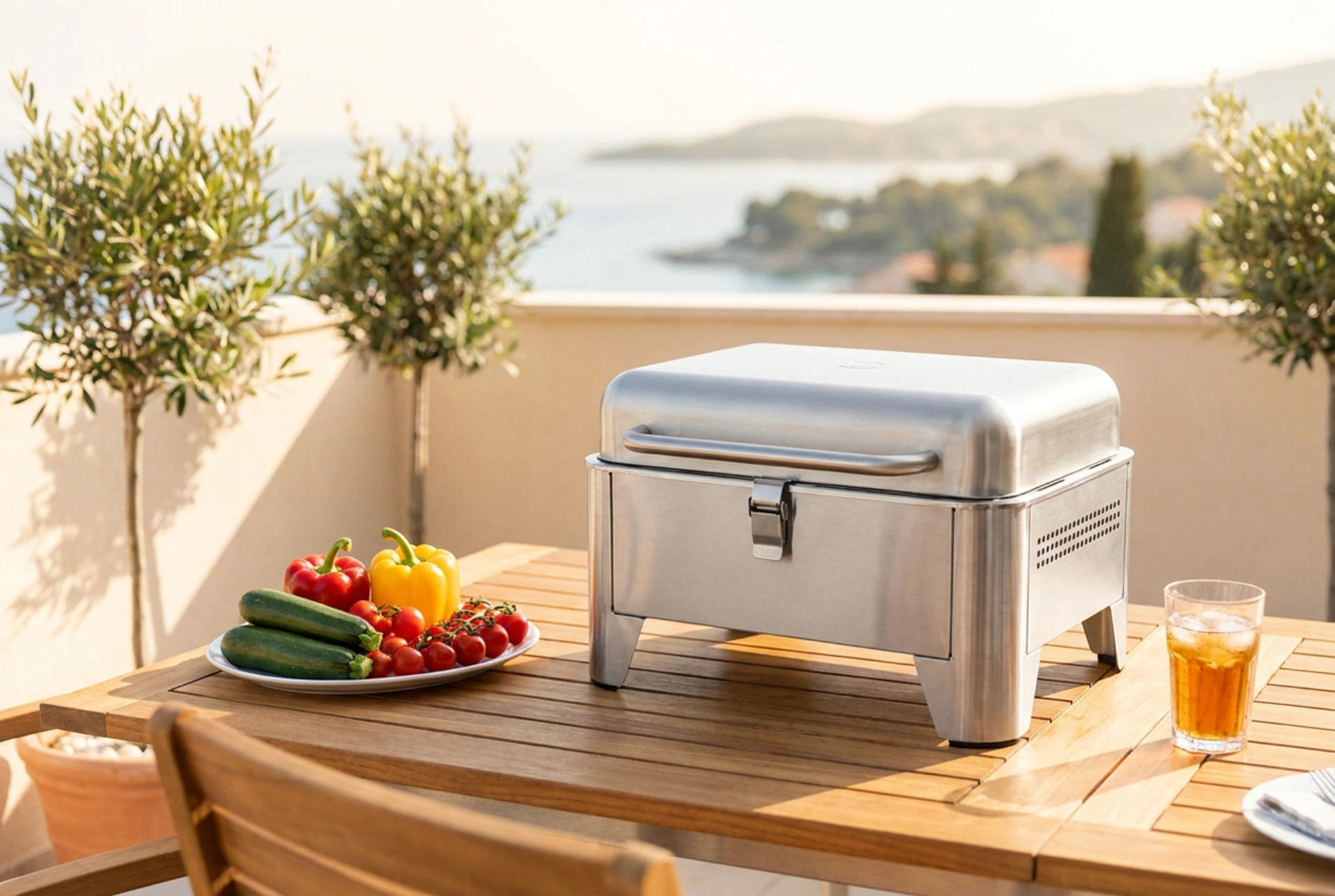


Operating an electric grill on a balcony requires a solid understanding of thermal transfer, electrical load management, and fat fire prevention to ensure safety in semi-enclosed spaces.
Understanding Electrical Loads and Circuit Safety
Electric grills are high-wattage appliances, typically consuming between 1,600 and 2,400 watts. This high power consumption converts electrical energy into thermal energy via resistive heating elements. To prevent overloading your domestic electrical circuit, you must connect the grill to a circuit that can handle the load. A standard domestic circuit rated at 13 amps can support a maximum load of approximately 3,000 watts. Running other high-draw appliances, such as a kettle or washing machine, on the same circuit simultaneously will trip the circuit breaker.
When using extension leads, choose a heavy-duty cable with a core thickness of at least 1.5 square millimetres. Standard light-duty extension leads can overheat under sustained high loads due to electrical resistance, creating a serious fire hazard. Always fully unwind the extension cable before use; a coiled cable acts as an inductor, trapping heat and melting the insulation.
Thermal Transfer and Surface Protection
Electric grills generate significant radiant heat. While the heating elements heat the cooking grate directly, thermal energy also radiates downwards and outwards. Placing a grill directly on wooden decking, composite materials, or plastic balcony tables can cause warping, discolouration, or even ignition. To mitigate this risk, position the grill on a stable, non-combustible surface such as steel, stone, or heavy concrete slabs.
Maintain a minimum clearance of 50 centimetres from combustible walls, railings, and outdoor furniture. This distance prevents heat accumulation from convection currents. If your balcony is exposed to wind, ensure the grill is positioned where drafts cannot blow loose items, like napkins or grease-absorbing paper, onto the hot grates.
Managing Fats, Oils, and Smoke Points
The primary source of smoke and potential flare-ups during electric grilling is the thermal decomposition of fats. When meat fats drip onto hot surfaces, they reach their smoke point and decompose, producing acrid smoke and volatile compounds. Unlike charcoal, electric grills do not have open flames, but grease dripping directly onto a red-hot heating element can still ignite.
Most modern electric balcony grills feature a water-filled drip tray positioned beneath the heating element. Keeping this tray filled with water is crucial. The water serves two purposes: it cools the dripping grease instantly, keeping it below its ignition temperature, and it prevents the fat from sticking to the tray, simplifying cleanup. Avoid using cooking oils with low smoke points, such as extra virgin olive oil, on the grill grates. Opt for high-smoke-point fats like refined rapeseed or sunflower oil to minimise aerosolised grease particles.
Post-Grilling Care and Thermal Shock Prevention
Proper shutdown and maintenance preserve the structural integrity of the grill components. After cooking, turn off the thermostat and allow the grill to cool down completely before cleaning. Never pour cold water directly onto a hot heating element or cast-iron grate. This rapid temperature drop induces thermal shock, which can crack cast-iron plates or rupture the protective metal sheathing around the electrical heating element.
To clean the grates, use a specialized brass or stainless-steel wire brush while the grates are still slightly warm to scrape away carbonised food residues. Clean the grease tray after every session to prevent rancid accumulation and to eliminate fuel sources for potential future flare-ups. Store the appliance indoors or under a waterproof, UV-resistant cover once it has cooled to protect the electrical contacts from atmospheric moisture and corrosion.