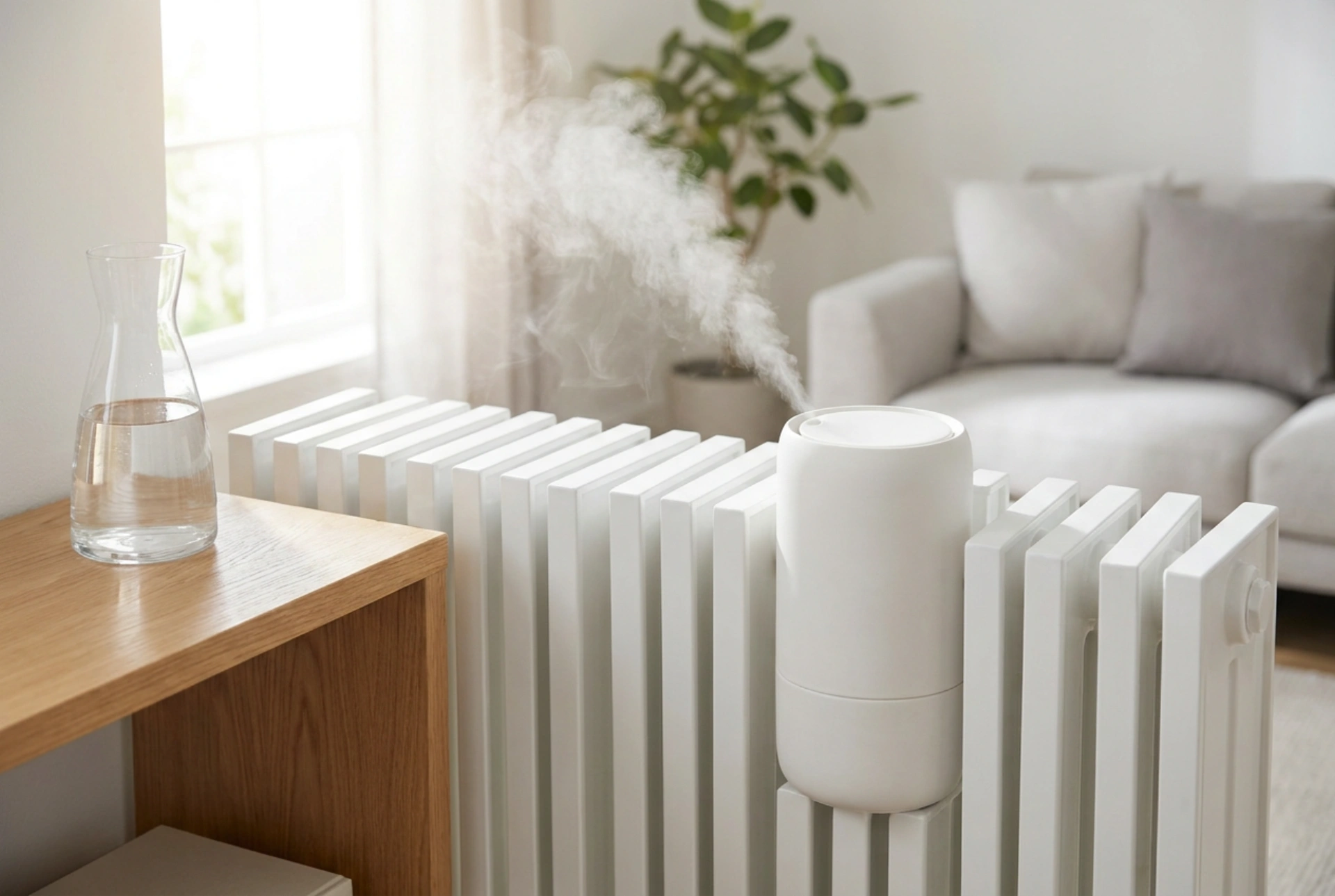


Hanging a ceramic or stainless steel humidifier on a column radiator is a highly efficient, electricity-free method to improve indoor air quality, provided you position the vessel correctly and manage water hygiene to prevent bacterial growth.
The Physics of Radiator-Mounted Evaporation
Passive radiator humidifiers operate on the principles of thermal conduction and convection. When the radiator heats up, thermal energy is transferred directly to the humidifier vessel through physical contact and radiant heat. As the temperature of the water inside the vessel rises, the kinetic energy of the water molecules increases, accelerating the transition from a liquid to a gaseous state. The rising warm air from the radiator then carries this water vapour upward and distributes it throughout the room via natural convection currents.
Unlike ultrasonic humidifiers, which force mineral dust into the air, thermal evaporators only release pure water molecules, leaving mineral deposits behind in the container. However, because the water remains warm and stagnant for extended periods, it creates an ideal environment for microbial proliferation if not managed correctly.
Secure Mounting and Positioning on Column Radiators
Traditional ribbed or column radiators present unique challenges for mounting due to their deep sections and varying gaps. Securing the vessel properly ensures optimal heat transfer and prevents accidental spills.
- Hook Selection: Use heavy-duty, rust-resistant stainless steel S-hooks. Avoid plastic hangers, as prolonged exposure to high temperatures (often exceeding 60 degrees Celsius on radiator surfaces) causes plasticizers to degrade, making the hanger brittle and prone to snapping.
- Optimal Height: Position the humidifier in the upper third of the radiator. This is where the temperature is highest, maximizing evaporation rates. However, ensure the top of the vessel sits at least 10 centimetres below the top edge of the radiator to allow rising air currents to disperse the vapour effectively.
- Surface Contact: The flat back of the humidifier must make direct contact with the metal columns of the radiator. This physical contact is crucial for conductive heat transfer. If the vessel hangs loosely or swings, insert a small, heat-resistant silicone spacer between the lower back of the vessel and the radiator columns to stabilise it.
- Wall Clearance: Ensure the humidifier does not touch the wall behind the radiator. Warm, moisture-laden air trapped against a cold wall can condense rapidly, leading to localized dampness and mould growth on plaster or wallpaper.
Water Chemistry and Preventing Biofilms
The primary risk associated with passive humidifiers is the formation of biofilm—a slimy layer of bacteria and fungi that adheres to the inner walls of the vessel. When water is heated to temperatures between 20 and 45 degrees Celsius, microbial reproduction accelerates exponentially.
Using tap water introduces dissolved calcium and magnesium ions (water hardness). As water evaporates, these minerals precipitate out, forming a rough scale (calcium carbonate) on the vessel walls. This porous scale provides an ideal structural scaffolding for bacterial colonies to anchor and multiply. To mitigate this, use demineralised or distilled water. This eliminates the mineral substrate entirely, keeping the inner surfaces smooth and easier to clean.
To chemically inhibit microbial growth without releasing toxic fumes into your living space, avoid chlorine-based bleaches, which vaporise and irritate the respiratory tract. Instead, use a 3% solution of hydrogen peroxide (one tablespoon per litre of water) or place a high-purity silver-ion rod in the reservoir. Silver ions disrupt the metabolic pathways of single-celled organisms, preventing cell division and maintaining water sterility through oligodynamic action.
Decalcification and Disinfection Routine
Maintaining a strict cleaning schedule is vital to keep the system hygienic. At least once a week, empty the humidifier completely and rinse it with hot water. If mineral scale has begun to form, use a weak organic acid to dissolve it. Citric acid is highly effective: dissolve two tablespoons of citric acid powder in warm water, pour it into the vessel, and let it sit for thirty minutes. The acid reacts with the insoluble calcium carbonate to form highly soluble calcium citrate, which easily rinses away. Avoid harsh abrasive pads, as micro-scratches on ceramic or plastic surfaces create microscopic pockets where bacteria can hide from future cleaning cycles.