

Cooking a single meal or drying a load of laundry indoors can release several litres of water vapor into your apartment, rapidly raising relative humidity to dangerous levels. Using a dehumidifier strategically after these activities prevents condensation, protects building materials, and stops mold growth before it starts.
Understanding the Physics of Indoor Moisture
When you boil pasta or dry wet clothes, liquid water undergoes a phase transition into water vapor. In a confined space like an apartment, the air can only hold a finite amount of moisture at a given temperature—a threshold known as the saturation point. As warm, moisture-laden air from cooking or washing contacts cooler surfaces like window panes or exterior walls, it drops below its dew point. This causes immediate condensation, creating localized dampness that damages paint, drywall, and timber.
Drying a single standard load of laundry indoors releases approximately two to three litres of water into the air. Cooking can add another litre per hour. To neutralize this sudden spike, a dehumidifier must be deployed to actively pull this airborne moisture out of circulation before it can settle on structural surfaces.
Optimal Placement and Airflow Dynamics
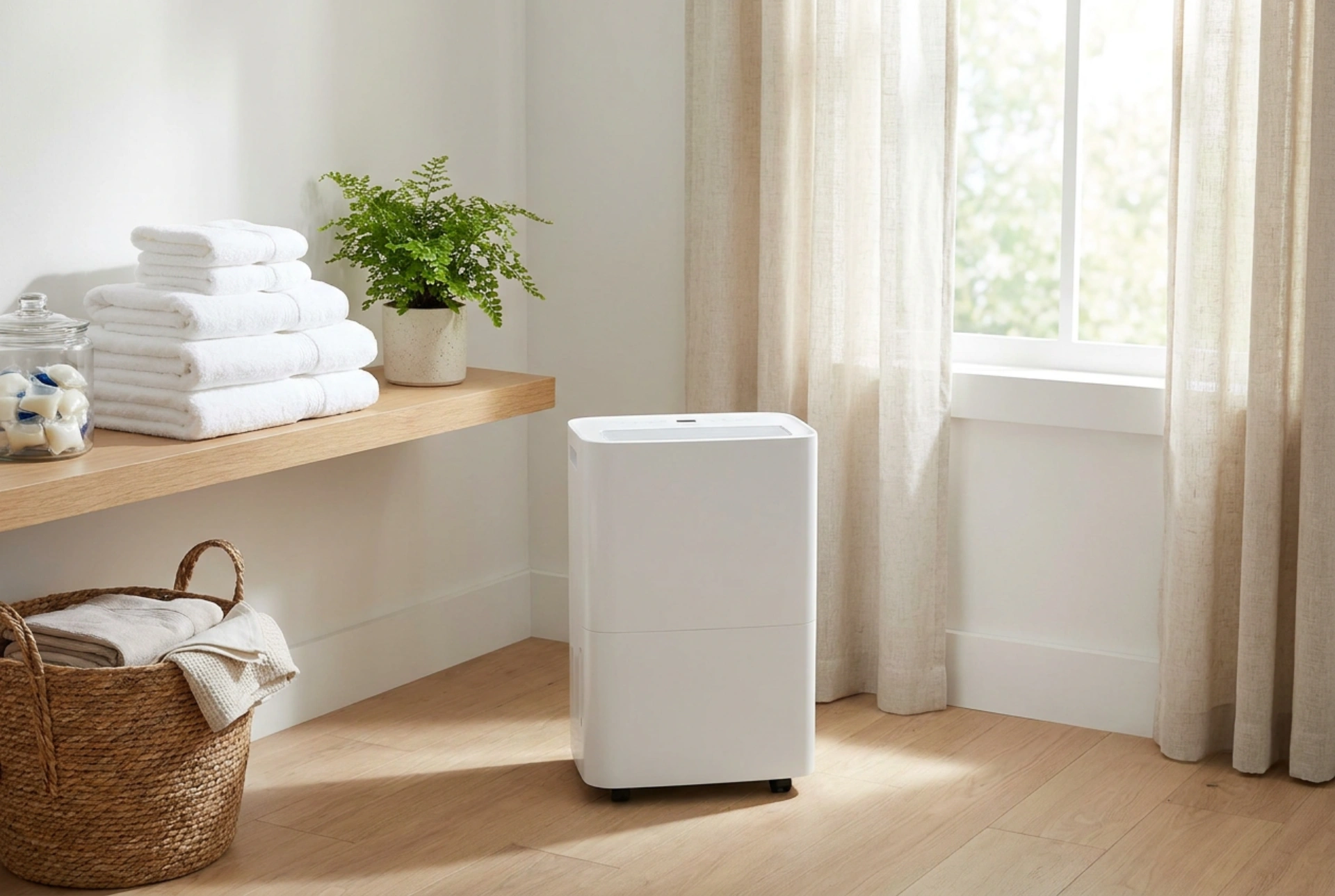
The physical location of your dehumidifier dictates its extraction efficiency. For the machine to work optimally, you must manage domestic airflow. When using it after washing or cooking, follow these placement guidelines:
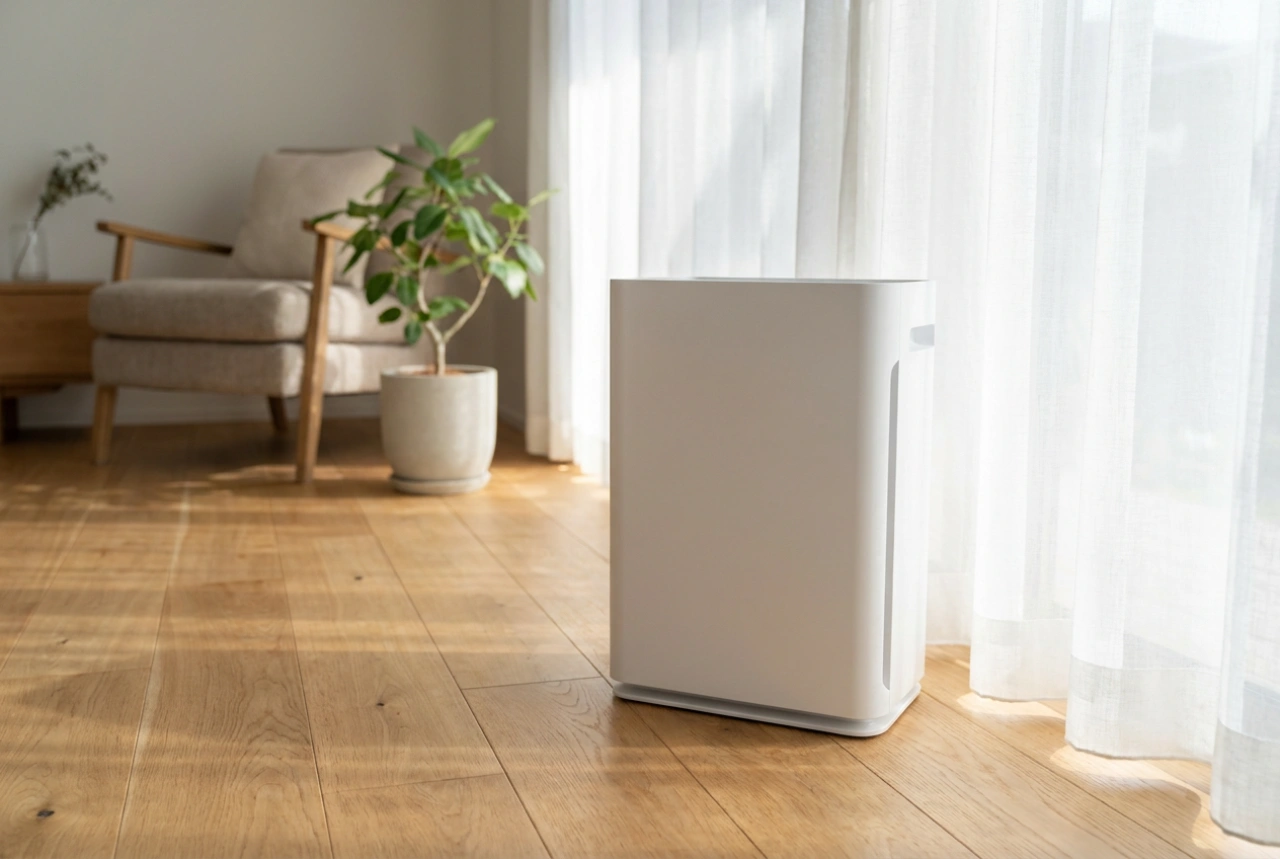
- Maintain clearance: Keep the unit at least 30 to 50 centimetres away from walls, furniture, and curtains. Most dehumidifiers use a rear or side intake and a top exhaust; restricting this airflow reduces the volume of air processed per hour.
- Enclose the target zone: If you are drying clothes in a specific room, close the doors and windows. Leaving them open forces the dehumidifier to attempt to dry the entire apartment—or worse, draw in humid outdoor air—rendering the process highly inefficient.
- Elevate for laundry: Since moist air from drying clothes rises slightly before cooling, placing the dehumidifier on a low platform or centering it directly beneath the drying rack maximizes moisture capture.
Matching Dehumidifier Settings to the Activity
Managing humidity is not just about turning the machine on; it requires setting the correct target relative humidity (RH) and operating mode. For general post-cooking or post-washing recovery, aim for a target RH of 45% to 50%. This range is low enough to prevent mold spore germination but high enough to avoid wasting electricity.
Most modern units feature a specialized "Laundry Mode". This setting runs the compressor continuously at its maximum fan speed to accelerate the evaporation rate of water from wet fabric fibers. Once the laundry is dry to the touch, manually switch the unit back to a standard humidistat-controlled mode (50%) to allow the compressor to cycle off. After cooking, running the dehumidifier for 45 to 60 minutes after turning off the stove is usually sufficient to capture the residual steam that escaped the extractor fan.
The Roles of Temperature and Machine Type
The ambient temperature of your apartment significantly influences how your dehumidifier performs. Compressor-based (refrigerant) dehumidifiers work by pulling air over an ultra-cold internal coil, causing moisture to condense and drip into a collection tank. These are highly efficient in warm rooms (above 20°C), making them ideal for kitchens after cooking.
In cooler laundry areas or during winter, if the room temperature drops below 15°C, compressor units can suffer from coil icing, which triggers a time-consuming defrost cycle. In these colder conditions, pairing the dehumidifier with a simple electric fan to circulate the air accelerates evaporation from the clothes, keeping the ambient air slightly warmer through convective heat transfer and ensuring the dehumidifier operates at peak thermodynamic efficiency.