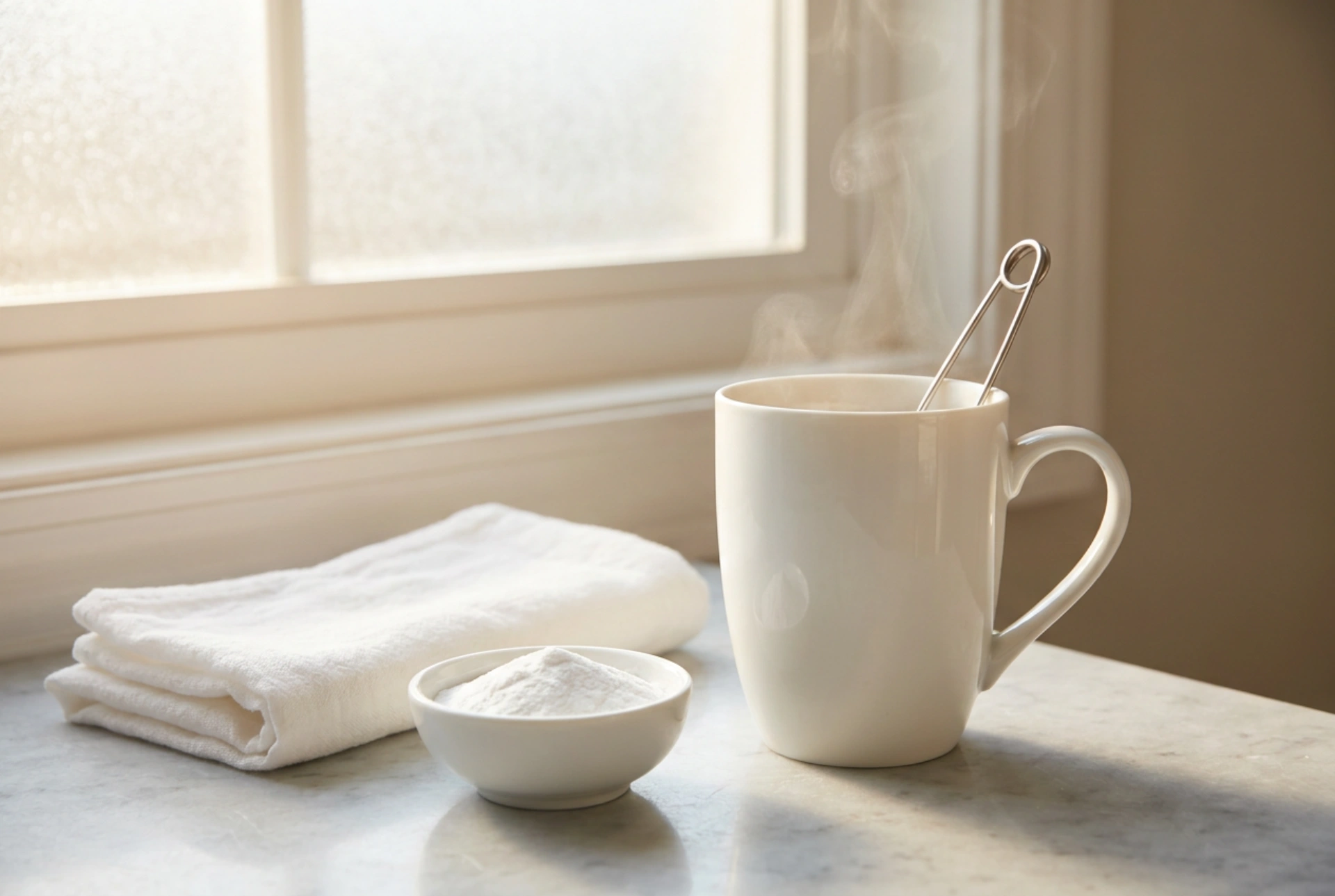


Removing stubborn tea stains from ceramic mugs and delicate ceramic infusers requires understanding the chemistry of tannins and mineral buildup rather than relying on aggressive scrubbing that can ruin the protective glaze.
The Chemistry Behind Tea Stains
Tea contains highly pigmenting organic compounds known as polyphenols, specifically tannins. When hot water extracts these compounds from tea leaves, they readily bond with the microscopic pores and imperfections on the surface of ceramic glazes. This staining process is accelerated by hard water. Calcium and magnesium ions present in tap water bind with the tannins, creating a resilient, insoluble organo-metallic film. This film acts like a microscopic glue, locking the dark pigments onto the ceramic walls of your mug and inside the tiny holes of your ceramic infuser. Over time, as more tea is brewed, these layers build up, forming a dense brown layer that is highly resistant to standard dishwashing detergents.
Method 1: Sodium Bicarbonate for Gentle Mechanical Friction
Sodium bicarbonate, commonly known as baking soda, is a highly effective, mildly alkaline compound that works on two distinct levels: chemical neutralization and gentle physical abrasion. Because the crystalline structure of baking soda is softer than ceramic glaze, it provides the necessary friction to dislodge the organic film without causing micro-scratches. Micro-scratches must be avoided at all costs, as they create larger recesses for future stains to settle in, making subsequent cleaning cycles increasingly difficult.
- Preparation: Mix three parts baking soda with one part warm water in a small container to form a thick, paste-like consistency. The paste should be damp but not runny to maintain its structural friction.
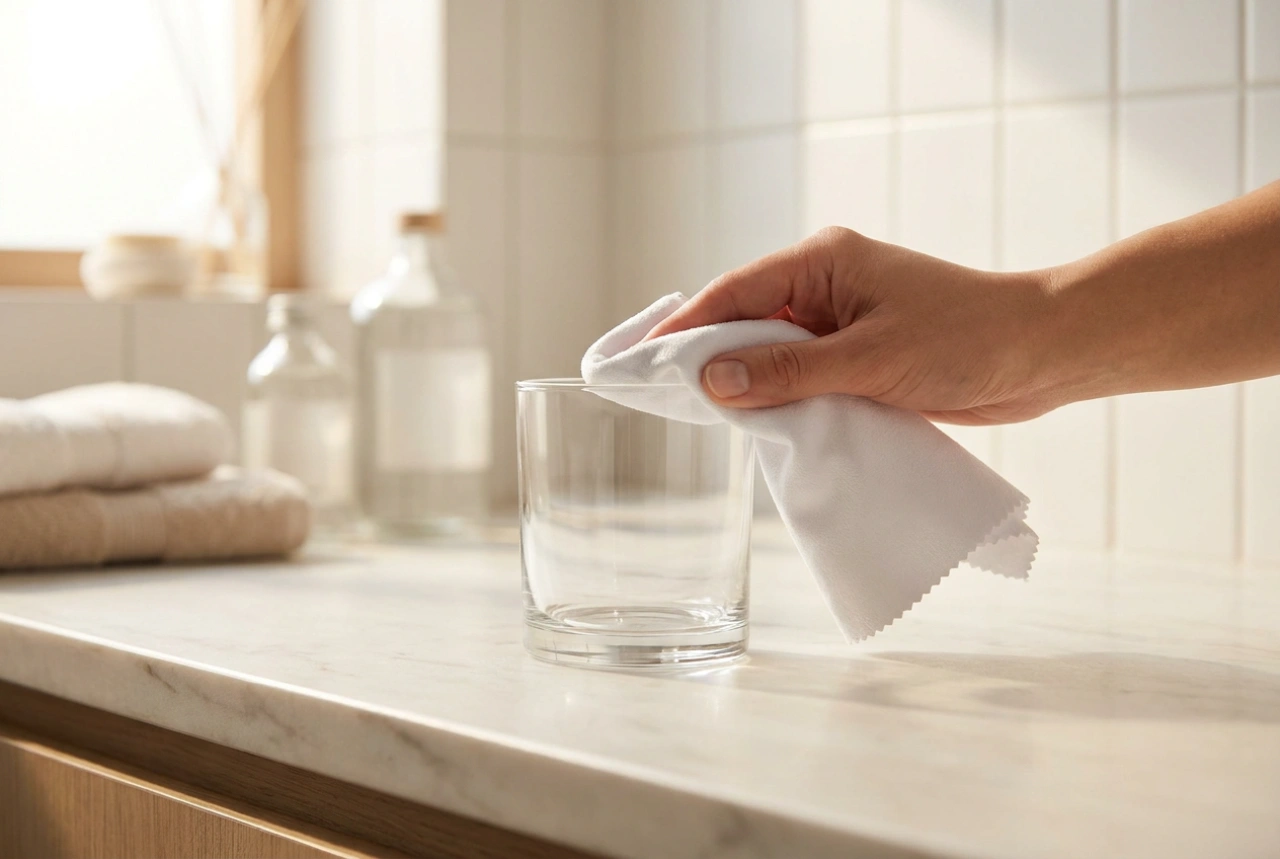
- Application: Apply the paste directly to a soft microfiber cloth or a non-scratch cellulose sponge. Rub the stained areas of the mug and the exterior of the ceramic infuser in gentle, circular motions, applying even, moderate pressure.
- Rinsing: Rinse the ceramic ware thoroughly with warm running water. The mild alkalinity of the baking soda helps break down the acidic tannin bonds, allowing them to dissolve and wash away cleanly.
Method 2: Sodium Percarbonate for Intricate Infuser Holes
Ceramic infusers present a unique cleaning challenge due to their perforated designs and hard-to-reach interior surfaces. Reaching inside the tiny filtration holes with a sponge or cloth is practically impossible, and forcing tools through them can crack the delicate ceramic structure. For these intricate areas, an oxidizing agent like sodium percarbonate (often sold as oxygen bleach) is the most efficient and hands-free solution.
When dissolved in hot water (ideally above 60 degrees Celsius), sodium percarbonate decomposes into hydrogen peroxide and sodium carbonate. The active oxygen released during this chemical reaction breaks the chemical bonds within the tannin molecules, effectively decolourising and decomposing the organic matter without any mechanical scrubbing. To execute this, place the ceramic infuser inside the mug, add one teaspoon of sodium percarbonate powder, and fill the mug with hot water. Allow the mixture to effervesce for 15 to 20 minutes. The active bubbling action helps physically dislodge loosened particles from the tiny perforations. Once the reaction subsides, rinse both items thoroughly under warm running water to remove all chemical residues.
Method 3: Dissolving the Mineral Binder with Citric Acid
When tea stains are bound to a stubborn layer of limescale, alkaline cleaning agents like baking soda may struggle to penetrate the surface. In this scenario, an organic acid like citric acid is required to dissolve the calcium carbonate matrix. Citric acid chelates the calcium ions, breaking down the mineral structure and releasing the trapped tea pigments that were bound within the scale.
To apply this method, fill the mug with hot water and stir in one tablespoon of anhydrous citric acid powder until completely dissolved. Submerge the ceramic infuser fully in this acidic solution. Let it sit undisturbed for 20 to 30 minutes. As the chemical reaction takes place, you will notice the limescale dissolving, taking the tea stains along with it. Wipe the surface gently with a soft sponge to remove any remaining loose film, and rinse thoroughly with clean water to neutralize any remaining acidity on the glaze.
Protecting Your Ceramic Ware from Future Stains
To prolong the lifespan of your ceramics and minimise future staining, always avoid harsh mechanical tools such as steel wool, wire brushes, or highly abrasive scouring pads. These tools wear down the protective silicate glaze, exposing the porous clay body underneath, which will then absorb stains permanently. Additionally, avoid exposing cold ceramic ware to boiling water instantly; rapid temperature changes can cause thermal shock, leading to micro-cracks in the glaze that harbor bacteria and stubborn pigments. Regular rinsing immediately after use is the simplest preventative measure to prevent tannins from polymerising on the ceramic surface.