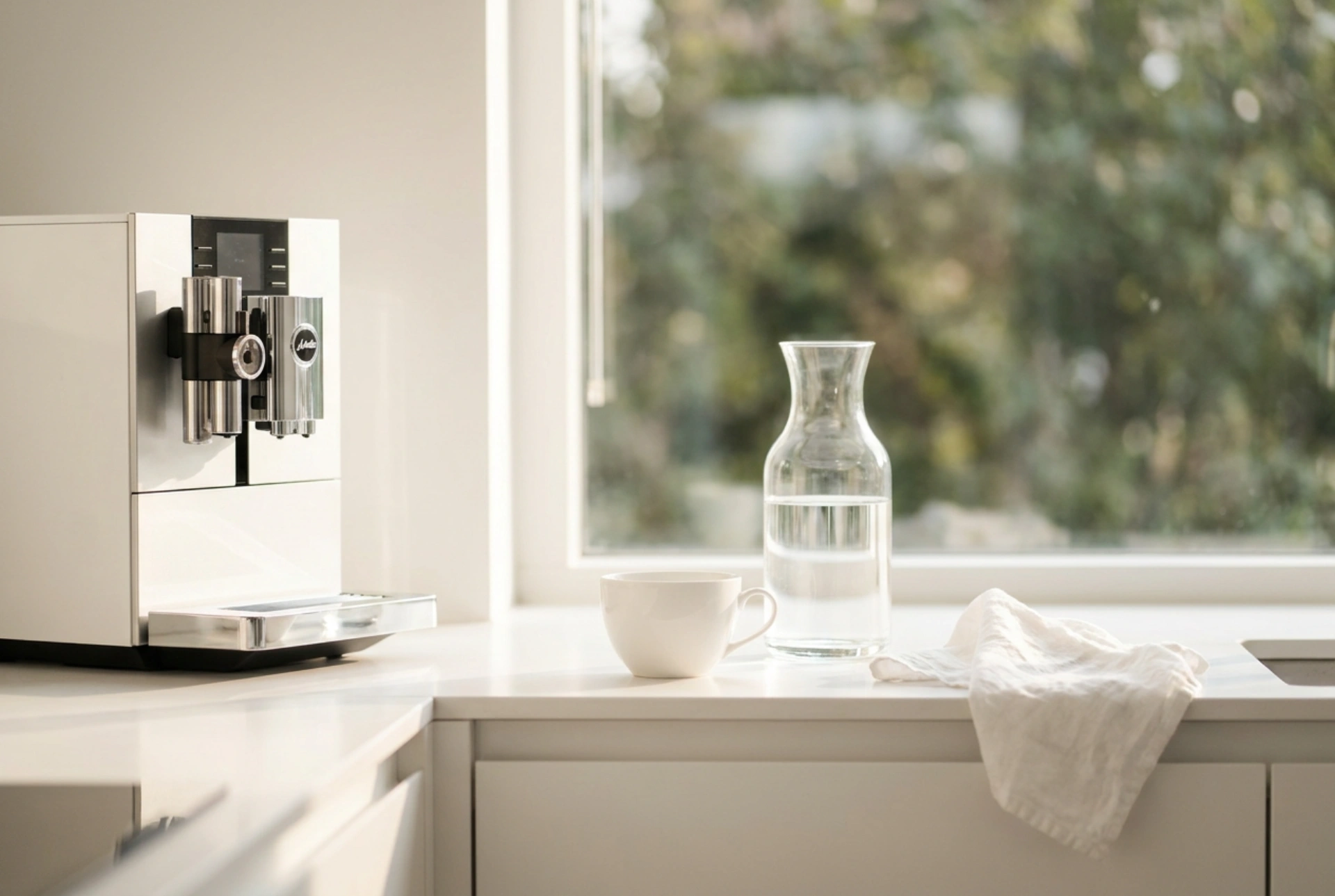


Coffee machine descaling requires a precise understanding of chemical reactions to safely dissolve mineral buildup without corroding delicate internal metals or degrading rubber seals. Implementing the correct acidic concentration, temperature, and flushing sequence is vital to maintain optimal thermal transfer and pressure within the brewing system.
The Chemistry of Scale and Metallic Vulnerability
Limescale is primarily composed of calcium carbonate (CaCO3), which precipitates out of water as it is heated inside the boiler. This crystalline structure acts as an insulator, reducing thermal efficiency and restricting the narrow water pathways. To dissolve this mineral crust, an acidic solution must be introduced to convert the insoluble calcium carbonate into soluble calcium salts, carbon dioxide, and water.
However, the internal components of a high-pressure espresso machine are made of diverse materials, including copper boilers, aluminium thermoblocks, brass fittings, and synthetic rubber gaskets (such as EPDM or silicone). Strong mineral acids can easily corrode these metals, particularly aluminium, which is highly reactive. Therefore, the choice of descaling agent must be carefully balanced. For instance, citric acid is highly effective and safe for copper and brass but can form insoluble calcium citrate precipitates if heated excessively in a highly concentrated solution. Sulfamic acid and lactic acid are highly favoured in professional maintenance because they dissolve scale rapidly at lower temperatures without leaving persistent residues or aggressively attacking the metal substrate. Understanding these chemical interactions prevents irreversible pitting of the boiler walls and preserves the structural integrity of the high-pressure circuit.
Why Domestic Remedies Pose a Risk to Internal Seals
While white vinegar (acetic acid) is often suggested as a domestic remedy, it is highly unsuitable for modern espresso machines. Acetic acid possesses a high volatility, meaning its strong, pungent aroma penetrates the porous surfaces of internal silicone seals and hoses, proving exceptionally difficult to rinse out. More importantly, acetic acid is highly aggressive towards copper and copper alloys, causing pitting corrosion that permanently weakens the boiler walls. It also degrades certain synthetic rubbers over time, leading to micro-leaks within the pressurized system where operating pressures can exceed 9 to 15 bars.
Furthermore, using highly concentrated homemade lemon juice mixtures introduces organic particles and sugars into the boiler. When subjected to temperatures exceeding 90 degrees Celsius, these organic residues can caramelise and bake onto the heating elements, creating a sticky carbon layer that is far harder to remove than standard limescale and can attract bacterial growth.
The Correct Descaling Protocol: Step-by-Step
To safely clear scale without clogging the delicate needle valves or the three-way solenoid valve, follow a structured chemical and physical flow protocol:
- Preparation and Dilution: Always dissolve solid descaling agents (like citric acid powder) completely in lukewarm water before pouring the solution into the water tank. Undissolved crystals can enter the system, causing immediate mechanical blockages in the fine mesh filters or flowmeters. A safe concentration is typically 20 to 25 grams of citric acid per litre of water.
- The Static Soaking Phase: Draw the acidic solution into the boiler until it emerges from the group head and steam wand, then turn off the heating element. Allow the solution to sit statically for 15 to 20 minutes. This static phase allows the acid to break down the surface of the scale without forcing loose, large flakes into the narrow group-head orifices.
- Controlled Flushing: Run the pump in short bursts (15 to 30 seconds) rather than continuous operation. This prevents the pump from overheating and helps flush out dissolved minerals progressively.
- Neutralisation and Rinsing: Flush the reservoir completely, wash it with clean water, and run at least two full reservoirs of pure water through both the brewing head and the steam wand. This step is critical to remove all residual acid, restoring the neutral pH of the system and protecting the internal surfaces from prolonged acidic exposure.
Maintaining Seal Integrity and Valve Function
During the descaling process, pay close attention to the group head gasket and the three-way solenoid valve. If the acid solution is left inside the machine for too long, or at temperatures exceeding 60 degrees Celsius, the chemical action can leach plasticizers from the rubber seals, making them brittle. Once brittle, they fail to seal under the high pressures required for extraction. Applying a thin film of food-grade silicone grease to accessible gaskets after descaling can significantly extend their operational lifespan and maintain a perfect hydraulic seal. Additionally, thorough rinsing ensures that no scale flakes lodge in the tiny orifice of the solenoid valve, which would otherwise prevent the valve from sealing completely, leading to constant dripping from the brew group.