

Combining air purification with fan-assisted circulation requires an understanding of indoor fluid dynamics to maximise the Clean Air Delivery Rate (CADR). Correct positioning, fan speed management, and filtration mechanics are essential to ensure the continuous extraction of airborne particulates and volatile organic compounds.
The Mechanics of Combined Air Purification and Circulation
To understand the utility of an air purifier with an integrated fan, one must look at how air moves within an enclosed space. Traditional purifiers rely on localised intake and exhaust, often creating a clean-air bubble around the device while stagnant air remains in the far corners of the room. By integrating a powerful fan, the device utilizes forced convection to project purified air further, establishing a continuous loop that draws unpurified air back toward the filtration inlet.
The filtration process itself relies on mechanical capture. As the fan draws air through the intake, the air passes through a pre-filter which traps larger debris such as hair and dust. The air then meets the high-efficiency particulate air (HEPA) filter. Within the HEPA matrix, particles are captured via three main physical mechanisms: inertial impaction (for larger particles that cannot navigate the fiber pathways), interception (where medium particles graze and adhere to fibers), and Brownian diffusion (where ultra-fine particles zig-zag randomly and collide with fibers). If the air velocity is too high, the residence time of air within secondary chemical filters, such as activated carbon, decreases, reducing the adsorption rate of gases and odours. Balancing fan speed is therefore a science of optimising volume turnover versus molecular contact time.
Strategic Placement: Exploiting Room Convection
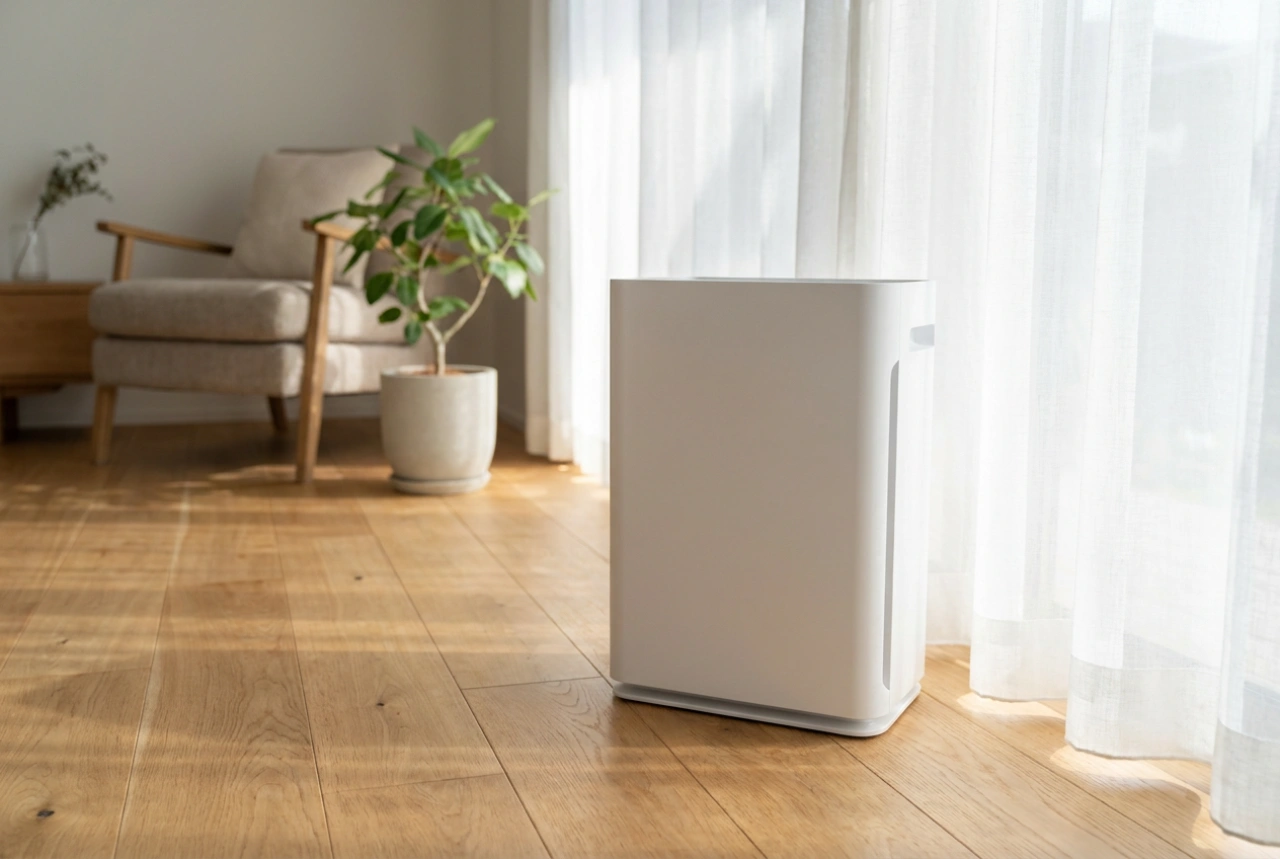
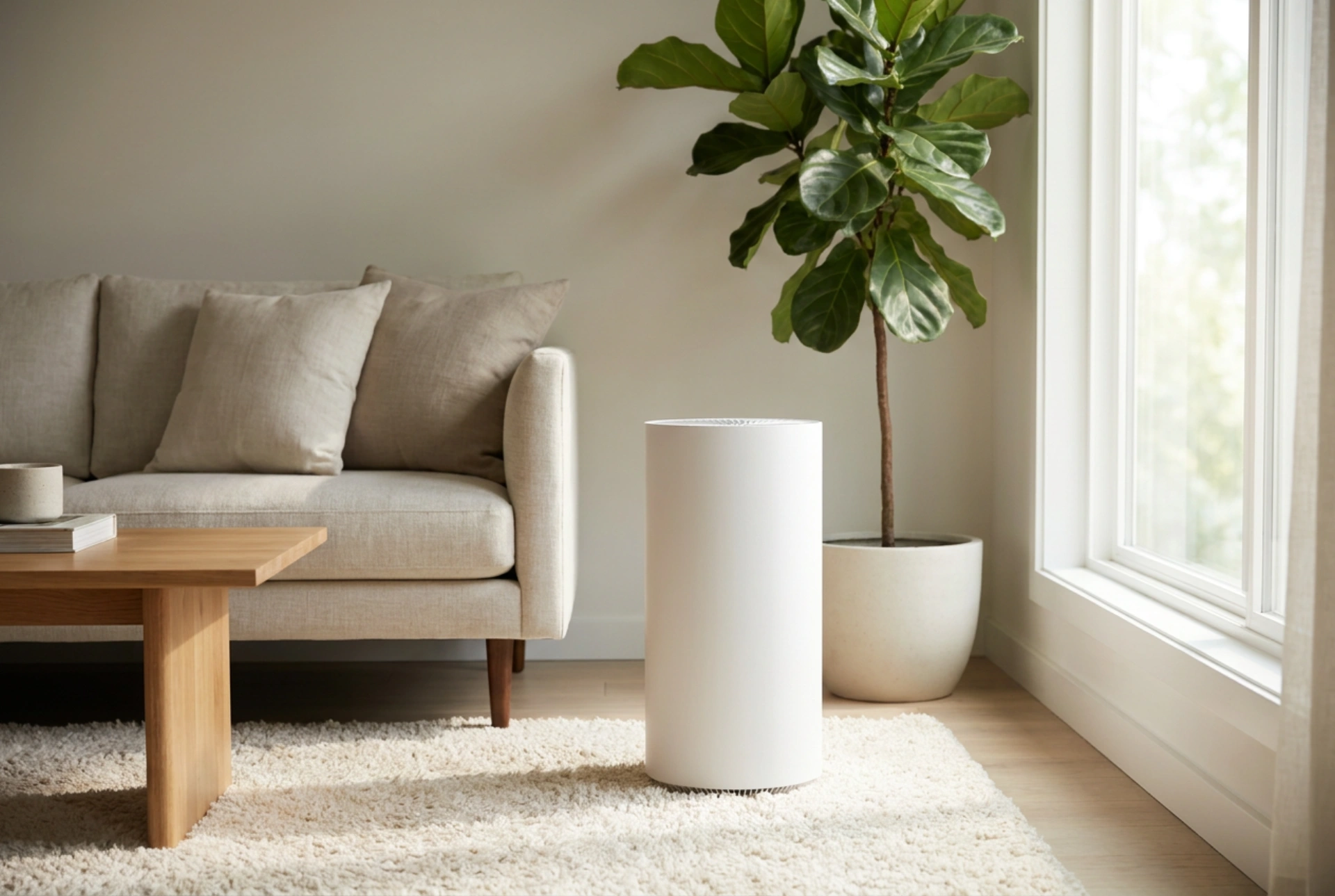
The efficiency of a fan-purifier is heavily dictated by its physical placement. Placing the unit in a corner or directly against a wall restricts the intake surface area and creates boundary layer effects that trap air. For optimal aerodynamic efficiency, maintain a clearance of at least 50 centimetres from all walls and furniture.
Furthermore, air movement is influenced by thermal convection. Warmer air rises while colder air sinks. If the goal is to distribute clean, cool air during summer, placing the unit near a window can help circulate fresh air, provided the window is closed to prevent outdoor pollutants from overwhelming the filters. Conversely, during winter, positioning the purifier near a heat source allows the fan to distribute warmed, filtered air more evenly throughout the room, breaking up thermal stratification.
Optimising Fan Speed and Contact Time
Operating an air purifier with a fan requires a tiered approach to speed settings. When first entering a room or after activities that generate particulates, such as cooking or dusting, the fan should be run at its highest setting for 15 to 30 minutes. This rapid volumetric turnover quickly lowers the particulate concentration.
Once the initial purification phase is complete, reducing the fan to a medium or low setting is highly beneficial. Lower speeds increase the contact time between the air and the activated carbon filter. Carbon filtration relies on physical adsorption, where gaseous pollutants adhere to the vast pore network of the carbon media. If the air moves too rapidly, these molecules bypass the adsorption sites, leaving VOCs and odours unresolved. A lower, steady fan speed maintains mechanical filtration while maximising chemical purification.
System Maintenance: Preventing Pressure Drops and Bypass
The performance of any fan-assisted purifier degrades as the filter media becomes loaded with debris. This loading increases static pressure within the unit, forcing the fan motor to work harder, which increases energy consumption and noise while reducing total airflow. Regularly cleaning the vacuum-safe pre-filter every two to four weeks prevents premature clogging of the primary HEPA filter.
It is also critical to inspect the structural seals around the filter cartridge. Air will always follow the path of least resistance. If the seals around the HEPA filter are compromised, the high pressure generated by the fan will force unpurified air around the edges of the filter rather than through it—a phenomenon known as filter bypass. Annually checking these gaskets and replacing filter media according to pressure-differential indicators ensures the system operates as designed.