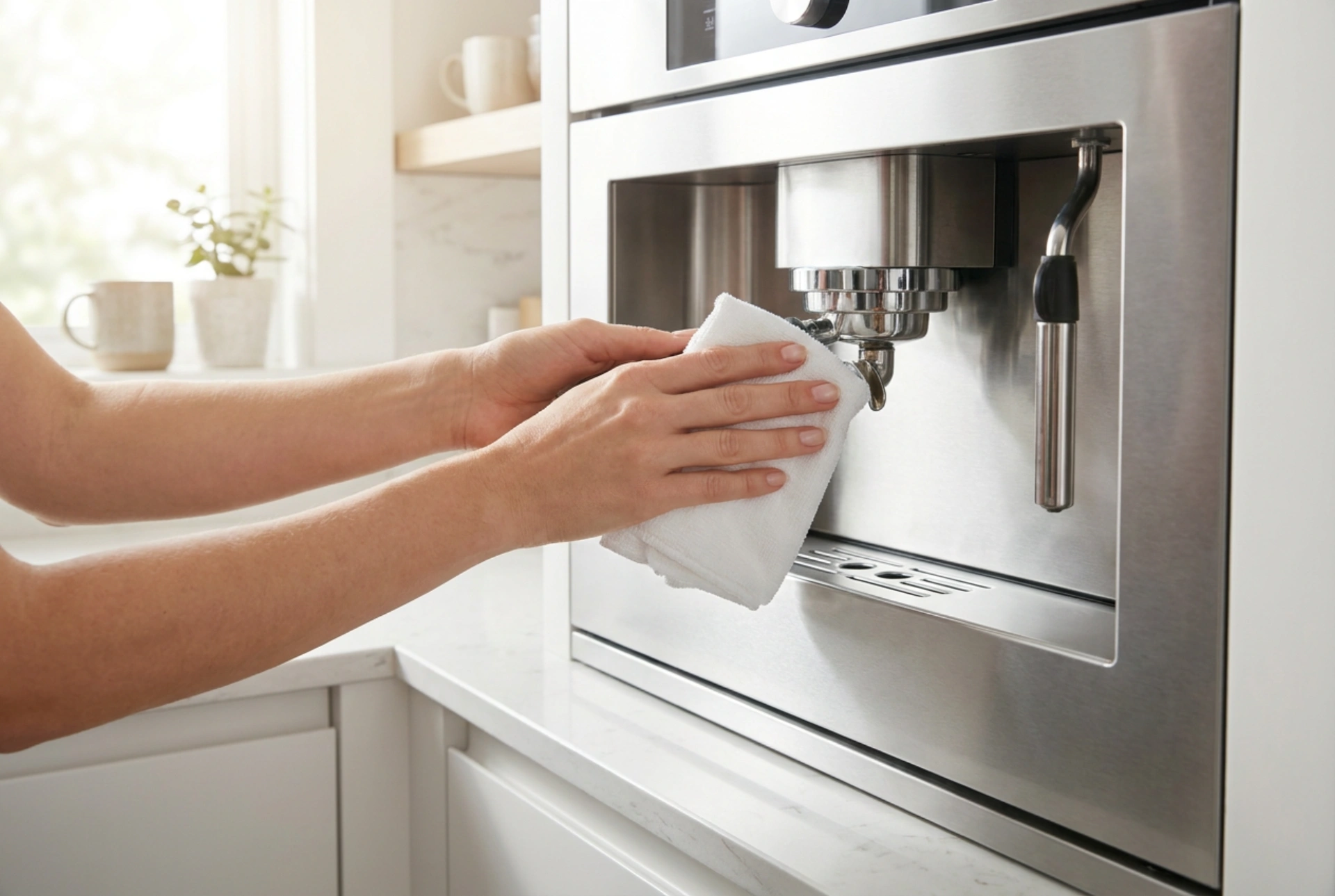


Built-in coffee machines operate in enclosed kitchen cabinetry where restricted airflow accelerates heat and moisture accumulation, creating a prime environment for mold, scale, and oil degradation. Maintaining these high-end appliances requires a precise understanding of material science, organic chemistry, and thermal mechanics to ensure optimal operation and longevity.
The Physics of the Enclosed Brewing Environment
Unlike freestanding appliances, a built-in coffee machine is integrated directly into kitchen cabinetry. This containment limits natural ventilation, meaning the residual heat and steam generated during brewing remain trapped within the housing unit. High humidity combined with elevated temperatures accelerates the oxidation of residual coffee oils and promotes microbial growth in the grounds container and drip tray.
To counteract this, proper ventilation pathways must remain unobstructed, and components must be thoroughly dried before being reinserted. Leaving moisture inside an enclosed space leads to atmospheric condensation on electronic control boards, potentially causing micro-corrosion over time. Always allow the interior chamber of the cabinet to air out for at least thirty minutes after pulling out the brewing unit for cleaning.
De-scaling: The Chemistry of Mineral Removal
As water is heated inside the machine's thermoblock, soluble calcium and magnesium bicarbonates decompose, precipitating as insoluble calcium carbonate—commonly known as limescale. This scale acts as a thermal insulator on heating elements, forcing the machine to consume more energy and causing inconsistent brewing temperatures that ruin extraction.
Removing these deposits requires an acidic agent to dissolve the calcium carbonate into water-soluble salts. While household vinegar contains acetic acid, it should never be used in a built-in machine; acetic acid is highly corrosive to copper pipes, brass fittings, and elastomeric rubber seals. Instead, use lactic acid or citric acid formulations. Lactic acid is highly effective as it gently dissolves scale without degrading synthetic gaskets, maintaining the integrity of high-pressure water lines.
Degreasing the Brew Group and Dissolving Coffee Lipids
Coffee beans contain natural lipids (oils) that are extracted under high pressure. These oils deposit themselves on the metal mesh screens, the brewing chamber, and the exit spouts. Over time, these lipids oxidize, turn rancid, and form a sticky, polymerised varnish that alters the taste of the coffee and restricts water flow.
Water alone cannot dissolve these hydrophobic oils. To break them down, use specialty cleaning tablets containing sodium percarbonate (oxygen-based bleaching agents) or mild alkaline surfactants. When dissolved in hot water, these agents release active oxygen, which chemically breaks the ester bonds of the polymerized oils, converting them into water-soluble compounds that can be easily flushed out. For machines with removable brew groups, extract the unit weekly, rinse it under lukewarm water, and lubricate the moving joints with food-grade silicone grease.
Milk Fluid Dynamics and Protein Breakdown
Milk residue poses a dual threat: microbial contamination and physical blockage. Milk consists of proteins (primarily casein), fats, and sugars (lactose). When heated to create foam, these proteins denature, forming a stubborn, insoluble film inside the narrow milk frothing tubes.
Standard detergents are ineffective against denatured proteins. An alkaline cleaner is required to hydrolyze the proteins, breaking them down into peptides, while emulsifying the fats. This process must be followed by an acidic rinse to dissolve "milk stone"—a crystalline deposit of calcium phosphate that forms when milk is heated. Never let milk sit in the lines; purge the steam wand and run the automatic milk rinse cycle immediately after every use.