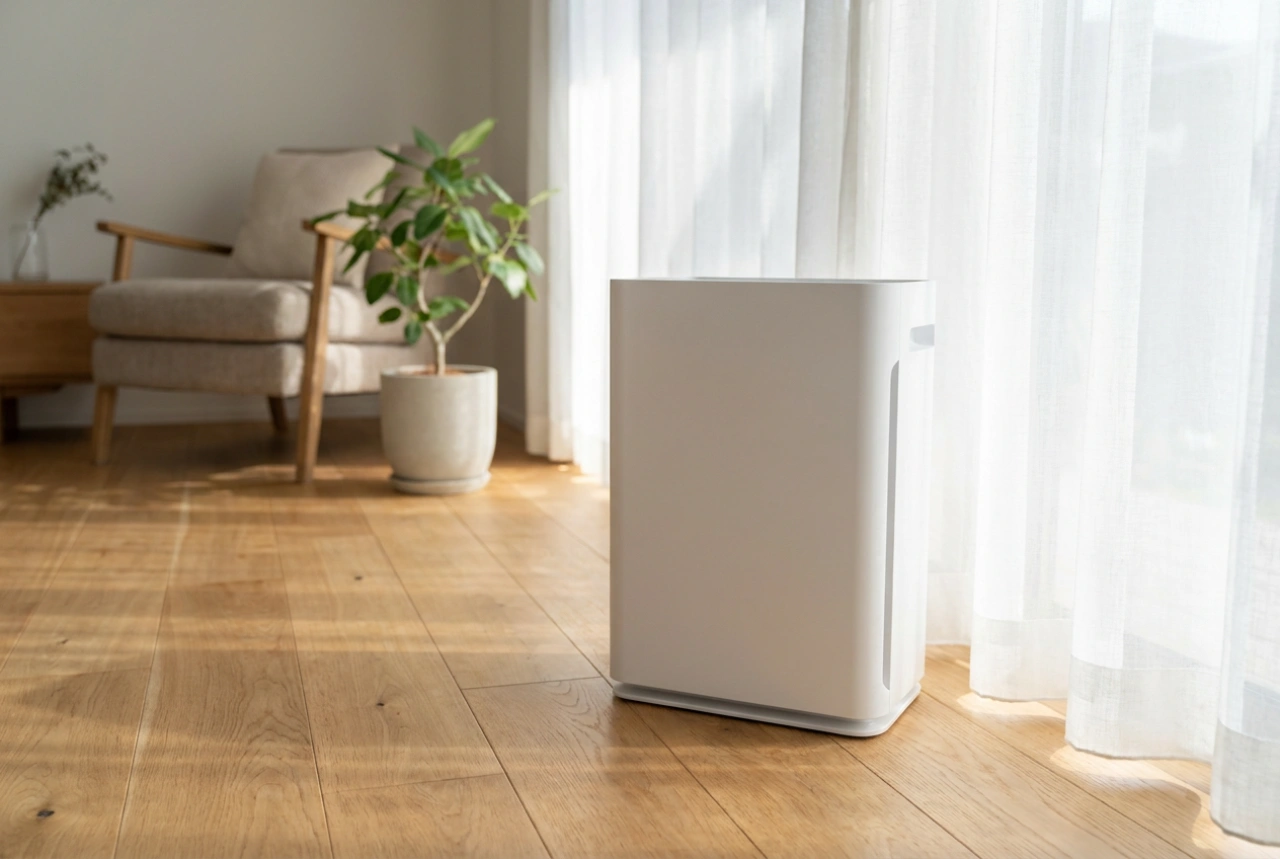


Maintaining clean indoor air is crucial for allergy sufferers, but an air purifier is only as effective as the physical and chemical state of its filtration media. Understanding how these filters capture microscopic allergens and why they eventually fail ensures your home remains a safe haven from pollen, dust mites, and pet dander.
The Physics of HEPA Filtration
High-Efficiency Particulate Air (HEPA) filters do not behave like simple kitchen sieves. While a sieve only stops particles larger than its openings, HEPA filters utilise three distinct physical mechanisms to trap particles down to 0.3 micrometres with 99.97% efficiency. Understanding these principles helps explain why maintaining filter integrity is so vital.
- Interception: This occurs when larger particles, following the airflow path line, come within one particle radius of a filter fibre and adhere to it physically.
- Inertial Impaction: Larger, heavier particles cannot navigate the tortuous paths through the dense glass microfibre matrix. Their inertia forces them to continue in a straight line, colliding directly with the fibres where they become lodged.
- Diffusion: This mechanism governs the smallest particles (under 0.1 micrometres). These tiny particles collide with gas molecules in the air, causing them to move erratically in a process known as Brownian motion. This chaotic movement increases the probability that they will contact and adhere to a fibre.
Because these mechanisms rely on clean, unobstructed fibres, a heavily loaded filter begins to lose its efficiency, reducing the overall air exchange rate in the room.
The Chemistry of Gas and Odour Removal
While HEPA filters capture solid particulates, they are entirely ineffective against gaseous pollutants, volatile organic compounds (VOCs), and airborne chemical irritants. To combat these, air purifiers utilise activated carbon filters. The science behind this is adsorption, a chemical process distinct from absorption.
In absorption, a fluid permeates a liquid or solid completely. In adsorption, however, gas molecules adhere only to the surface of the activated carbon. The carbon is treated with oxygen to open up millions of microscopic pores between the carbon atoms, vastly increasing its surface area. A single gram of activated carbon can have a surface area exceeding 3,000 square metres.
Gaseous allergens and VOCs are held within these pores by weak intermolecular attractions known as van der Waals forces. Once these microscopic pores are completely filled, the carbon filter reaches its saturation point. At this stage, it can no longer trap chemical pollutants, and in some temperature-variable conditions, it may even begin releasing desorbed gases back into the living space.
The Biological Risks of Filter Saturation
For allergy sufferers, a neglected filter is more than just inefficient; it can become an active source of airborne allergens. The particles captured by a HEPA filter—such as pollen, skin flakes, mould spores, and organic dust—provide an ideal organic substrate for biological growth.
When combined with the natural humidity present in household air, these trapped organic materials can host bacterial colonies and mould spores. Over time, mould can grow through the filter medium, releasing new spores directly into the clean airstream. Furthermore, as the filter becomes clogged, the resistance to airflow (known as pressure drop) increases significantly. This forces the purifier’s motor to work harder, generating excess heat, consuming more energy, and potentially allowing unfiltered air to bypass the seal around the filter edges.
A Safe and Effective Filter Replacement Protocol
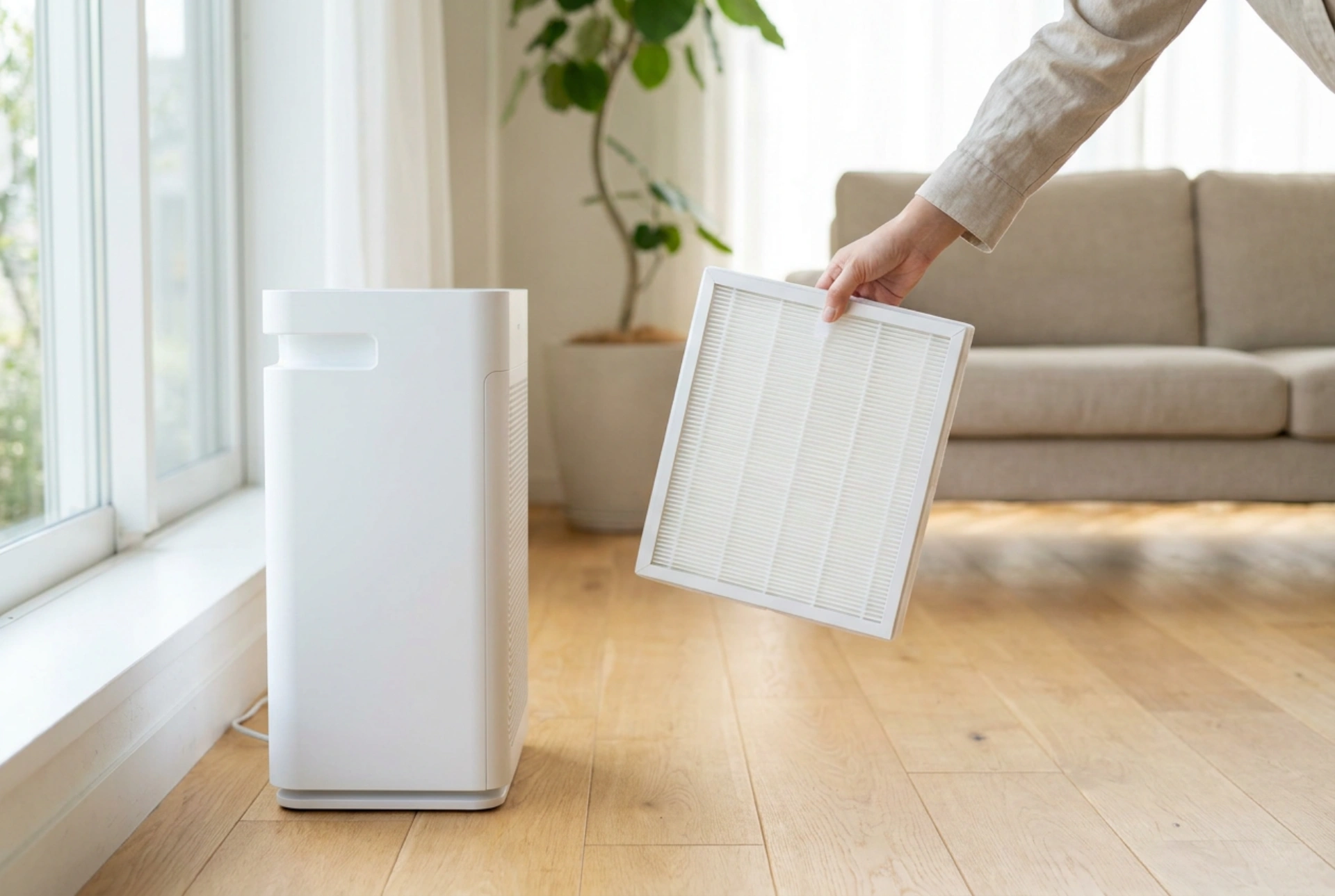
Replacing a saturated filter must be done with precision to prevent the reintroduction of concentrated allergens back into the indoor environment. Follow this systematic order of operations to ensure clean, safe handling:
- Power Down: Always unplug the appliance to eliminate any electrical currents and immediately halt the active airflow.
- Personal Protection: Wear a high-quality particulate mask and non-porous gloves. Handling a loaded filter can disturb settled allergens, causing immediate respiratory irritation.
- Immediate Containment: Place a heavy-duty plastic bag directly over the filter housing before sliding the old filter out. Slide the dirty filter straight into the bag and seal it tightly inside the room where the purifier is located.
- Seal and Clean: Wipe down the internal plastic housing of the purifier with a damp, lint-free cloth to capture any loose particles that escaped the filter edges. Allow the housing to dry completely before installing the fresh filter.
By executing this process every six to twelve months—depending on indoor air quality and usage patterns—you preserve the physical seals and optimal pressure mechanics of your device, ensuring continuous, medical-grade air filtration.