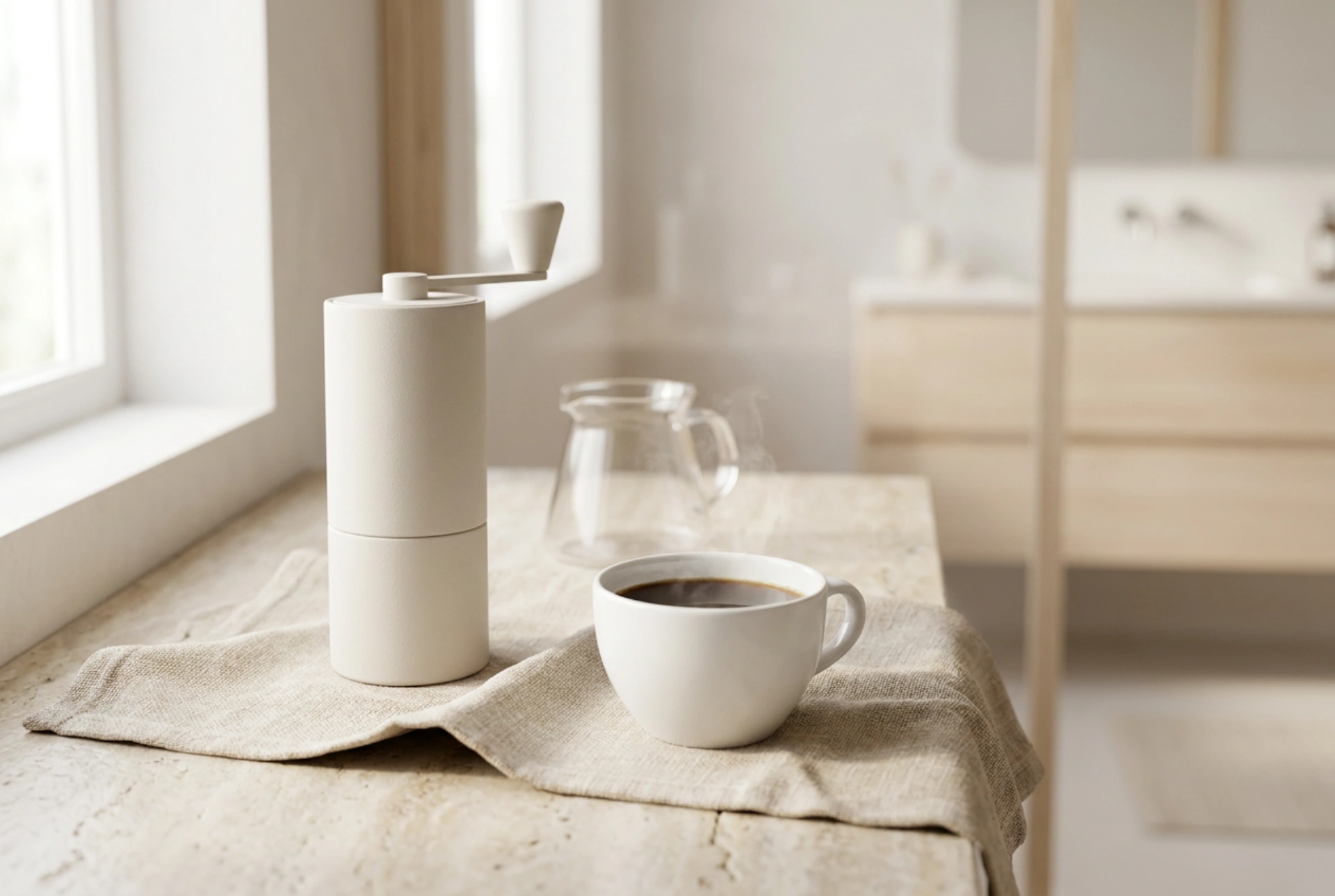


Maintaining a coffee grinder is essential for preserving the true flavour profile of your daily brew, but the choice between ceramic and steel burrs dictates your entire cleaning routine. Understanding the material science behind how these surfaces interact with coffee oils and static electricity reveals which option requires less effort to keep pristine.
The Physics of Coffee Grinding and Oil Accumulation
Every coffee bean contains delicate lipids—natural oils that carry the aromatic compounds we enjoy. During the grinding process, the mechanical pressure and friction generate heat, forcing these oils to the surface of the coffee particles. As these oils coat the grinding burrs, they act as a binder for microscopic coffee dust (fines), creating a sticky, stubborn film. If left untreated, these lipids oxidize when exposed to air, turning rancid and ruining the taste of subsequent brews.
The ease with which you can remove this layer depends entirely on the surface roughness and thermal properties of the burr material. Steel and ceramic handle these forces in fundamentally different ways, affecting both the rate of buildup and the difficulty of its removal.
Ceramic Burrs: Porosity and Static Properties
Ceramic burrs are manufactured through sintering, a process that bonds material at high temperatures. While extremely hard and resistant to wear, ceramic surfaces possess a micro-porous structure on a microscopic level. This slight porosity gives coffee oils a textured surface to cling to, making manual removal of rancid fats slightly more challenging over time.
The Advantage of Water Resistance
One major benefit of ceramic is its complete chemical inertness to water. Unlike steel, ceramic burrs will never rust. This means you can wash disassembled ceramic burrs directly under warm running water, using a mild grease-cutting detergent to emulsify and wash away oxidized oils. However, this advantage comes with a caveat: ceramic absorbs thermal energy slowly but retains it, and if washed, the components must be left to air-dry completely for hours to prevent moisture from transferring to the metal axle or adjustment mechanisms of the grinder.
Lower Static Electricity
Ceramic is a poor electrical conductor, which naturally reduces the buildup of static electricity during grinding. Less static means fewer coffee fines cling to the burr chamber, resulting in a cleaner environment that requires less frequent deep brushing compared to its metal counterpart.
Steel Burrs: Smoothness, Oxidation, and Oil Release
Steel burrs, typically machined from hardened stainless steel or carbon steel, feature an incredibly smooth, non-porous surface. On a microscopic scale, the roughness average of polished steel is significantly lower than that of ceramic, meaning coffee oils have fewer microscopic crevices to grip.
The Threat of Oxidation
While steel is highly resistant to oil adhesion, it is incredibly vulnerable to moisture. Even high-grade stainless steel burrs can rust or lose their razor-sharp edges if exposed to water or humid cleaning environments. Therefore, washing steel burrs with water is strictly prohibited. Cleaning must be carried out using dry methods, such as specialized stiff brushes, compressed air, or neutral-solvent cleaning tablets made of gluten-free grains that absorb oils as they pass through the grind chamber.
Precision Cleaning and Static Cling
Because steel conducts electricity, friction creates a higher static charge during grinding. This causes fine coffee dust to cling stubbornly to the steel surfaces and the surrounding chamber. However, because the steel surface is so smooth, a quick sweep with a stiff natural-fibre brush easily dislodges these particles, making routine dry maintenance exceptionally fast.
Comparative Cleaning Protocols: Step-by-Step
To maximize the lifespan and performance of your grinder, follow these tailored cleaning methodologies based on your burr material:
Ceramic Burr Wet Cleaning Protocol
- Disassemble the grinder according to the manufacturer's mechanical diagram, isolating the ceramic parts from any steel springs, washers, or shafts.
- Submerge the ceramic burrs in warm water mixed with a small amount of neutral, fragrance-free dishwashing liquid to break down the lipid barrier.
- Scrub gently with a nylon-bristled brush to clear the cutting teeth.
- Rinse thoroughly with clean water to remove all soap residue.
- Dry with a lint-free cloth and allow to air-dry completely in a warm, dry area for at least four hours before reassembly.
Steel Burr Dry Cleaning Protocol
- Disassemble the grinder to expose the burr set. Do not allow any water near the components.
- Use a stiff, narrow brush to sweep away compacted coffee fines from the crevices of the cutting geometry.
- Blow out remaining microscopic dust using a manual air blower or a can of clean, dry compressed air.
- Wipe the faces of the burrs with a completely dry microfiber cloth to absorb surface oils.
- Reassemble and run a small handful of sacrificial coffee beans through the system to purge any loosened debris.
The Verdict: Which Is Truly Easier to Clean?
For the average user, steel burrs are significantly easier and faster to clean on a daily basis. The lack of surface porosity prevents deep oil penetration, allowing you to maintain optimal performance solely with dry brushing and occasional cleaning tablets. Ceramic burrs, while offering the convenience of water-washing, require careful disassembly to avoid cracking the brittle material and demand lengthy drying times that interrupt your coffee-brewing routine.