

Creating your own dishwasher tablets requires a precise balance of active chemical compounds that can break down grease and dissolve starch without leaving a cloudy film on your glassware. The secret to durable, highly effective homemade tablets lies not only in the ratio of ingredients but also in the crucial curing process that prevents premature chemical reactions.
The Chemistry of Effective Dishwashing Ingredients
To formulate a tablet that performs as well as commercial alternatives, you must understand the role of each component. Standard formulas rely on three main pillars: water softeners, alkaline cleaning agents, and oxygen-based bleaching agents. When combined correctly, these dry ingredients target different types of food residue.
- Sodium Carbonate (Washing Soda): This is your primary alkaline builder. It raises the pH of the wash water, which saponifies fats and oils, turning stubborn grease into water-soluble soaps that easily rinse away.
- Sodium Bicarbonate (Baking Soda): A milder alkali that acts as a buffer, maintaining stable pH levels during the cycle, while providing gentle physical abrasion to scrub away dried-on starches.
- Citric Acid: This works as a chelating agent. It binds to calcium and magnesium ions in hard water, preventing them from depositing on your dishes as white limescale. It also helps neutralise alkaline residues in the final rinse.
- Sodium Percarbonate (Oxygen Bleach): When exposed to hot water (above 60°C), this compound releases active oxygen, which oxidises and breaks down organic pigments like tea, coffee, and fruit stains.
Managing the Effervescent Reaction During Mixing
The most common failure point in making DIY dishwasher tablets is the premature reaction between citric acid and sodium bicarbonate. When these two substances meet water, they undergo an acid-base reaction, releasing carbon dioxide gas (fizzing). If this reaction occurs while you are mixing the ingredients, the tablets will lose their gas, swell up, and ultimately crumble once dry.
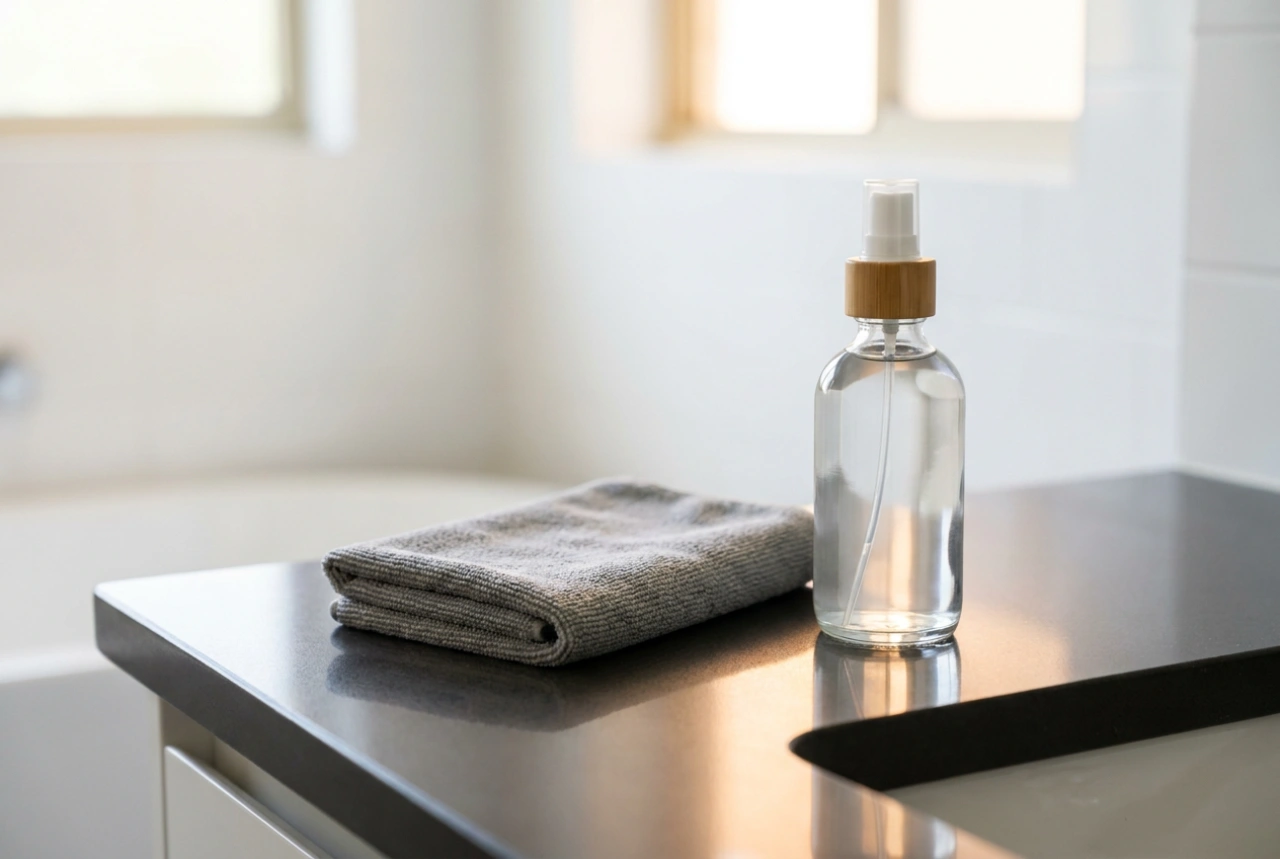
To prevent this, you must limit the moisture content during the binding phase. Instead of water, use high-purity isopropyl alcohol (rubbing alcohol) as the dampening agent. Isopropyl alcohol does not trigger the acid-base reaction because it lacks the free water molecules needed to ionise the acid and base. Alternatively, if you must use water, apply it using a fine mist spray bottle, adding only a few drops at a time while vigorously stirring the dry mixture. The mixture should feel like damp sand—holding its shape when squeezed in your hand, but not wet to the touch.
The Controlled Curing Process for Ultimate Durability
Once pressed firmly into silicone moulds, the tablets must undergo a specific drying process to lock their structure in place. Simply leaving them on a countertop often exposes them to atmospheric humidity, which slowly triggers the effervescent reaction, causing the tablets to expand and weaken over several hours.
The optimal method to cure the tablets involves a low-temperature, dry environment. Place the filled silicone moulds into an oven preheated to 50°C, then immediately turn the oven off. The residual, dry heat accelerates the evaporation of any solvent (like alcohol or minimal water) without reaching the thermal decomposition point of the sodium percarbonate or activating the citric acid. Leave the moulds in the closed oven for four to six hours.
Alternatively, if you prefer air-drying, place the moulds inside a sealed container alongside a desiccant, such as silica gel packets or a small bowl of dry rice. This creates a microclimate with near-zero humidity, forcing the moisture out of the tablets without allowing atmospheric water vapour to trigger the internal chemical reactions. Keep them in this dry environment for at least 24 hours until they are completely rock-hard.
Proper Storage to Prevent Degradation
Even after a perfect cure, homemade dishwasher tablets remain highly hygroscopic, meaning they will actively absorb moisture from the surrounding air. In a humid kitchen environment, unprotected tablets will soften, lose their structural integrity, and degrade in cleaning efficiency.
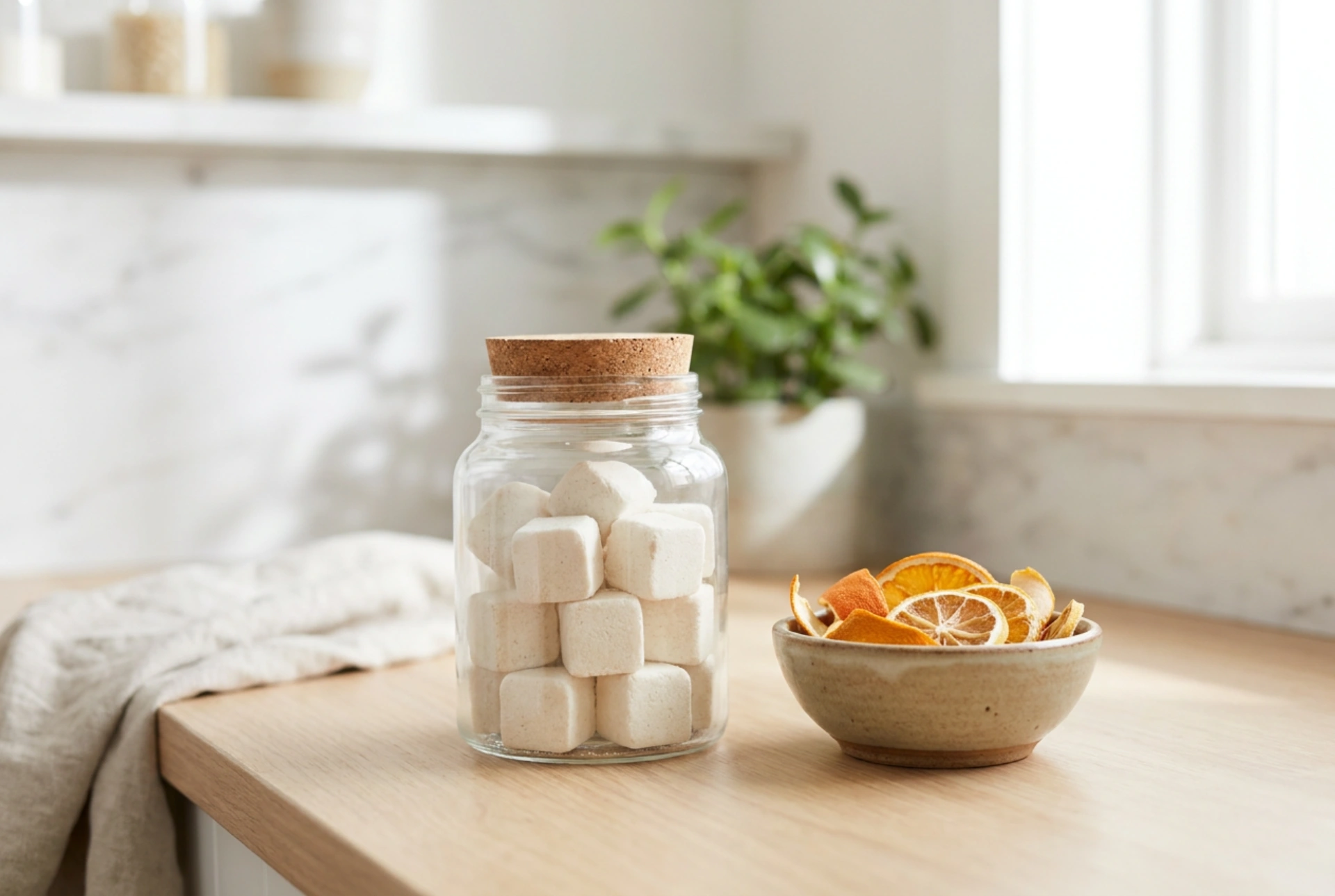
Store the completely dried tablets in an airtight glass jar fitted with a rubber gasket. To ensure absolute dryness, place one or two food-safe silica gel packs at the bottom of the jar. This setup guarantees that your tablets remain solid and ready to dissolve only when exposed to the high heat and high-volume water flow of your dishwasher's wash cycle.