

For individuals living with asthma, indoor air quality directly dictates daily comfort and respiratory health. High-efficiency air purifiers mitigate the risk of asthma flare-ups by physically removing microscopic irritants from the breathing zone through advanced filtration mechanisms.
The Physics of Particle Capture: How HEPA Filters Work
Mechanical air filtration relies on High-Efficiency Particulate Air (HEPA) filters, which are engineered to capture at least 99.97% of airborne particles as small as 0.3 micrometres. This specific size is known as the Most Penetrating Particle Size (MPPS), representing the hardest particles to trap. To understand how these filters support asthma management, one must look at the four distinct physical principles they employ:
- Inertial Impaction: Larger particles, such as heavy pollen grains and dense dust mite debris, possess too much inertia to follow the curving streamlines of the airflow around the filter fibres. Instead, they crash directly into the fibres and become trapped.
- Interception: Mid-sized particles follow the airstream closely but pass near enough to a filter fibre that their physical edge comes into contact with it, adhering due to molecular forces.
- Diffusion: The smallest particles, measuring under 0.1 micrometres (such as smoke particles and ultra-fine dust), do not travel along smooth air currents. Instead, they are bombarded by surrounding gas molecules, causing them to move in an erratic, zigzag path known as Brownian motion. This chaotic movement increases the probability that they will collide with and stick to a filter fibre.
- Electrostatic Attraction: Some advanced filters carry a permanent electrostatic charge that pulls oppositely charged particles out of the air stream, securing them within the filter matrix without restricting airflow.
Neutralising Gas-Phase Irritants: The Role of Activated Carbon
While HEPA filters excel at capturing solid particles, they cannot trap gases, odours, or volatile organic compounds (VOCs) like household cleaning fumes, formaldehyde, or cooking by-products, which are potent asthma triggers. For these gaseous irritants, activated carbon filtration is required.
Activated carbon undergoes a physical preparation process—typically thermal activation using steam or carbon dioxide—which creates a vast network of microscopic pores. This process dramatically increases the surface area of the carbon; a single gram can have a surface area exceeding 1,000 square metres. Gaseous molecules are captured via adsorption, a physical process where gas molecules adhere to the internal pore walls of the carbon matrix through van der Waals forces, effectively locking the chemical irritants away from the indoor air supply.
Fluid Dynamics and Strategic Purifier Placement
The efficacy of an air purifier depends heavily on fluid dynamics within the room. To maintain a low concentration of asthma triggers, the volume of clean air delivered must exceed the rate at which pollutants enter or settle. This is measured as the Clean Air Delivery Rate (CADR).
To optimise airflow patterns and ensure efficient air exchange, consider the following mechanical rules of thumb:
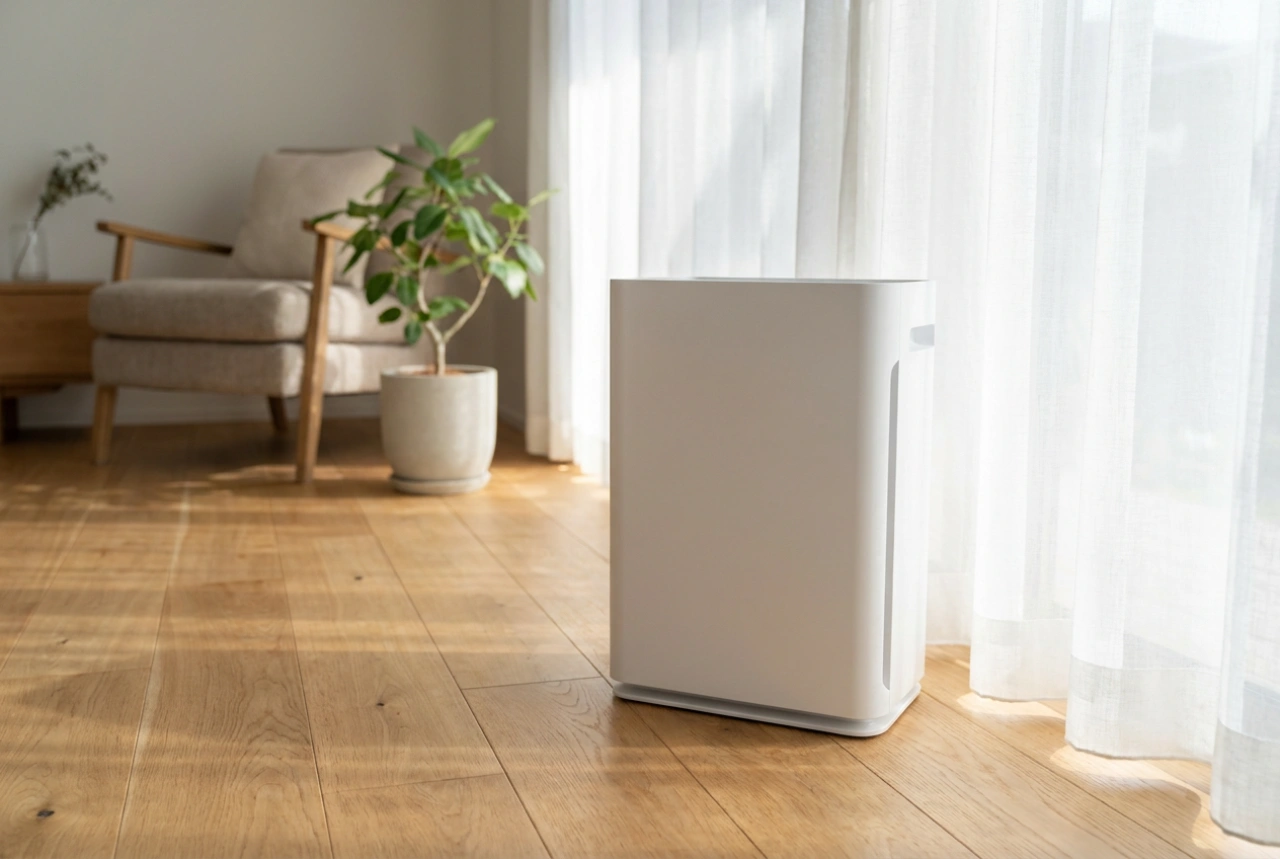
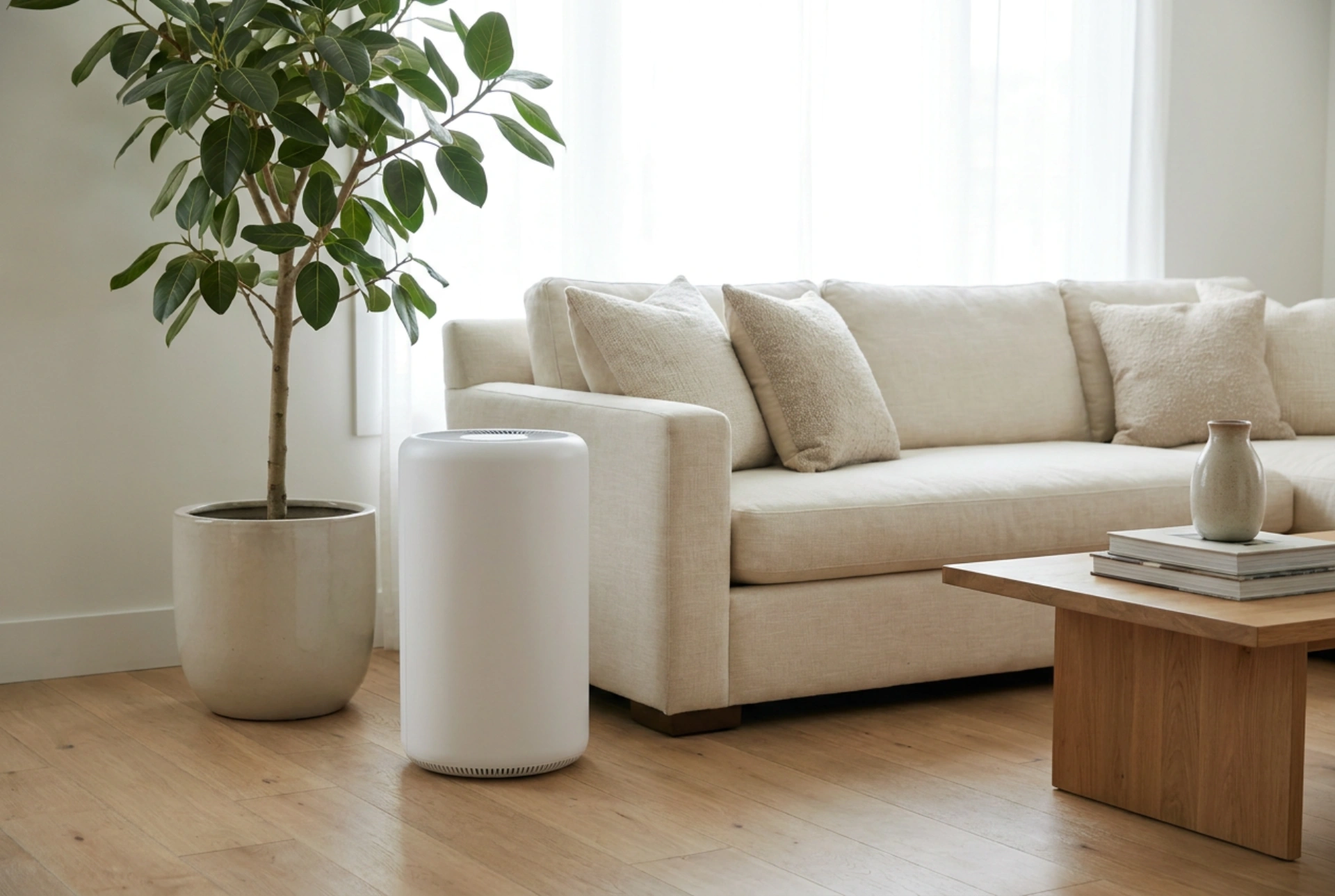
- Avoid Obstructions: Position the device at least 30 to 50 centimetres away from walls, heavy drapes, or large furniture. Obstructing the intake or exhaust grilles disrupts the circular convection currents necessary to draw polluted air from across the entire room.
- Elevate for Fine Dust: Placing the purifier on a slightly elevated surface, such as a low table, can optimise the capture of lighter, suspended aerosols, whereas floor placement is better suited for heavier dust particles that settle quickly.
- Close Windows During Operation: Running a purifier with windows wide open introduces an infinite source of external pollen and particulate matter, quickly overwhelming the system and reducing its local effectiveness.
Preventing Secondary Pollution: Maintenance Chemistry
An unmaintained air purifier can become a source of secondary pollution. Over time, captured organic material on a loaded filter can degrade or, in high-humidity environments, foster microbial growth. Regular maintenance preserves the physical integrity of the filtration system:
- Pre-filter cleaning: Vacuuming or washing the coarse pre-filter every two to four weeks prevents larger dust clumps from restricting airflow and preserves the lifetime of the delicate HEPA layer.
- Replacing HEPA and carbon components: Saturation points are absolute. Once the microscopic pores of an activated carbon filter are filled, or the HEPA matrix is fully loaded, air bypass can occur, and filtration efficiency drops. Timely replacement according to the manufacturer’s runtime metrics is essential to maintain clean air.