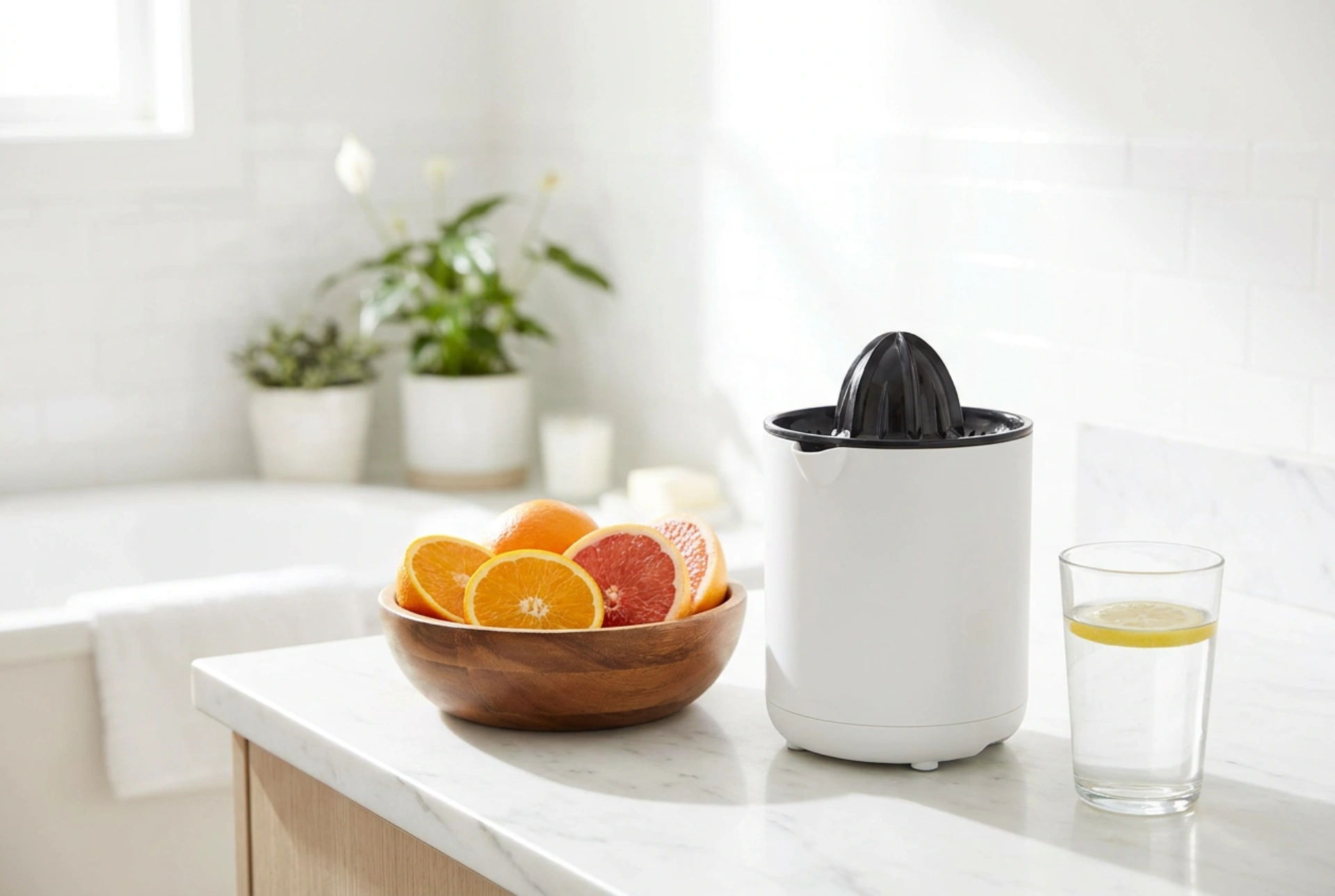


Cleaning a fruit and vegetable juicer immediately after use is essential to prevent pulp from drying, hardening, and fermenting within the delicate mesh and plastic housing. Eliminating stubborn odours and stains requires a systematic approach based on material science, utilising temperature control and mild chemical neutralisation to dissolve organic residues without damaging the appliance.
The Chemistry of Juicer Odours and Resilient Residues
Vegetable and fruit pulp contains a complex mixture of cellulose, starches, pectin, pigments, and volatile organic compounds (VOCs). When exposed to oxygen and friction during the juicing process, these compounds break down and adhere to the internal surfaces of the machine. Polycarbonate and ABS plastics, commonly used in juicer construction, are slightly porous at a microscopic level. This allows hydrophobic essential oils—such as limonene from citrus or sulfurous compounds from brassicas—to penetrate the material, creating a lingering smell that standard detergents cannot dissolve.
Furthermore, carotenoids from carrots and chlorophyll from leafy greens chemically bind to the polymer chains of plastic parts, leading to unsightly discolouration. To disrupt these bonds, you must use targeted chemical agents that dissolve organic oils and oxidise pigments without degrading the plastic itself.
The Initial Flush: Temperature Mechanics
The first step in cleaning a disassembled juicer must always be a cold-water rinse. Many make the mistake of using hot water immediately, but this denatures soluble proteins and gelatinises starches and pectins present in the pulp, effectively baking them into the microscopic holes of the stainless steel filter basket. Cold water washes away these starches and loose fibres without setting them.
Once the loose debris is cleared, transition to warm water (approximately 40 to 50 degrees Celsius) combined with a surfactant-based washing-up liquid. The warm temperature lowers the viscosity of organic oils, allowing the surfactants to emulsify the fats and lift them off the plastic and metal surfaces.
Decongesting the Micro-Mesh Filter Basket
The micro-mesh filter is the most critical and challenging component to clean. It contains hundreds of microscopic perforations that quickly become clogged with cellulose fibres. Standard sponges are ineffective here, as they merely slide over the surface and can deposit lint.
- Use a stiff-bristled nylon brush specifically designed for fine mesh. Do not use metal wire brushes, which can abrade the stainless steel and create microscopic scratches where bacteria can colonise.
- Brush the basket from the inside out under running water. This directional movement pushes the trapped fibres back through the entry path rather than forcing them deeper into the tapered holes.
- If the mesh is clogged with mineral scale from hard water or dried-on silica from root vegetables, soak the basket in a solution of equal parts warm water and distilled white vinegar for 15 minutes. The acetic acid dissolves the calcium carbonate matrix holding the organic fibres in place, freeing them for easy brushing.
Neutralising Absorbed Odours in Plastic Housing
To draw out and neutralise deep-set organic odours from plastic collectors and lids, standard dish soap is insufficient. Instead, leverage the power of mild, food-safe oxidising and alkalising agents.
Sodium Bicarbonate Scrubbing Paste
Sodium bicarbonate (baking soda) acts as a mild abrasive and a powerful deodoriser. Prepare a thick paste using three parts sodium bicarbonate to one part water. Apply this paste to the plastic surfaces using a soft cloth or sponge. The alkaline nature of sodium bicarbonate neutralises acidic odour molecules (such as those from fermented fruits) and physically lifts embedded oils without scratching the plastic.
Active Oxygen Soak for Stubborn Stains
For persistent stains from carrots or beetroot, avoid chlorine bleach, which can degrade the polymers and leave a chemical odour. Instead, dissolve one tablespoon of sodium percarbonate (active oxygen bleach) in two litres of warm water. Submerge the plastic components in this solution for 30 minutes. The active oxygen breaks down the double bonds in carotenoid and chlorophyll molecules, rendering them colourless and water-soluble, while simultaneously sanitising the parts and eliminating musty odours.
Preventative Assembly and Proper Air-Drying
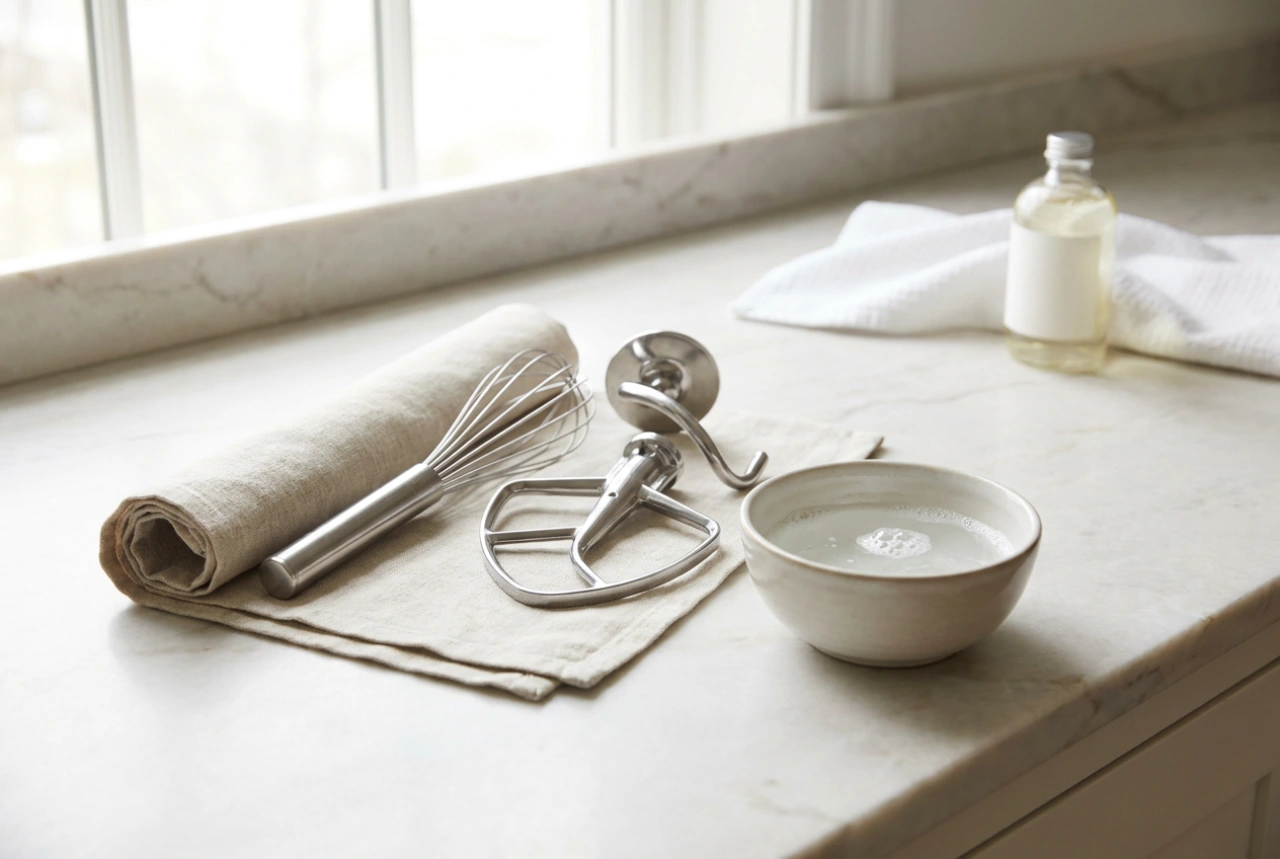
Never reassemble a wet or damp juicer. Trapping moisture inside a closed, dark appliance creates an ideal anaerobic environment for residual bacterial spores and mould to thrive, which is the primary cause of damp, sour smells. After rinsing all components thoroughly with clean, cold water to remove any chemical residues, lay them out on a clean, breathable linen cloth or drying rack in a well-ventilated area. Allow them to air-dry completely before reassembling the unit for storage.