

Protecting a manual or electric kitchen grinder from corrosion requires an understanding of metal oxidation and the chemical reactions triggered by food preparation. Meat residues contain organic acids, mineral salts, and moisture that rapidly attack cast iron, carbon steel, and even low-grade stainless steel components once the protective surface barrier is compromised.
The Science of Corrosion in Food Grinders
Most high-performance meat grinders utilize carbon steel for their cutting blades and plates because it retains a sharp edge far longer than standard stainless steel. However, carbon steel lacks chromium, the element responsible for creating a self-healing passive layer of chromium oxide that resists rust. When exposed to oxygen and water, iron atoms undergo an electrochemical process called oxidation, forming hydrated iron(III) oxide—commonly known as rust.
This reaction is accelerated by the salts and acids present in animal tissues. Furthermore, microscopic pitting on the metal surface traps moisture, creating micro-environments where galvanic corrosion can occur. Understanding this chemical vulnerability dictates that every step of the cleaning and storage process must actively combat moisture retention and acidic exposure.
The Mechanical Cleaning and Temperature Protocol
Effective maintenance begins immediately after use. Allowing meat residue to dry on the components makes removal difficult and invites bacterial growth, which produces organic acids that corrode the metal. The cleaning process must follow a strict order of operations:
- Pre-cleansing: Run a piece of dry bread or a handful of raw white rice through the assembled grinder. The dry, abrasive structure of these materials absorbs excess fat and pushes out remaining meat fragments from the auger and plate.
- Disassembly: Completely dismantle the unit. Never wash a meat grinder assembled, as water becomes trapped in the junctions between the collar, plate, blade, and auger shaft.
- Water Temperature Control: Wash all metal components in warm water (approximately 40°C to 50°C) using a mild, neutral-pH dish detergent. Do not use boiling water, as extreme heat coagulates remaining meat proteins, locking them into the microscopic pores of the metal.
- The Dishwasher Danger: Under no circumstances should carbon steel or cast aluminium grinder parts be placed in a dishwasher. Dishwasher detergents are highly alkaline, often containing sodium silicate or sodium carbonate, which strip away protective tin coatings and cause rapid, irreversible oxidation of aluminium and steel, resulting in a dark grey residue.
Advanced Dehydration Techniques
Simply wiping a grinder component with a towel does not eliminate moisture trapped within the porous structure of cast metal or inside the tiny holes of the grinding plate. To ensure complete dehydration, employ physical and thermal extraction techniques.
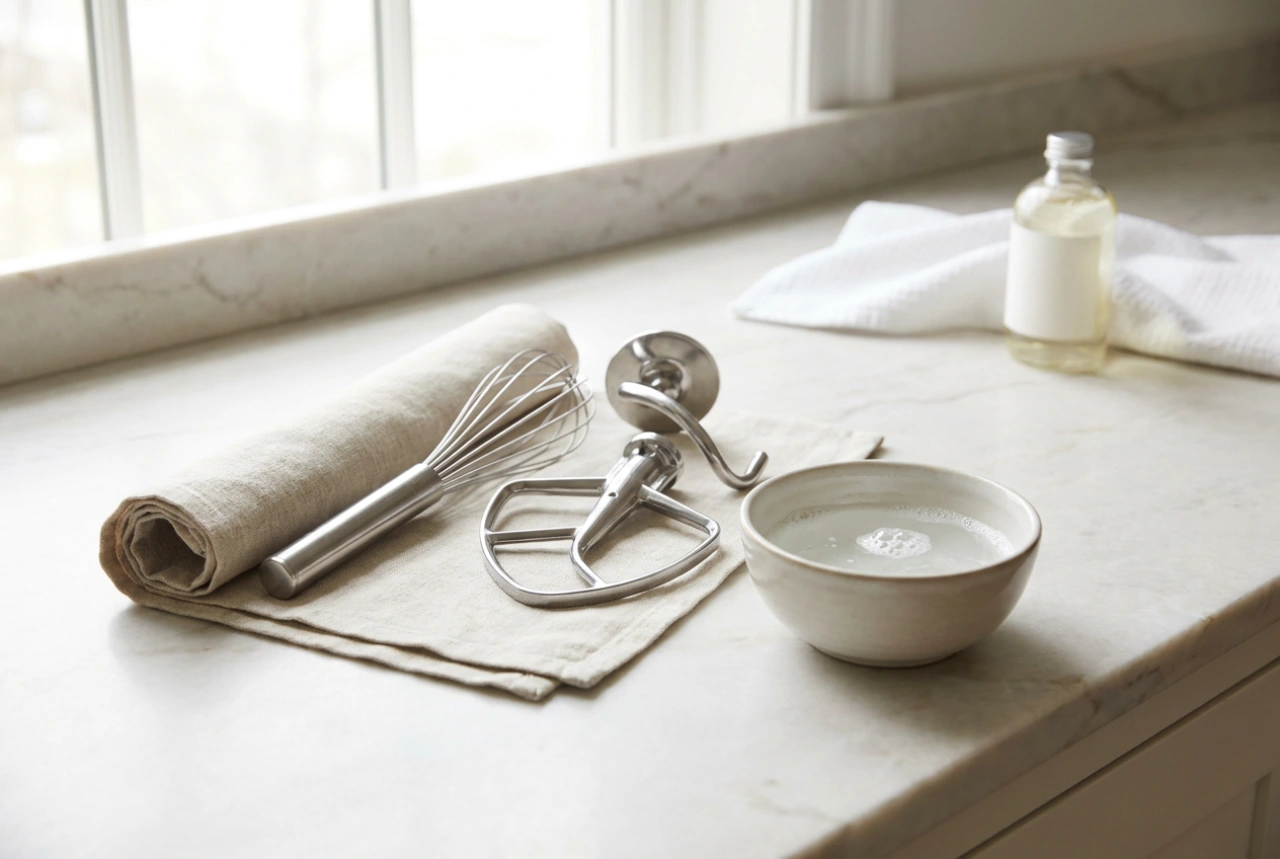
After hand-drying each piece thoroughly with a clean microfibre cloth, place the components on a baking sheet lined with parchment paper. Insert the sheet into an oven preheated to 60°C to 70°C for approximately 15 minutes. This low thermal energy is sufficient to evaporate microscopic water droplets from the internal channels of the grinding plate and the screw threads of the collar without altering the temper of the hardened steel blades.
Chemical Barrier Protection: Choosing the Right Oil
Once the metal is completely dehydrated, it must be sealed from atmospheric oxygen. This is achieved by applying a thin hydrophobic barrier. However, selecting the correct oil is critical for both food safety and equipment longevity.
Avoid using common vegetable oils, such as canola, olive, or sunflower oil. These oils contain unsaturated fatty acids that undergo polymerization when exposed to air over time. This process causes the oil to turn sticky, gummy, and rancid, which can seize the moving parts of the grinder and impart unpleasant flavours to future food batches. Instead, apply a thin layer of food-grade mineral oil or liquid paraffin. These highly refined, saturated hydrocarbons do not oxidize, spoil, or become sticky, providing an impenetrable, food-safe barrier against moisture and oxygen.
Optimized Storage Conditions
The final stage in rust prevention is the storage environment. Do not store the disassembled parts in sealed plastic bags or airtight containers, as any residual humidity will condense on the metal surfaces when temperatures fluctuate. Instead, wrap the oiled components individually in clean, dry paper towels or butcher paper. The paper acts as a secondary buffer, absorbing any ambient moisture from the air before it can contact the metal. Store the wrapped parts in a well-ventilated, dry drawer or cabinet, keeping them disassembled until the next use to prevent pressure-induced friction and moisture trapping between the contact surfaces.