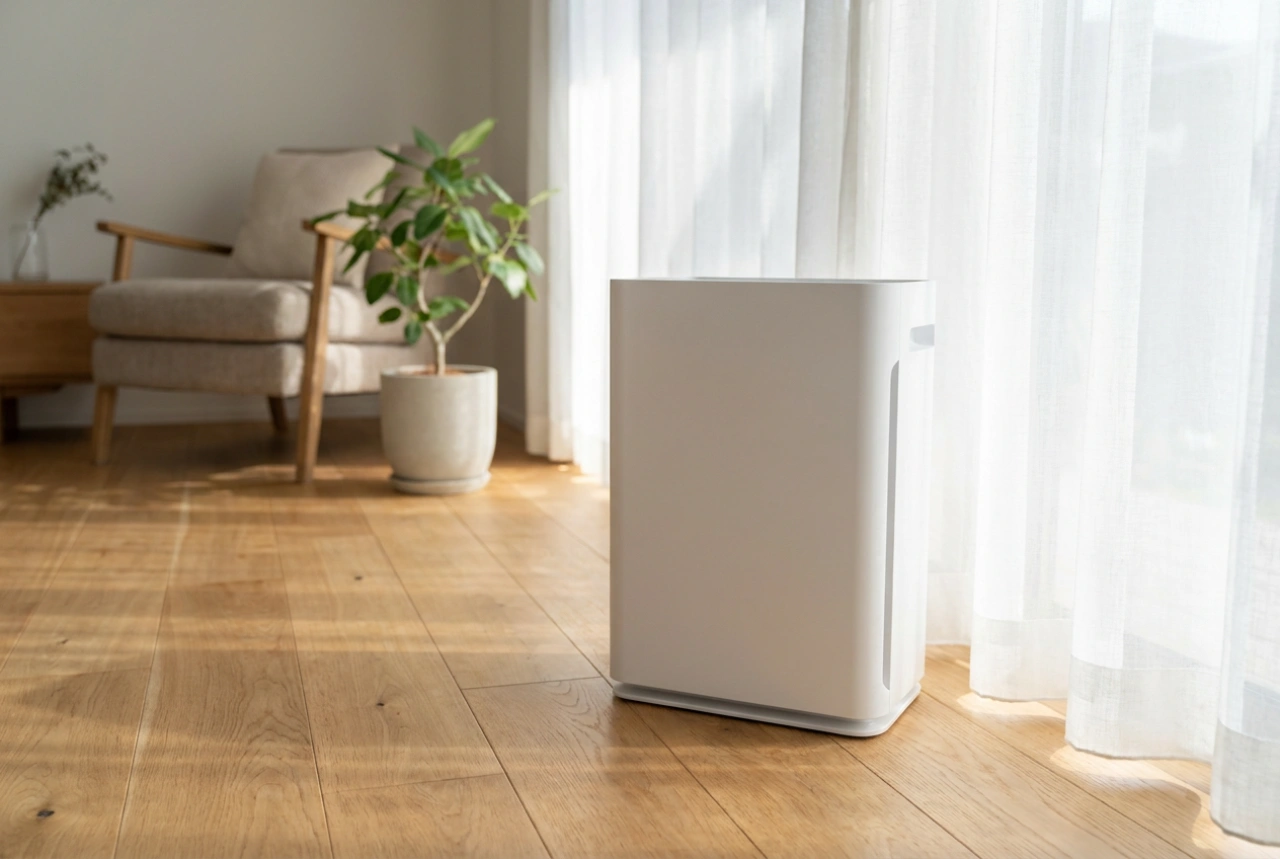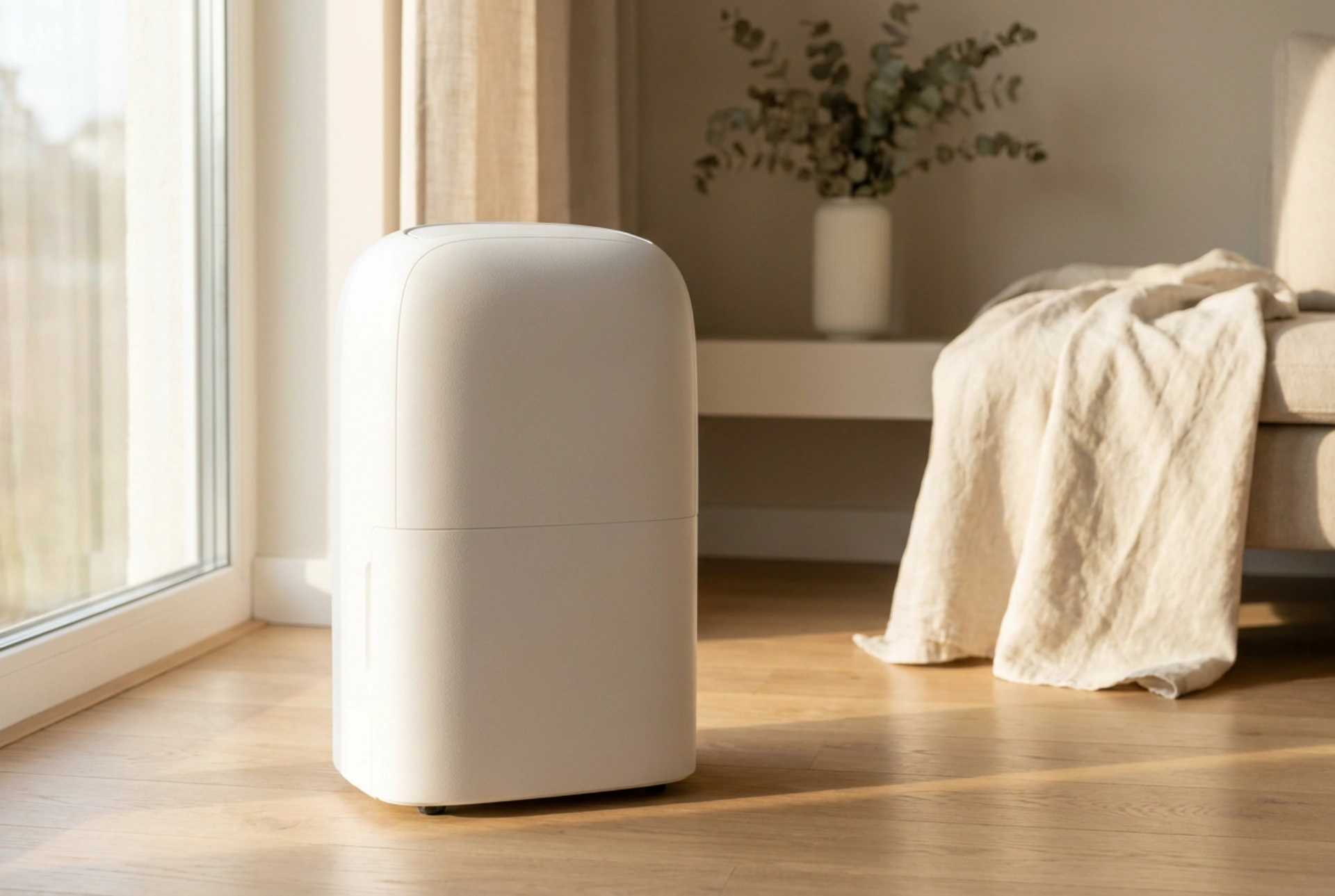


Excessive indoor humidity compromises structural integrity and indoor air quality by encouraging mould growth and structural dampness. Understanding the thermodynamic principles behind dehumidification allows you to deploy these devices efficiently, targeting moisture at its physical source.
The Two Mechanisms: Condensation vs Adsorption
Dehumidifiers primarily operate on one of two physical principles: refrigeration (condensation) or absorption/adsorption (desiccant). Each method is engineered for specific thermal conditions and moisture levels.
Refrigerant (Compressor) Dehumidifiers: These devices utilise a standard refrigeration cycle. A fan draws warm, humid air over an evaporator coil cooled by a refrigerant fluid. As the air temperature drops below its dew point, water vapour changes state from gas to liquid, condensing onto the cold coils. The liquid water drips into a collection vessel. The cooled, dry air then passes over a condenser coil, which reheats it slightly above room temperature before releasing it back into the space. This cycle lowers relative humidity by directly removing water molecules from the air mass.
Desiccant (Adsorption) Dehumidifiers: Instead of cooling coils, desiccant models use a slowly rotating wheel impregnated with a highly porous water-absorbing material, typically silica gel. The indoor air passes through the rotor, and water molecules are physically trapped within the desiccant's microscopic pores. A secondary heated airstream (regeneration air) passes through a segment of the wheel to release the trapped moisture, which is then condensed and collected. Because this process does not rely on cooling coils, desiccant units are highly effective in cold environments where ice would otherwise form on refrigerant coils.
The Physics of Relative Humidity and Dew Point
To use a dehumidifier effectively, you must understand the relationship between temperature and air moisture capacity. Relative humidity (RH) represents the amount of water vapour present in the air compared to the maximum amount the air can hold at that specific temperature. Warm air holds significantly more moisture than cold air.
When warm, moisture-laden air cools down—such as when it contacts cold window panes or uninsulated external walls—its relative humidity reaches 100%, and the excess water condenses into liquid. This temperature threshold is known as the dew point. Maintaining indoor relative humidity between 40% and 60% prevents this condensation, stopping mould spores from germinating and inhibiting dust mite reproduction, both of which require high localized relative humidity to survive.
When to Activate Your Dehumidifier
Deploying a dehumidifier should be a targeted response to specific environmental indicators rather than a continuous, unmonitored process. Key scenarios include:
- Indoor Laundry Drying: Wet clothes release litres of water into the air as they dry. Running a dehumidifier nearby accelerates evaporation through vapor pressure differential while capturing the moisture before it settles on cold walls.
- Cold Basements and Crawl Spaces: Below-ground structures naturally have lower temperatures and high contact with damp earth. Desiccant units are ideal here, as they operate efficiently below 15°C without freezing.
- Post-Renovation Drying: Wet trades such as plastering, tiling, and painting introduce massive volumes of water into a building's fabric. Controlled dehumidification prevents timber warping and ensures uniform drying of plaster.
- Seasonal Condensation: During winter, the temperature differential between indoor and outdoor air causes window condensation. Operating a dehumidifier reduces the indoor dew point below the glass temperature, keeping windows dry.
Optimising Dehumidifier Efficiency
To maximise extraction rates and minimise energy consumption, place the unit in the centre of the damp zone to ensure unobstructed, laminar airflow. Keep all external doors and windows sealed to prevent the device from drawing in outdoor humidity. Regularly clean the air intake filter; a clogged filter restricts airflow, reducing the volume of air passing over the heat exchangers and causing the compressor to overheat, which significantly degrades thermodynamic efficiency.