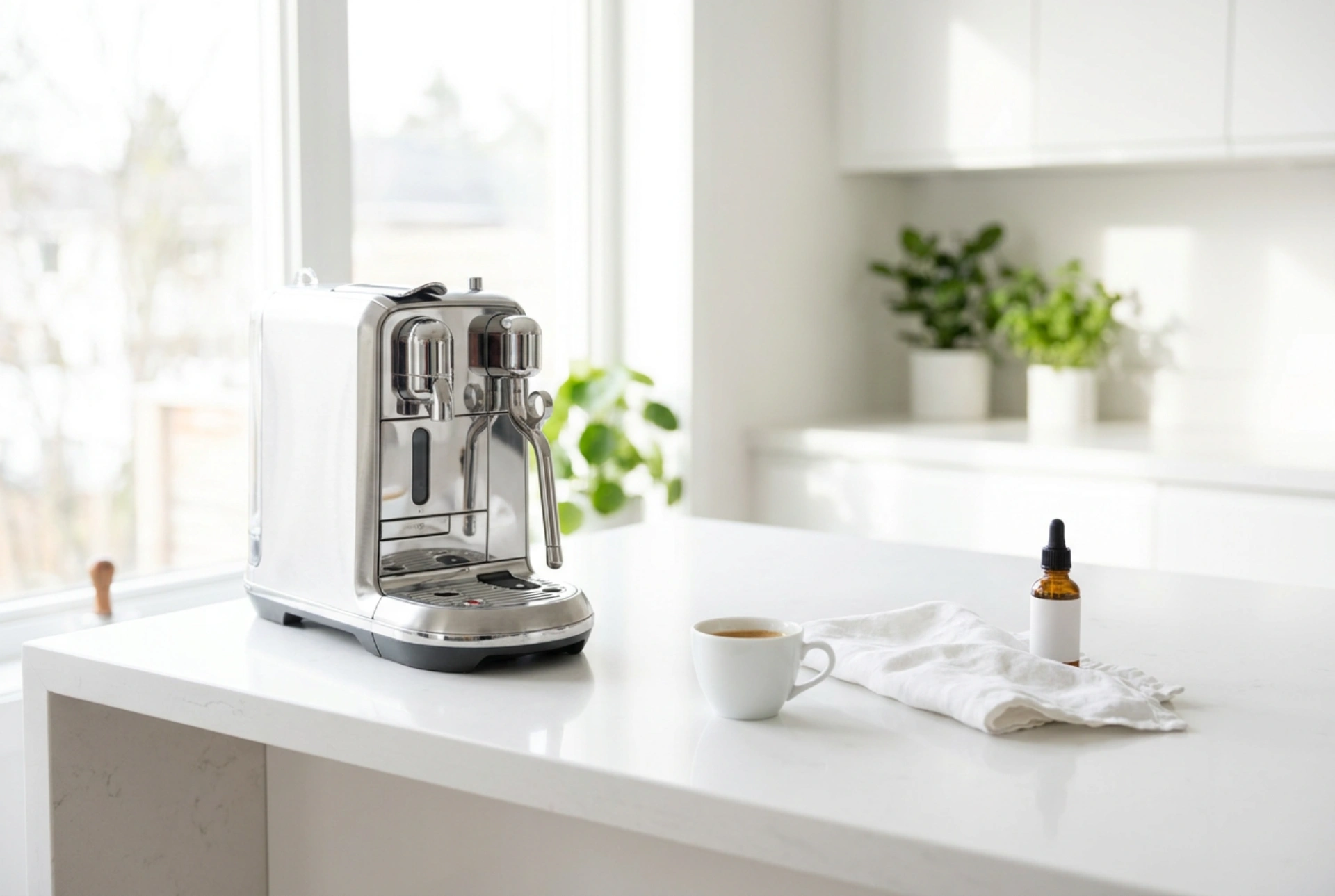


Maintaining a capsule coffee machine requires addressing two distinct types of contamination: mineral limescale from heating water and organic coffee oils that polymerise in the brewing chamber. Regular chemical and physical maintenance ensures consistent brewing temperature, precise pressure, and uncorrupted flavour.
The Chemistry of Mineral Limescale
Water contains dissolved calcium and magnesium hydrogencarbonates. When heated inside the compact thermoblock of a capsule machine, these minerals undergo a thermal decomposition reaction, precipitating as insoluble calcium carbonate, commonly known as limescale. This crystalline layer acts as an insulator, slowing heat transfer from the element to the water, which leads to under-extracted, sour coffee.
To dissolve this mineral buildup, an acidic descaling solution is required. Citric acid or lactic acid are the most effective agents for household machines. They react with calcium carbonate to form water-soluble calcium citrate or calcium lactate, which can then be easily flushed out. Avoid using acetic acid (household vinegar); its high volatility can degrade the internal silicone tubing, rubber seals, and brass components of the machine over time.
Combating Organic Coffee Oils and Lipids
Coffee beans contain natural lipids and essential oils that are extracted under high pressure. Over time, these hydrophobic compounds adhere to the needle, capsule holder, and dispensing nozzle. Exposed to heat and oxygen, these oils undergo polymerisation and rancidification, creating a sticky, bitter film that taints subsequent extractions.
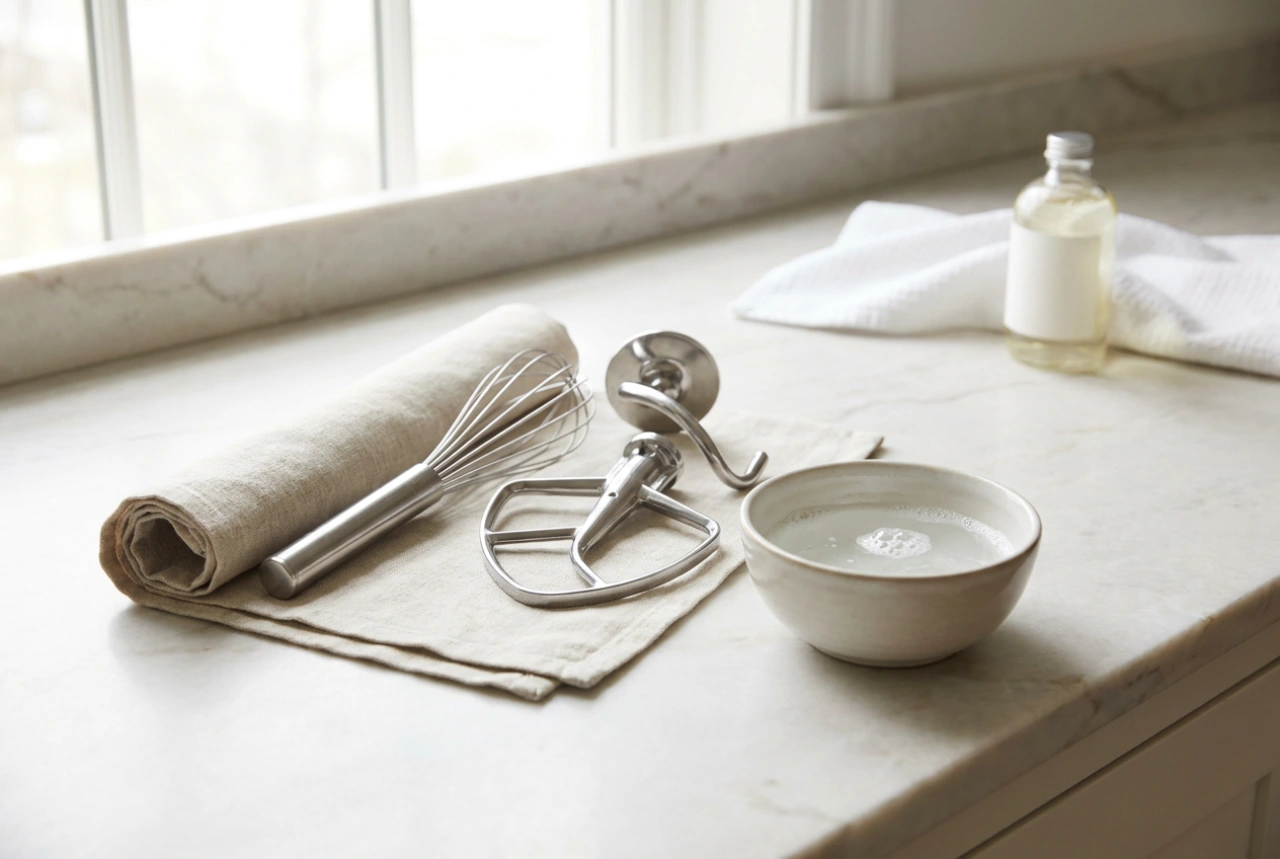
Because these oils are insoluble in water, simple rinsing is insufficient. Cleaning requires mild surfactant action or oxidising agents. A weak solution of sodium percarbonate (oxygen bleach) dissolved in warm water can be used to soak removable parts like the capsule holder and drip tray. This releases active oxygen, which chemically breaks the polymerised oil chains, allowing them to be wiped away effortlessly without leaving soapy residues.
The Step-by-Step Maintenance Protocol
An effective maintenance schedule prevents systemic failures and ensures optimal extraction pressure. Follow this systematic routine to keep the internal passages clean:
- Daily Capsule Disposal and Rinse: Always eject the spent capsule immediately after brewing. Leaving it in the chamber keeps the sealing gasket compressed and traps moisture, creating an ideal environment for mould and bacterial growth. Run a short water-only cycle (without a capsule) to flush out loose grounds from the nozzle.
- Weekly Component Wash: Remove the capsule container, drip tray, and water reservoir. Wash them with warm water and a neutral detergent. Use a soft, non-abrasive brush to clear any residual coffee grinds from the brewing needle, which punctures the capsules.
- Monthly Descaling Cycle: Dissolve approximately 25 grams of citric acid powder in one litre of warm water, ensuring it is completely dissolved before pouring it into the reservoir. Run the descaling program according to the manufacturer’s instructions, allowing the solution to sit in the system for 10 minutes to maximise chemical contact time. Follow this with two full reservoirs of clean water to flush out all acidic residues.
Preventative Water Management
The simplest way to reduce descaling frequency is to control the mineral input. Using water filtered through an ion-exchange resin cartridge removes a significant portion of calcium and magnesium ions, replacing them with sodium or hydrogen ions. This not only minimises limescale accumulation within the delicate capillaries of the heating element but also ensures a cleaner extraction, allowing the delicate volatile compounds of the coffee to dissolve more efficiently.