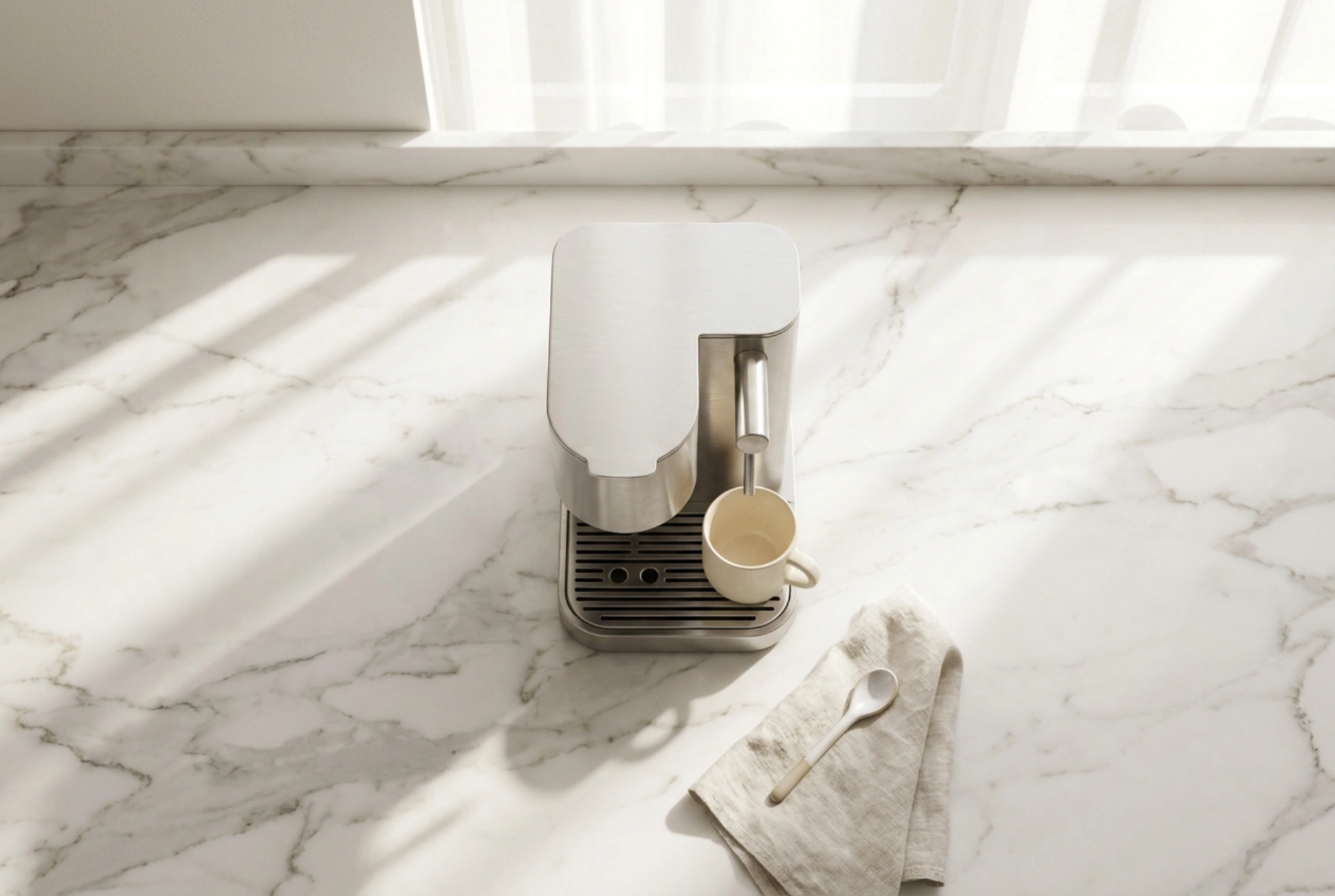


Maintaining an espresso machine with an integrated grinder requires a systematic descaling routine to prevent calcium carbonate buildup from clogging narrow water pathways and degrading espresso quality. By understanding the chemical processes of mineral scaling and implementing a precise flushing technique, you can preserve the thermal stability of your machine and protect its internal components.
The Chemistry of Scale Formation in Heating Elements
Tap water contains dissolved minerals, primarily calcium and magnesium ions, alongside bicarbonate ions. When water is heated inside the espresso machine boiler or thermoblock, a chemical reaction occurs. The thermal energy causes soluble calcium bicarbonate to decompose into insoluble calcium carbonate, water, and carbon dioxide. This calcium carbonate precipitates out of the water, adhering to the hot metal surfaces of the heating elements and tubing.
Over time, this accumulation forms a chalky layer known as scale. Scale acts as an efficient thermal insulator. Because it has a much lower thermal conductivity than copper, brass, or stainless steel, the heating element must work harder and run hotter to heat the water to the optimal brewing temperature of 90 to 96 degrees Celsius. This thermal strain shortens the lifespan of the heating element and leads to inconsistent water temperatures, which directly causes under-extraction and sour-tasting espresso.
Why Integrated Grinders Demand Extra Caution
Espresso machines with built-in grinders present a unique physical challenge during maintenance. Coffee grinders use precision steel or ceramic burrs to grind beans into a fine, uniform powder. This fine dust is highly hygroscopic, meaning it readily absorbs moisture from the air. During the descaling process, large volumes of hot water and steam are forced through the group head and steam wand, significantly increasing local humidity.
If steam or warm moisture migrates into the grinder chute or burr chamber, the trapped coffee dust will transform into a sticky paste. Once dry, this paste hardens, clogging the grinding mechanism, putting excessive load on the motor, and potentially causing permanent mechanical failure. To prevent this, always ensure the bean hopper is sealed, and never operate the grinder while descaling or immediately after running steam cycles without allowing the machine to cool and ventilate.
Selecting the Right Chemical Agent
The choice of descaling agent is a matter of practical chemistry. While household vinegar is often suggested, its active component, acetic acid, is highly aggressive toward the copper and brass components inside high-end machines. Furthermore, acetic acid penetrates porous silicone gaskets and rubber seals, leaving a persistent aroma and taste that is incredibly difficult to flush out.
Instead, modern espresso descaling solutions utilize organic acids such as citric acid, sulfamic acid, or lactic acid. Lactic acid is particularly favored for domestic machines because it is highly effective at dissolving calcium carbonate while remaining exceptionally gentle on copper, brass, and aluminum. The chemical reaction between lactic acid and scale converts the insoluble calcium carbonate into highly soluble calcium lactate, water, and carbon dioxide gas, allowing the scale to be easily flushed out without leaving stubborn residues.
The Step-by-Step Descaling Procedure
To execute a flawless descaling cycle, follow this structured, heat-managed process:
- Preparation: Remove the water reservoir and thoroughly wash it. If your machine utilizes an in-tank water softener or carbon filter, remove it immediately. Running descaling solution through an active resin filter will destroy the filter and contaminate the water path with trapped chemicals.
- Solution Mixing: Dissolve your chosen descaling agent in lukewarm water according to the manufacturer's concentration guidelines. Pour the fully dissolved solution into the reservoir and place a large container under both the group head and the steam wand.
- The First Pass: Turn on the machine and run a small amount of the solution through the group head and the steam wand to ensure the chemical agent fills the internal boilers and thermoblocks.
- The Dwell Phase: Turn off the machine and let the solution sit inside the boilers for 10 to 15 minutes. This dwell time is critical, as it allows the acid to chemically break down the crystalline structure of the calcium carbonate scale without mechanical agitation.
- The Final Flush and Rinse: Turn the machine back on and flush the remaining solution through both the group head and steam wand. Once the reservoir is empty, rinse it thoroughly, fill it with clean water, and run at least two complete reservoirs of clean water through the system to eliminate any remaining acid residues.
Water Management to Prevent Future Scaling
While regular descaling is vital, controlling the water chemistry entering your machine is the most effective preventive measure. Utilizing water with a balanced mineral profile—ideally between 70 and 150 parts per million of Total Dissolved Solids—strikes the perfect balance. This range provides enough minerals to ensure full-bodied espresso extraction while keeping calcium levels low enough to prevent rapid scale accumulation, significantly extending the intervals between necessary descaling cycles.