

Drying fruits like bananas, apples, or plums concentrates their natural sugars and pectins, leaving behind a stubborn, sticky glaze on food dehydrator trays. Cleaning these delicate mesh screens requires a systematic approach that dissolves caramelised sugars without scratching or warping the plastic material.
Understanding the Bond: Why Dehydrator Residue Is So Stubborn
When you dehydrate sliced fruits, water evaporates, leaving behind a highly concentrated mixture of fructose, glucose, and pectin. Under prolonged exposure to low heat (typically between 50°C and 70°C), these natural sugars undergo a process akin to mild caramelisation. The sugars form cohesive hydrogen bonds with the polymer chains of plastic trays, especially those made of polystyrene or polycarbonate. Pectin, a structural heteropolysaccharide found in plant cell walls, acts as a natural gelling agent. When dried, it creates a tough, lacquer-like film that resists standard wiping. Attempting to scrape this layer off dry can permanently scratch the trays, creating microscopic grooves where future food particles and bacteria can easily lodge.
The Physics of Temperature and Solubilisation
The first step in removing sticky residue is breaking the molecular bonds of the dried sugars. This is best achieved through temperature-controlled solubilisation rather than physical force. Warm water is the highly effective solvent here, but the temperature must be carefully managed. Most plastic dehydrator trays are prone to thermal deformation (warping) at temperatures exceeding 60°C. Therefore, you should use lukewarm water between 40°C and 45°C.
- The Pre-Soak: Submerge the sticky trays entirely in a basin of warm water. Avoid boiling water, which can distort the plastic frames and render them unusable in the dehydrator base.
- Time as an Active Agent: Allow the trays to soak for 15 to 30 minutes. This gives the water molecules sufficient time to penetrate the dehydrated pectin matrix and rehydrate the sugars, loosening their grip on the mesh structure.
Enhancing the Solution with Safe Surfactants
While warm water dissolves simple sugars, complex pectins and plant oils require chemical assistance to break down. Avoid harsh chlorine-based detergents or abrasive scouring powders, which can degrade food-grade plastics and leave toxic residues.
Sodium Bicarbonate (Baking Soda) Solution
Adding two tablespoons of sodium bicarbonate to the soaking bath introduces a mild alkaline environment. This weak base helps hydrolyze the acidic components of fruit residues, making them highly soluble in water. It also acts as a gentle, non-abrasive water softener that loosens stubborn organic bonds without scratching the plastic surfaces.
Oxygen Bleach for Disinfection and Organic Stain Removal
For trays stained by dark berries or mushrooms, a mild sodium percarbonate (oxygen bleach) solution is ideal. When dissolved in warm water, it releases hydrogen peroxide and sodium carbonate. The bubbling action of the active oxygen physically lifts organic particles out of the tiny mesh openings, while its sanitising properties eliminate any latent mould spores from the dried mushrooms.
Mechanical Action: Correct Tools and Techniques
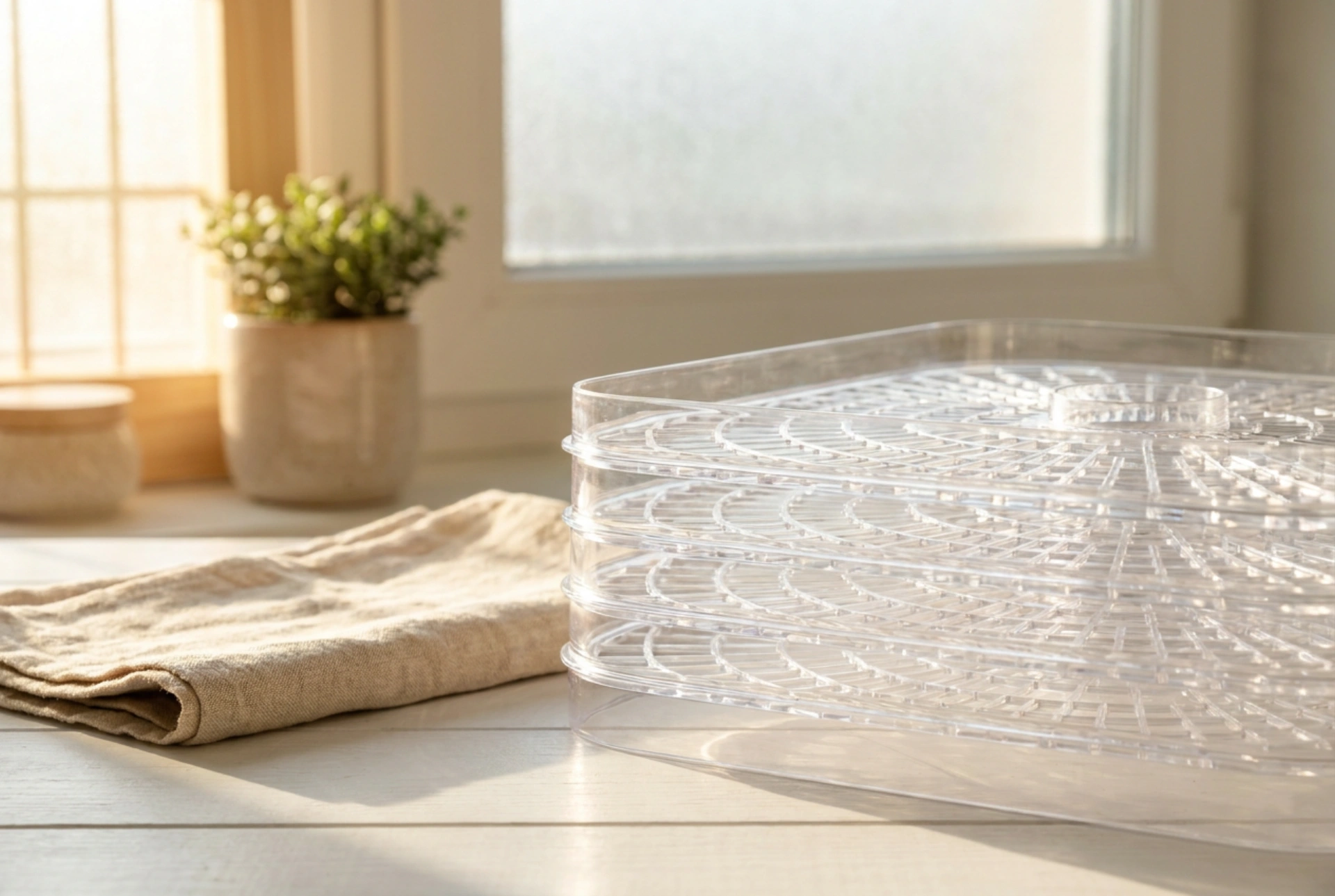
Once the chemical soaking has softened the glaze, gentle physical agitation is required to clear the mesh. The geometry of dehydrator trays—often consisting of tiny square or diamond-shaped grids—makes standard sponges ineffective, as they cannot reach into the corners.
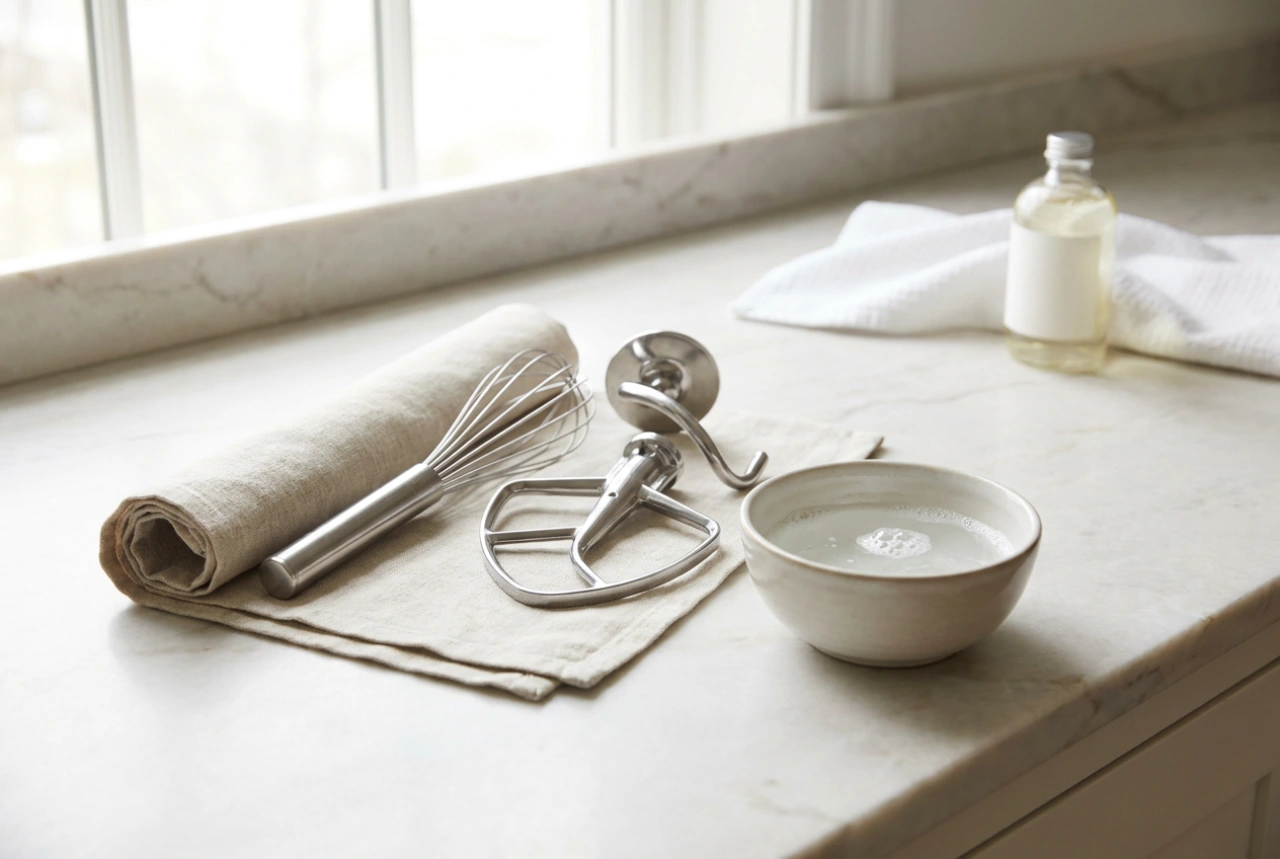
- Soft-Bristled Nylon Brushes: Use a clean, soft-bristled toothbrush or a dedicated dish brush. Brush in circular motions to dislodge particles from all angles of the mesh. Avoid metal wire brushes, which will slice through plastic screens and strip protective coatings off metal trays.
- Microfibre Cloths: For flat surfaces and the outer frames, a high-density microfibre cloth works best. The microscopic fibres act like tiny hooks, pulling away dissolved sugar residues rather than just smearing them across the plastic.
- Rinsing and Air Drying: Thoroughly rinse the trays under running warm water to wash away all loosened particles and surfactant residues. Shake off excess water and place the trays in a well-ventilated drying rack. Always ensure the trays are completely dry before assembling the dehydrator to prevent mildew growth inside the unit.
Preventing Sticky Residue in Future Runs
Minimising cleanup begins before you switch on the appliance. Applying a microscopic barrier can prevent sugars from bonding to the trays in the first place.
A highly effective technique is applying a very thin layer of neutral vegetable oil with a high smoke point using a paper towel. The hydrophobic lipid layer prevents the hydrophilic sugars and pectins from adhering directly to the plastic mesh. Alternatively, for particularly wet fruits like tomatoes or strawberries, utilising reusable non-stick silicone mesh sheets designed for food dehydration offers an excellent barrier that can be easily peeled off and washed separately.