

Over time, dishwashers accumulate a combination of grease, limescale, and food particles that create a breeding ground for bacteria and unpleasant odours. Cleaning your appliance using targeted home chemistry restores its structural efficiency and ensures hygienic wash cycles without the need for harsh commercial chemicals.
The Science of Dishwasher Odours
An unpleasant smell emanating from your dishwasher is rarely a sign of mechanical failure; instead, it is a direct result of organic decomposition. The interior of a dishwasher is a warm, humid environment with high relative humidity. When food residues, fats, and proteins are washed off your dishes, they do not always exit through the drain completely. Instead, a micro-thin layer of organic matter, known as a biofilm, can cling to the plastic walls, rubber seals, and metal racks.
Furthermore, hard water contains dissolved calcium and magnesium ions. During high-temperature washes, these ions precipitate to form calcium carbonate (limescale). This chalky buildup has a rough, porous surface texture that acts as a microscopic anchor, trapping grease and biological material. As anaerobic bacteria and fungi colonise these trapped particles, they release volatile organic compounds (VOCs) containing sulphur and nitrogen, resulting in that characteristic musty or sour odour.
Phase One: Deep Cleaning the Filter and Spray Arms
Before applying chemical neutralisers, you must physically remove the bulk of the organic waste trapped inside the mechanical components of the machine. The filter assembly at the bottom of the tub is the primary collection point for solid debris and the most common source of foul odours.
- Extract the filter: Rotate the cylindrical filter assembly counter-clockwise to unlock it, then lift it out along with the flat mesh screen.
- Degrease the mesh: Rinse the filter under warm running water. Apply a generous amount of liquid dish soap or sodium bicarbonate paste and scrub gently with a soft-bristled brush. This physically breaks up grease polymers and emulsifies them so they can be washed away.
- Clear the spray arms: Unclog the small nozzles on both the upper and lower spray arms using a wooden toothpick. Mineral deposits and small seeds frequently lodge in these openings, disrupting the water spray pattern and preventing proper rinsing.
Phase Two: Dissolving Limescale with Acetic Acid
To eliminate the porous mineral deposits that harbour odour-causing bacteria, you need an acid. White vinegar, which contains approximately 5% to 8% acetic acid, is ideal for this purpose. The acid chemically reacts with the insoluble calcium carbonate to form water-soluble calcium acetate and carbon dioxide gas.
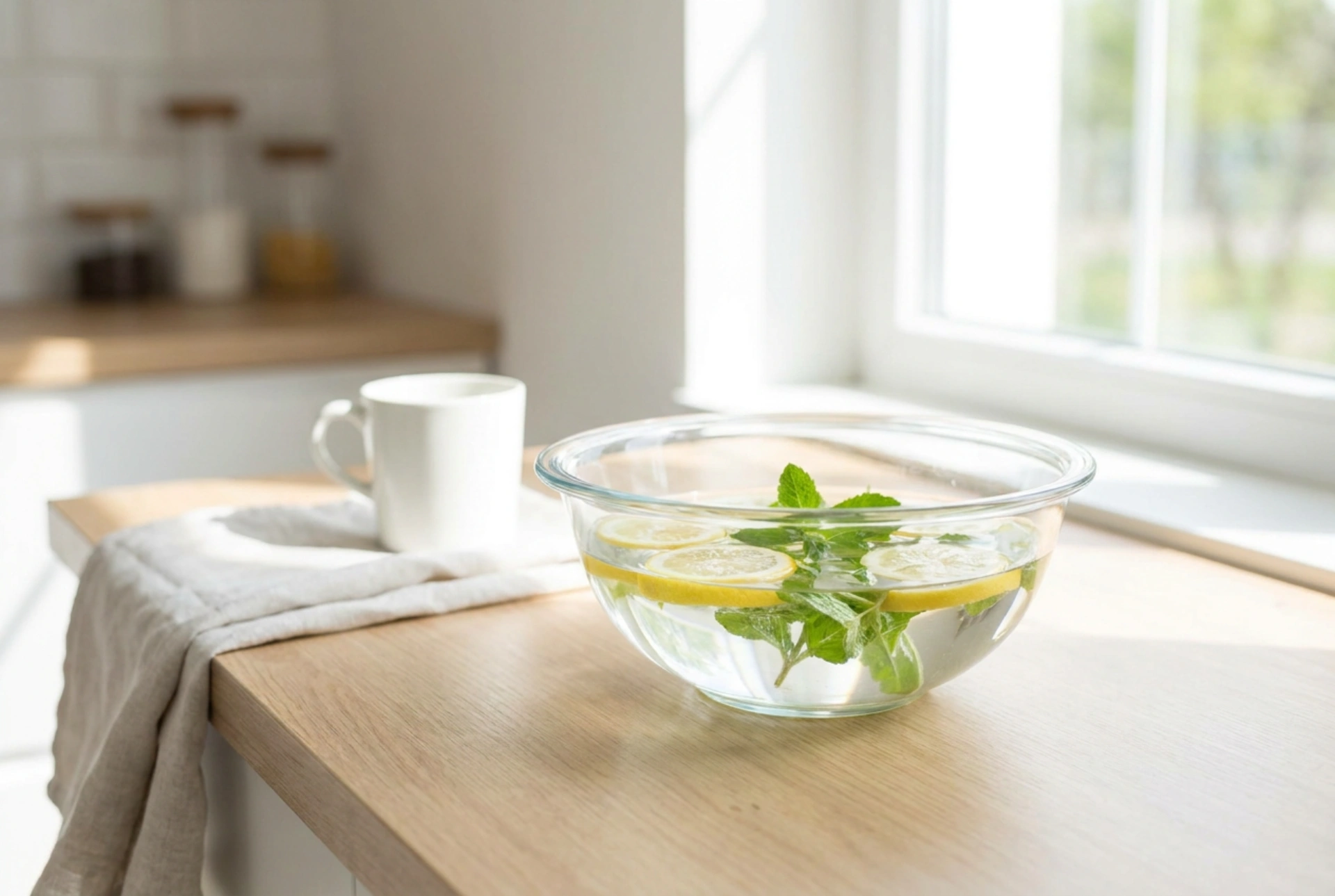
To perform this treatment, place a glass bowl filled with 250 ml of white vinegar on the top rack of an empty dishwasher. Do not pour the vinegar directly into the sump, as the machine's initial drain cycle will pump it out before the wash cycle begins. Run a heavy-duty cycle with a temperature setting of at least 60°C. The circulating hot water will gradually distribute the vinegar throughout the chamber, dissolving scale and emulsifying grease.
Crucially, do not mix vinegar and baking soda in the same cycle. While the resulting bubbling reaction looks impressive, the acid and base neutralise each other, yielding water, carbon dioxide, and sodium acetate—none of which have significant cleaning power.
Phase Three: Sanitising and Deodorising with Sodium Bicarbonate
Once the acid cycle has dissolved the mineral scale, the next step is to address acidic odour molecules and remaining grease stains using an alkali. Sodium bicarbonate (baking soda) has a mild alkaline pH of around 8.1. This alkalinity helps to saponify fats, turning stubborn grease into a water-soluble soap-like substance that washes away easily.
Sprinkle approximately 100 grams of sodium bicarbonate evenly over the bottom floor of the empty dishwasher. Run a short, high-temperature cycle. The sodium bicarbonate will neutralise organic acids (such as butyric acid from dairy residues) and scrub away any remaining microbial biofilms, leaving the interior clean and deodorised.
Maintaining a Fresh Environment
Prevention is key to stopping odours before they develop. Always leave the dishwasher door slightly ajar between cycles to allow air circulation, which lowers the internal humidity and inhibits fungal growth. Additionally, wipe the rubber door seals weekly with a damp microfibre cloth; these seals remain cold during cycles, meaning grease can solidify on them, providing a perfect environment for black mould.