

Cleaning a meat grinder and shredder attachment immediately after use is crucial to prevent bacterial growth and protect the delicate metal components from oxidation. Understanding the material science behind fat emulsification and metal reactivity ensures your appliance remains hygienic and rust-free for years.
The Physics of Pre-Cleaning: The Bread Technique
Before disassembling the appliance, running a dry piece of stale bread or a hard bun through the grinder is a highly effective mechanical pre-cleaning method. The porous structure of the bread acts as a natural sponge, absorbing residual animal fats and pushing out stubborn meat fibers lodged in the auger and grinding plate. This simple step significantly reduces the amount of greasy residue you have to wash manually, preventing clogged drains and saturated cleaning cloths.
Material Science: Aluminum versus Stainless Steel
Most modern meat grinders and slicers are made from either cast aluminum, stainless steel, or chrome-plated iron. Knowing which material you have dictates your cleaning chemistry. Aluminum attachments must never be placed in a dishwasher. Dishwasher detergents are highly alkaline, often containing sodium silicate or sodium carbonate, which strip the protective oxide layer from aluminum. This chemical reaction leads to irreversible black tarnishing and a powdery residue. Stainless steel, on the other hand, resists corrosion but still requires gentle surfactants to maintain its passive chromium oxide layer.
Temperature and Chemistry: Emulsifying Fats and Proteins
When washing disassembled parts, water temperature plays a critical role in chemistry. A common mistake is using boiling water immediately. High temperatures (above 60 degrees Celsius) denature and coagulate raw meat proteins, causing them to bond tightly to the metal surfaces like glue. Instead, start with a lukewarm rinse to flush away loose proteins. Once the protein residue is gone, transition to hot water (around 45 to 50 degrees Celsius) combined with a high-quality dish washing liquid. The surfactants in the detergent contain hydrophilic heads and hydrophobic tails; they surround the fat molecules, emulsify them, and allow them to be easily washed away with water.
Tackling the Shredder: Removing Starches and Acids
Shredder and slicer attachments often deal with vegetables containing high amounts of starches, natural sugars, and organic acids. Starches can dry into a hard, cement-like film. To clean these effectively, soak the slicing drums in warm water with a splash of mild acid, like citric acid, to break down the vegetable starches. Use a stiff-bristled nylon brush to clean the small, sharp cutting edges of the shredding drum. Always brush in the direction of the blades to avoid dulling them and to protect your fingers from cuts.
Drying and Preventing Flash Rust
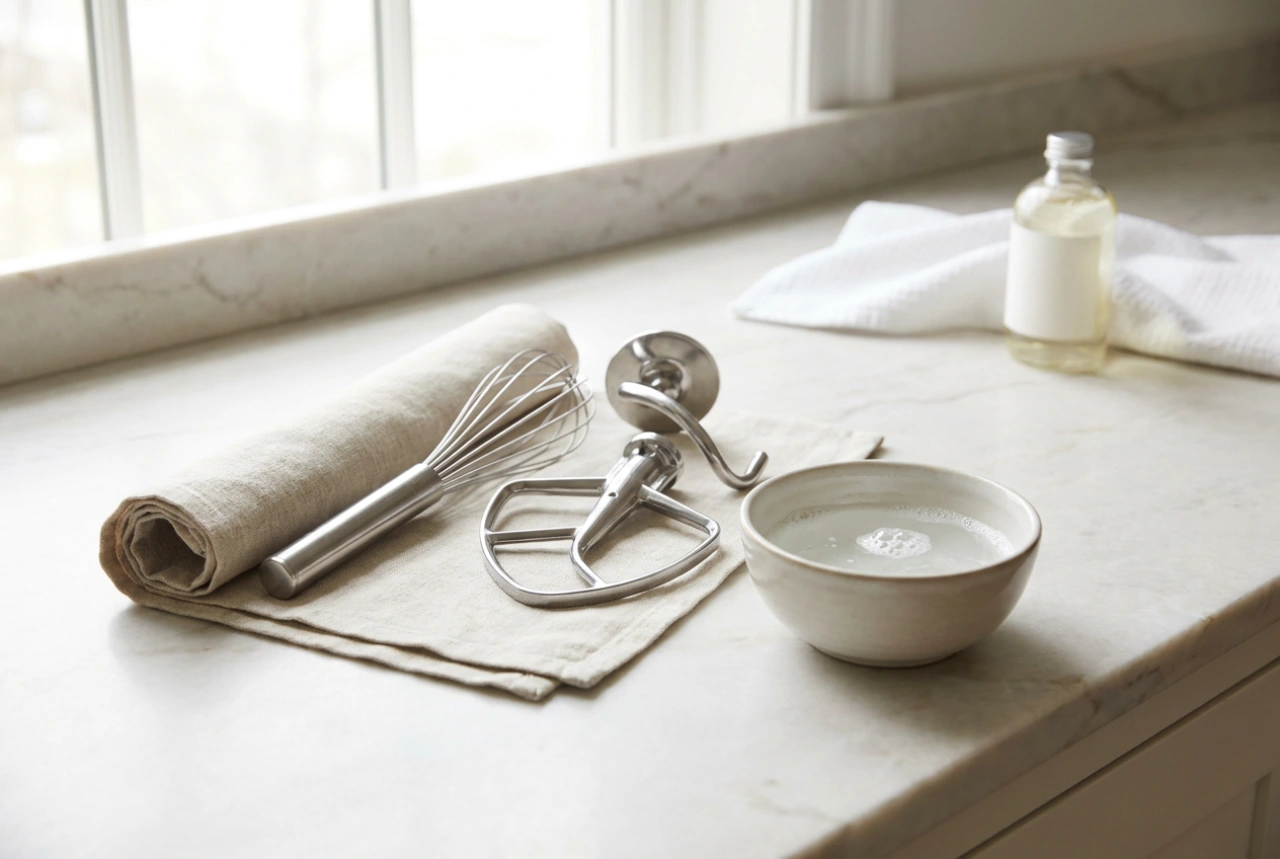
Cast iron and carbon steel plates and blades are highly susceptible to flash rust—a rapid oxidation process that occurs when wet metal meets oxygen. Immediately after rinsing all parts with clean water, dry them thoroughly with a clean microfiber cloth. To create a protective barrier against moisture, apply a microscopic layer of food-grade mineral oil or neutral cooking oil to the carbon steel grinding plates and cutting knives before storing them. This prevents moisture from making contact with the iron molecules, ensuring the cutting edges remain sharp and rust-free.