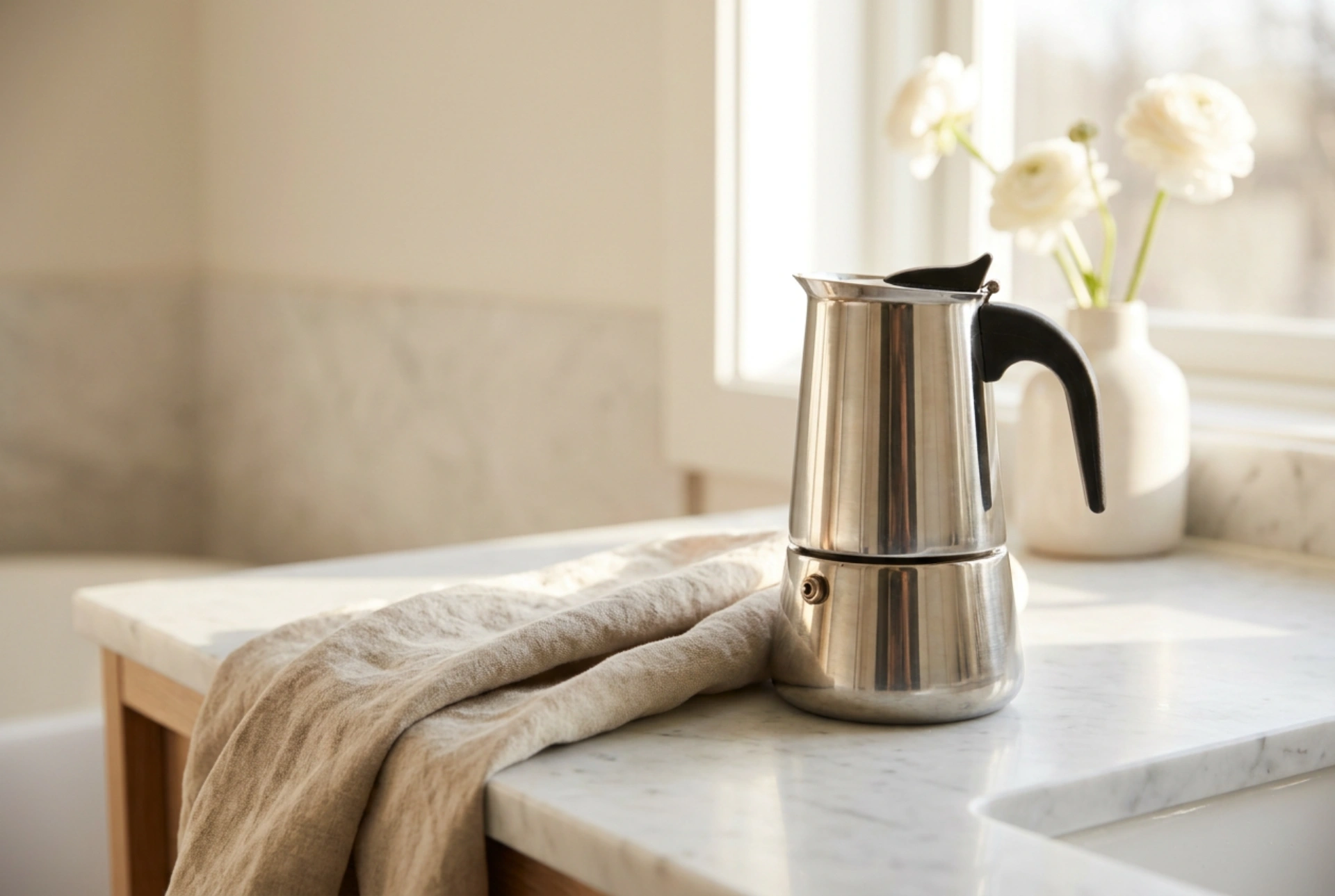


Achieving the perfect cup of coffee from a stovetop moka pot relies on a delicate balance between the extraction process and the chemical state of the metal's interior surface.
The Chemistry of the Metallic Taste: Aluminium vs. Stainless Steel
To understand why coffee sometimes takes on a sharp, metallic tang, one must look at the material science of the moka pot. Aluminium stovetop espresso makers rely on a thin, natural passivation layer of aluminium oxide ($Al_2O_3$) on their surface. This micro-layer prevents the acidic coffee—which typically has a pH between 5.0 and 5.5—from directly reacting with and dissolving the raw metal beneath.
If you wash an aluminium moka pot with highly alkaline dish soaps or place it in a dishwasher, the high pH environment strips this protective oxide barrier. When you brew next, the hot, acidic water reacts directly with the exposed metal, causing trace amounts of aluminium to leach into your beverage. While stainless steel models are chemically more inert and do not suffer from this specific oxide degradation, they can still develop metallic off-flavours if mineral scale and burnt oils are allowed to build up on their surfaces.
Daily Maintenance: The Mechanical Removal of Lipids
Coffee beans contain natural lipids (oils) that deposit on the inner walls of the pot during extraction. While a very thin layer of fresh oils can act as an additional barrier against oxygen, allowed to accumulate, these lipids oxidize rapidly when exposed to air. This oxidation process creates rancid compounds that impart a bitter, stale, and metallic taste to subsequent brews. Daily cleaning must focus on removing these excess lipids without damaging the metal.
- Avoid Chemical Surfactants: For daily cleaning, do not use standard dishwashing liquids. They strip the protective seasoning layer and oxide barrier on aluminium.
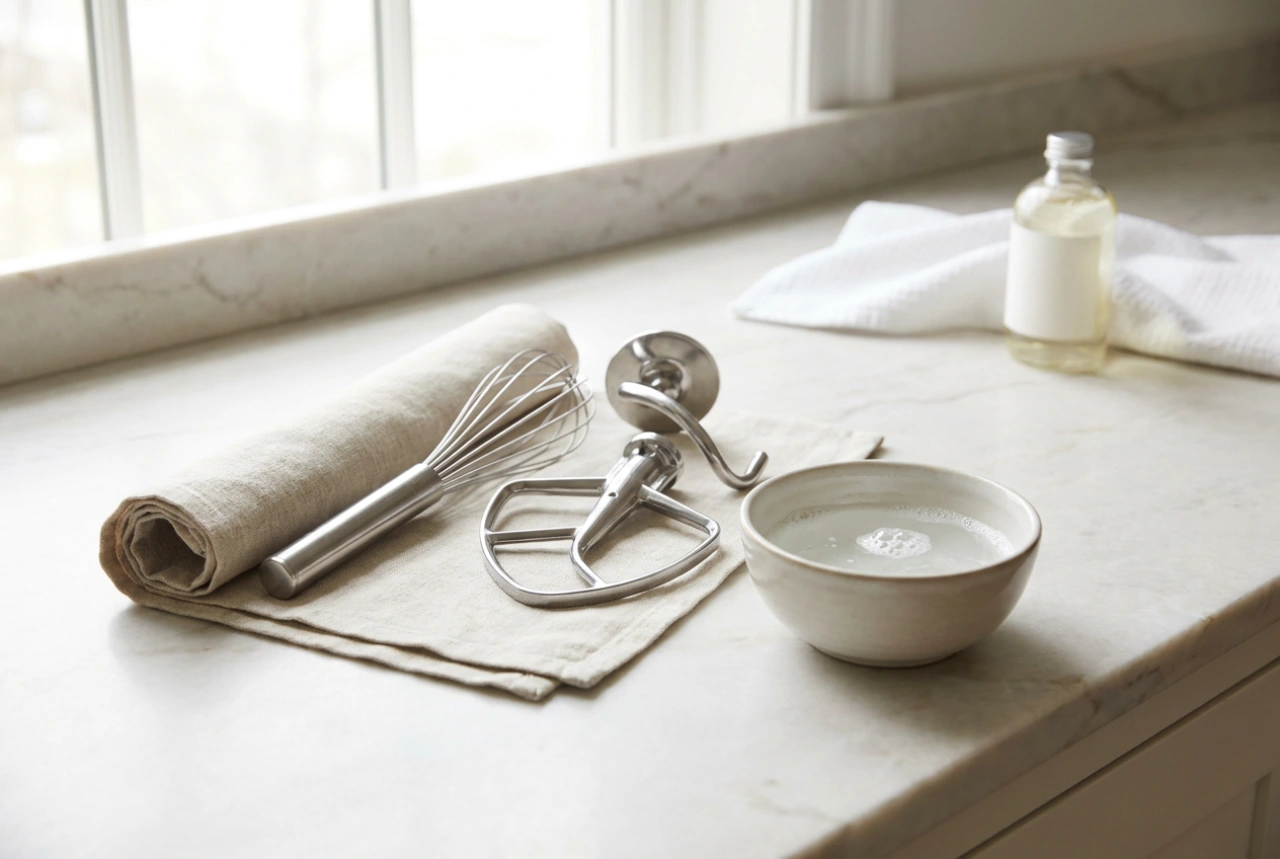
- Temperature and Mechanical Action: Disassemble the pot as soon as it cools. Rinse all parts under warm running water (approximately 40°C to 50°C) to soften the lipids. Use a soft microfiber cloth or a non-abrasive brush to wipe down the interior walls, mechanically lifting away the oily residue.
- Never Use Abrasives: Avoid steel wool, copper sponges, or the abrasive green side of standard kitchen sponges. These physical abrasives scratch the metal, creating microscopic grooves where bacteria and stale oils can settle, while also scraping away the protective oxide layer.
Deep Cleaning and Descaling Without Damage
Over time, calcium and magnesium carbonates present in tap water bind with coffee oils to form a stubborn scale deposit inside the lower boiler and the funnel. This scale traps stale organic compounds, causing a persistent unpleasant flavour. To dissolve this buildup safely without pitting the metal, use a mild, food-grade acid solution rather than commercial descaling agents.
The Citric Acid Method
Citric acid is highly effective at breaking down carbonate scale while remaining gentle on aluminium and stainless steel. Dissolve one tablespoon of citric acid powder in 500ml of warm water. Fill the lower boiler up to the safety valve with this solution, assemble the empty pot (without coffee grounds), and place it on low heat. Allow the acidic water to brew through to the upper chamber. This process chemically dissolves mineral deposits and helps to repassivate the aluminium surface. Once complete, run two cycles with plain water to thoroughly rinse and neutralise any remaining acidity.
Cleaning the Gasket and Filter Plate
The rubber or silicone gasket and the metal filter disc located under the collection chamber are notorious traps for trapped grinds and stale water. If left uncleaned, mold and rancid oil quickly accumulate here, releasing bitter, burnt, and metallic flavours into your fresh coffee. Gently pry out the rubber gasket using a blunt wooden spatula or a fingernail—avoid knives or metal screwdrivers, which can easily score the sealing surface of the pot. Wash the filter plate and the gasket separately under warm water, checking the gasket for elasticity. If the rubber is hard, cracked, or brittle, it will fail to maintain the necessary brewing pressure and must be replaced.
Proper Drying and Reassembly
Moisture is the primary catalyst for oxidation. Storing a damp, fully assembled moka pot creates a humid microclimate that leads to the formation of white, powdery aluminium hydroxide spots. Always dry every component thoroughly with a clean lint-free towel immediately after washing. Store the moka pot in disassembled pieces; this allows air to circulate freely, prevents residual moisture from being trapped, and ensures the rubber gasket is not kept under constant compression, extending its operational lifespan.