

Maintaining a compact espresso machine requires a systematic approach to prevent coffee oil rancidity and mineral scale buildup from compromising your extraction pressure and flavour. By understanding the chemical reactions of coffee residues and hard water, you can establish a streamlined maintenance routine that fits seamlessly into a small kitchen footprint.
The Science of Coffee Oils and Thermal Stability
Coffee beans contain volatile lipids and oils that emulsify under high pressure (typically 9 bars) and temperature (around 90 to 95 degrees Celsius). While these oils create the desired crema, they quickly oxidise when exposed to air and heat, turning into a sticky, rancid film on the shower screen, group head gasket, and portafilter basket. This film not only ruins the flavour profile of subsequent extractions but can also clog the fine mesh of the shower screen, causing uneven water distribution and channelling.
To combat this, daily physical purging is essential. After every extraction, knock out the spent coffee puck immediately. Run a brief blank shot (hot water without the portafilter) to flush loose grounds from the shower screen. Use a stiff, angled group head brush to clean the gasket channel. This prevents coffee particles from baking onto the rubber gasket, which would otherwise degrade the airtight seal over time.
Deciphering Descaling Chemistry
Tap water contains dissolved calcium and magnesium hydrogen carbonates. When heated inside an espresso machine's boiler or thermoblock, these minerals precipitate to form calcium carbonate, commonly known as limescale. This scale acts as a thermal insulator, forcing the heating element to work harder, and can eventually block the narrow water pathways.
To remove these deposits safely without damaging the internal copper, brass, or stainless steel components, you must use a mild, food-safe acid. Lactic acid and citric acid are highly effective at dissolving calcium carbonate by converting it into soluble salts that can be flushed away. Dissolve the acid in warm water according to the correct ratio, fill the water reservoir, and run the solution through the steam wand and group head in short intervals. This pulsed method allows the chemical reaction time to dissolve the scale inside the heating elements before the solution is completely flushed out with fresh, clean water.
Addressing Milk Protein and Fat on the Steam Wand
When texturing milk, the steam wand reaches temperatures exceeding 100 degrees Celsius. Milk consists of proteins (whey and casein) and fats. When heated, these proteins denature and bind tightly to the hot stainless steel surface of the wand, creating a stubborn, baked-on film. If left uncleaned, milk is also drawn back inside the wand as the steam cools and creates a vacuum, leading to bacterial growth.
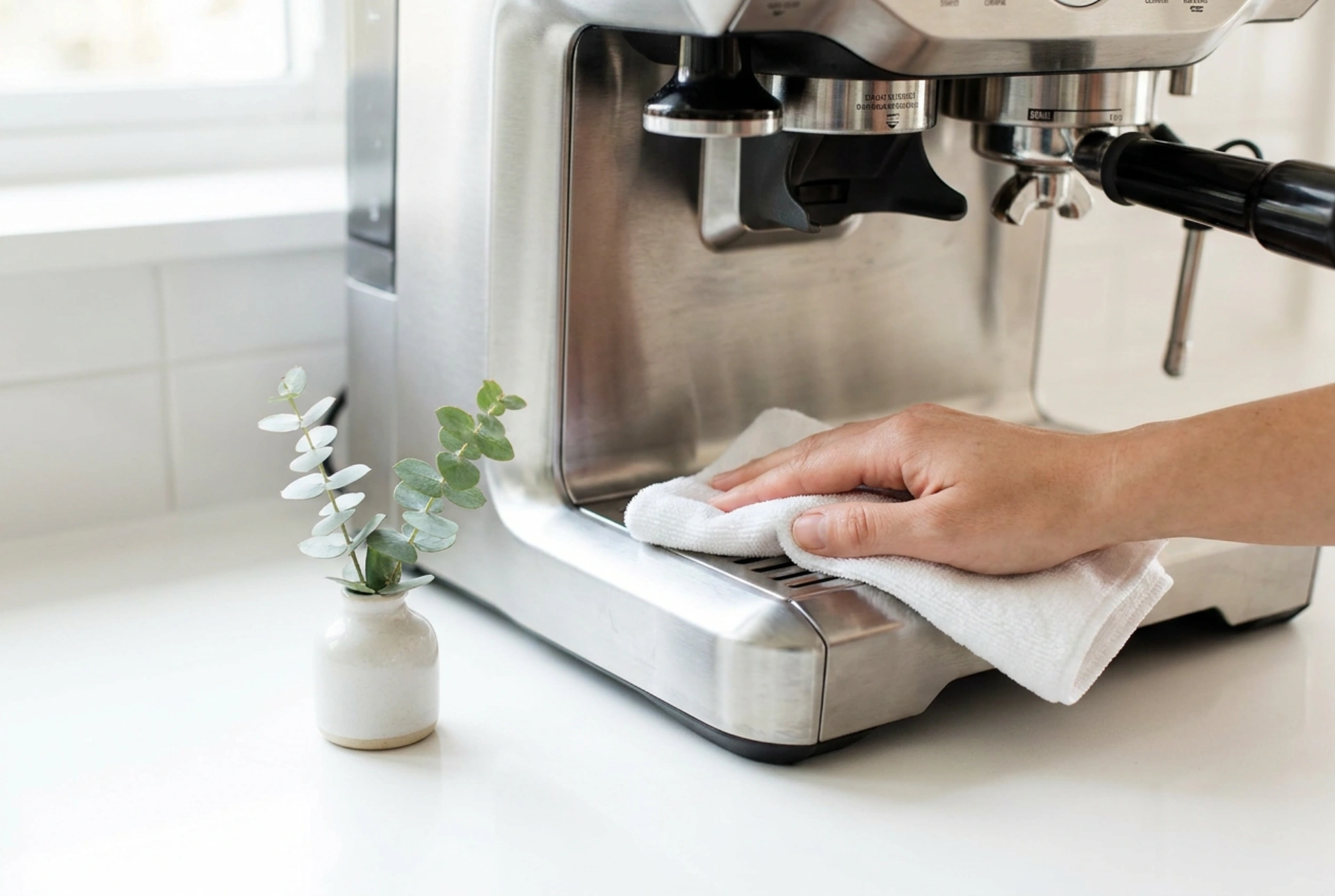
The key to preventing this is immediate thermal shock and physical wiping. As soon as you finish steaming, purge the steam wand for two seconds to blast out any milk inside the tip. Instantly wrap the nozzle in a damp microfibre cloth; the sudden cooling helps loosen the proteins. Wipe the wand downwards with firm pressure. If milk residue has hardened, submerge the steam tip in hot water mixed with a dedicated surfactant cleaner to break down the fats and proteins before wiping.
A Chaos-Free Maintenance Sequence
Maintaining a small appliance in a limited space requires a strict, mess-free order of operations. Keep a dedicated wet microfibre cloth for the steam wand and a dry one for polishing the machine's exterior.
- Immediately after brewing: Knock the puck, flush the group head, and wipe the basket dry. This keeps the portafilter hot and ready for the next shot.
- End of the day: Remove the drip tray and wash it in warm, soapy water. Wipe down the casing to remove any splashes before they dry and etch into the finish.
- Weekly: Perform a backflush using a blind basket and a specialized backflushing detergent to dissolve stubborn oils inside the group head.
- Monthly: Soak the portafilter and basket in a hot bath of oxygen bleach powder to restore the metal surface to its original shine.