

Maintaining a built-in coffee machine requires a clear understanding of both its internal thermodynamics and the physical constraints of surrounding cabinetry. Proper care prevents moisture accumulation and structural damage to your kitchen units while ensuring optimal water pressure and flavor extraction.
Managing Heat and Steam inside Cabinets
Unlike freestanding appliances, built-in coffee machines operate within enclosed wooden or composite alcoves. During brewing and milk texturing, these units generate significant amounts of heat and steam. If this moisture is trapped, it condenses on the cool surfaces of the cabinetry, leading to wood swelling, joint degradation, and mold growth. To mitigate this, modern built-in machines are mounted on telescopic runners.
- Ventilation: Always pull the machine forward on its runners during heavy use or immediately after a milk-steaming session to allow heat to dissipate into the open room.
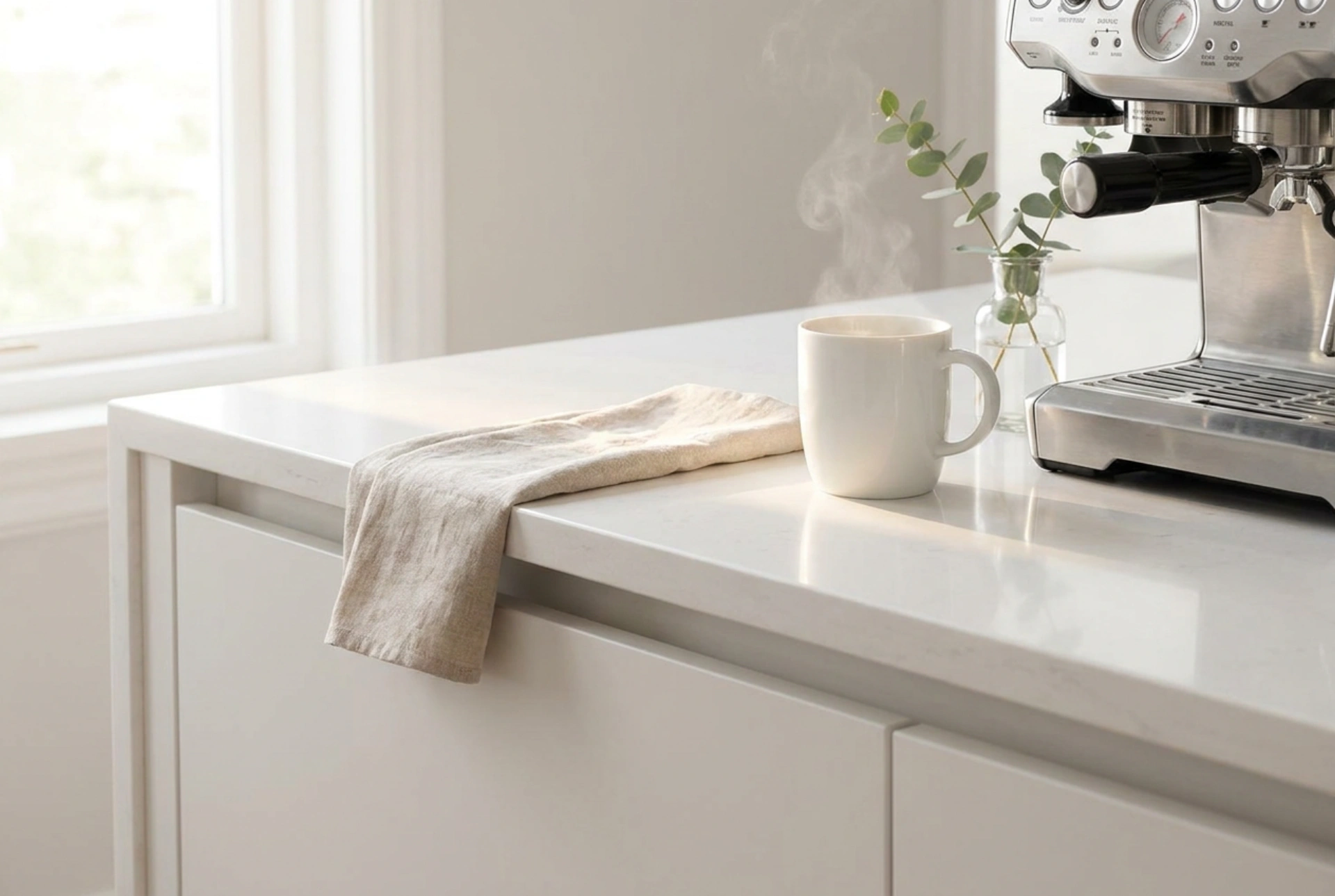
- Dry-wiping: Use a high-density microfiber cloth to wipe down the outer casing and the inner alcove walls, removing any residual condensation before sliding the machine back into place.
- Sealing integrity: Regularly inspect the rubber door seals and gaskets. Over time, heat causes elastomers to lose elasticity, allowing steam to escape into the cabinet housing.
The Chemistry of Decalcification
Water hardness is determined by the concentration of dissolved calcium and magnesium ions. When water is heated inside the machine's thermoblock, these ions precipitate to form calcium carbonate (limescale). Limescale acts as an thermal insulator, reducing heating efficiency, and can clog the narrow water pathways, leading to pressure drops that ruin espresso extraction.
To safely dissolve these mineral deposits without damaging the internal copper, brass, or stainless steel plumbing, you must use the correct acidic agents. Organic acids, such as citric acid or lactic acid, are ideal. Lactic acid is particularly gentle on internal rubber seals while highly effective at breaking down calcium carbonate into water-soluble calcium lactate. Never use harsh mineral acids or vinegar; acetic acid is highly corrosive to copper alloys and leaves a persistent residue that affects the taste of subsequent brews.
Removing Coffee Lipids and Oils
Coffee beans contain natural hydrophobic lipids (oils) and wax. During extraction, these oils are subjected to high pressure and heat, coating the brew group, piston, and dispensing nozzles. Over time, these lipids oxidize, turning rancid and imparting a bitter, metallic taste to the coffee. This oily film also attracts fine coffee grounds, creating a thick paste that blocks the micro-mesh steel filter.
To maintain flavor profile and mechanical function, the brew group must be cleaned regularly. Remove the mechanical brew group weekly and rinse it under warm water (around 40°C) to melt and wash away surface oils. Avoid using dishwashing liquids, as they strip away the essential food-grade silicone grease required for the moving joints. For deep cleaning, run a cycle using oxygen-based bleaching agents (such as sodium percarbonate). These compounds release active oxygen, which chemically oxidizes and breaks down the stubborn polymerised oil films without leaving toxic residues.
Milk System Hygiene: Proteins and Fats
Milk texturing introduces proteins (caseins and whey) and lipids into the steam wand and frothing circuits. When heated above 60°C, these proteins denature, forming a stubborn, insoluble film on the inner walls of the tubes. This film restricts air flow, preventing the correct air-to-milk ratio needed for microfoam, and serves as an ideal substrate for bacterial growth.
- Cold water flush: Always flush the milk system with cold water immediately after use. Warm water causes the proteins to coagulate and stick, whereas cold water washes them away easily.
- Alkaline cleaning: Periodically run an alkaline cleaning solution through the milk circuit. Alkaline agents saponify the fats and dissolve the denatured protein matrices, keeping the fine air-intake nozzles clear.
Protecting Surrounding Kitchen Materials
The chemical agents used to maintain your coffee machine can be highly destructive to surrounding kitchen surfaces, particularly natural stones like marble, granite, or limestone. Acidic descaling solutions will instantly etch polished marble, leaving permanent dull spots. To protect your kitchen architecture, always place a protective silicone or rubber mat over the worktop beneath the machine during maintenance. Immediately wipe up any spills with a clean, damp cloth to prevent chemical reactions on delicate surfaces.