

Removing sticky, polymerised kitchen grease requires understanding how lipids bind to different cabinet finishes and how to safely break these chemical bonds without degrading protective coatings.
The Chemistry of Kitchen Grease and Surfactants
Cooking processes release airborne lipid droplets that settle on kitchen surfaces. Over time, exposure to oxygen and heat causes these lipids to undergo polymerisation. The individual fat molecules cross-link, turning from a soft oil into a tough, sticky, and varnish-like film. Standard water-based cleaning cannot dissolve these hydrophobic substances because water molecules are polar, while fats are non-polar.
To lift polymerised grease, you must introduce surfactants. Surfactant molecules possess a dual nature: a hydrophilic (water-loving) head and a lipophilic (fat-loving) tail. When applied to a greasy surface, the lipophilic tails insert themselves into the grease layer, surrounding the fat molecules to form spherical structures called micelles. These micelles suspend the grease in the water, allowing it to be wiped away without aggressive scrubbing.
Material Vulnerability: Matte, Gloss, and Wood Fronts
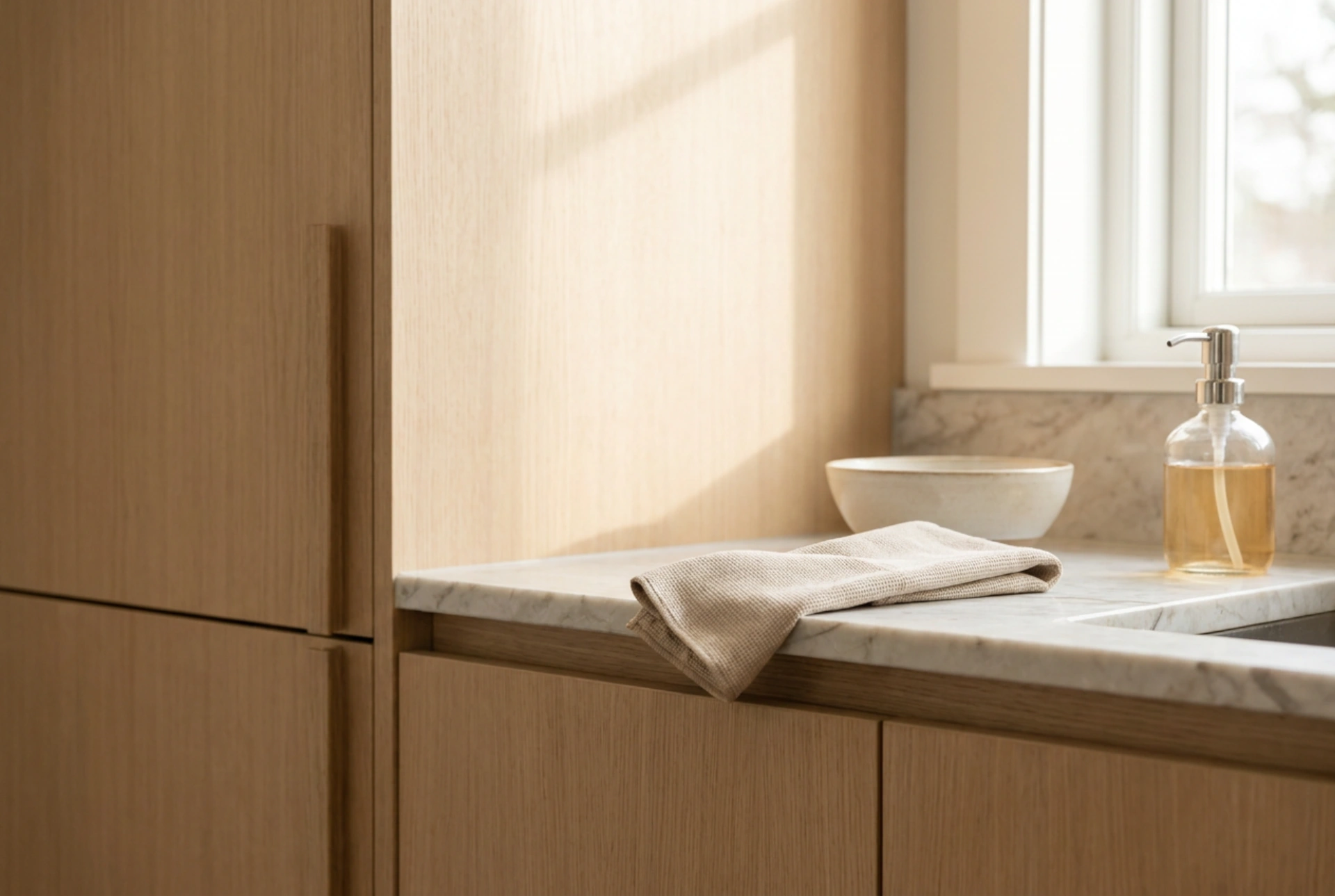
Different cabinet finishes react uniquely to chemical agents and mechanical force. Understanding your cabinet's material science prevents permanent aesthetic damage.
- High-Gloss Acrylic and Lacquer: These surfaces are highly susceptible to micro-scratching. Even minor abrasives, such as baking soda particles or rough sponges, will leave microscopic swirls that permanently dull the reflection. Additionally, strong solvent cleaners containing acetone or high concentrations of alcohol can degrade the polymer structure, causing cloudiness or cracking.
- Matte and Soft-Touch Finishes: Matte surfaces achieve their anti-reflective property through microscopic surface roughness that scatters light. Applying excessive friction or using abrasive pads will flatten these micro-textures, creating permanent shiny patches, a phenomenon known as polishing.
- Solid Wood and Veneer: Wood is highly hygroscopic, meaning it readily absorbs moisture. Excess water can penetrate through microscopic cracks in the varnish or lacquer, causing the wood fibres to swell, warp, or delaminate. Furthermore, highly alkaline cleaners can strip the protective finish or discolour the wood tannins.
The Safe Cleaning Protocol: Temperature and Dwell Time
To clean effectively without damage, you must rely on chemical action and temperature rather than physical force. This approach minimises mechanical wear on the delicate surfaces.
1. Temperature Management
Thermal energy is a highly effective tool for breaking down grease. Warm water (approximately 40°C to 50°C) softens the polymerised fat, reducing its viscosity and making it significantly easier for surfactants to penetrate. Never use boiling water, as extreme heat can soften the adhesives holding edge bands or blister acrylic coatings.
2. Wetting and Dwell Time
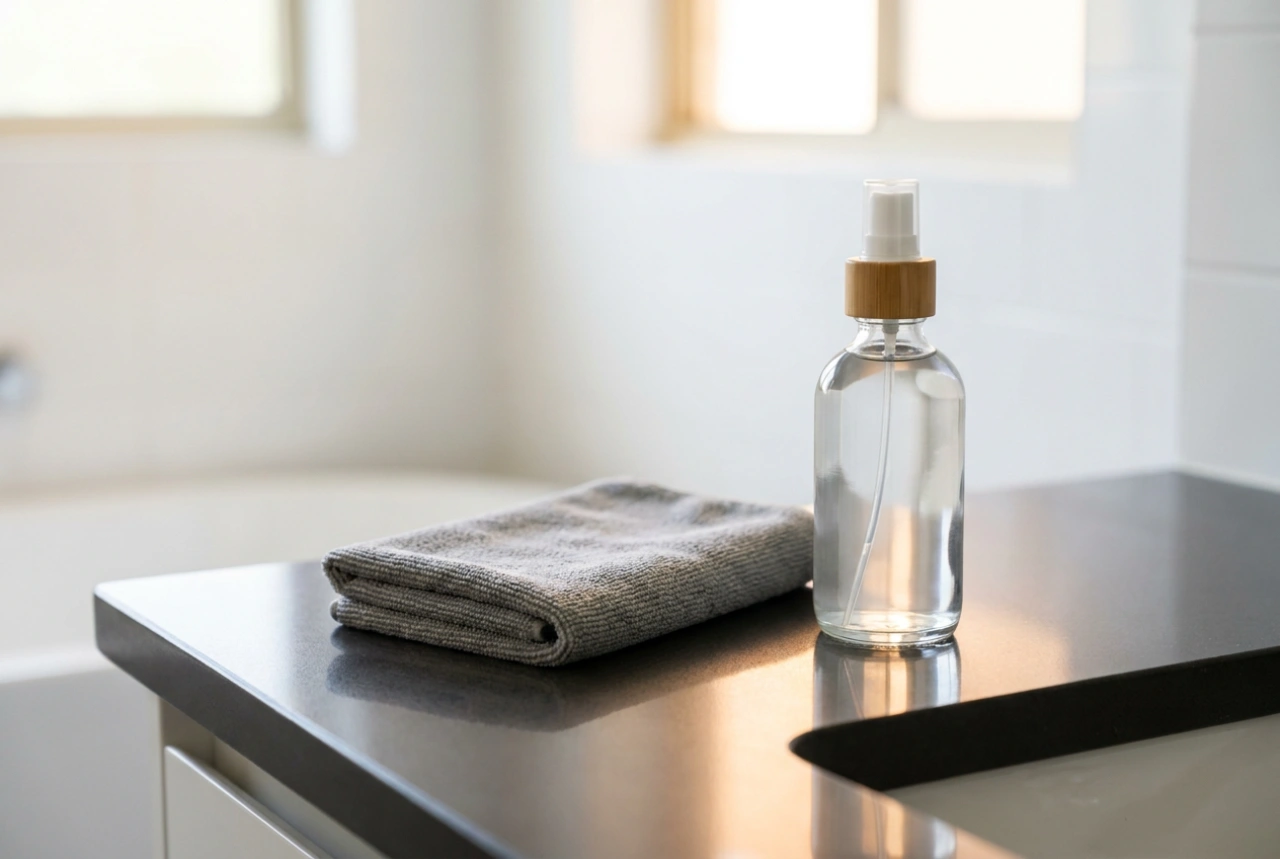
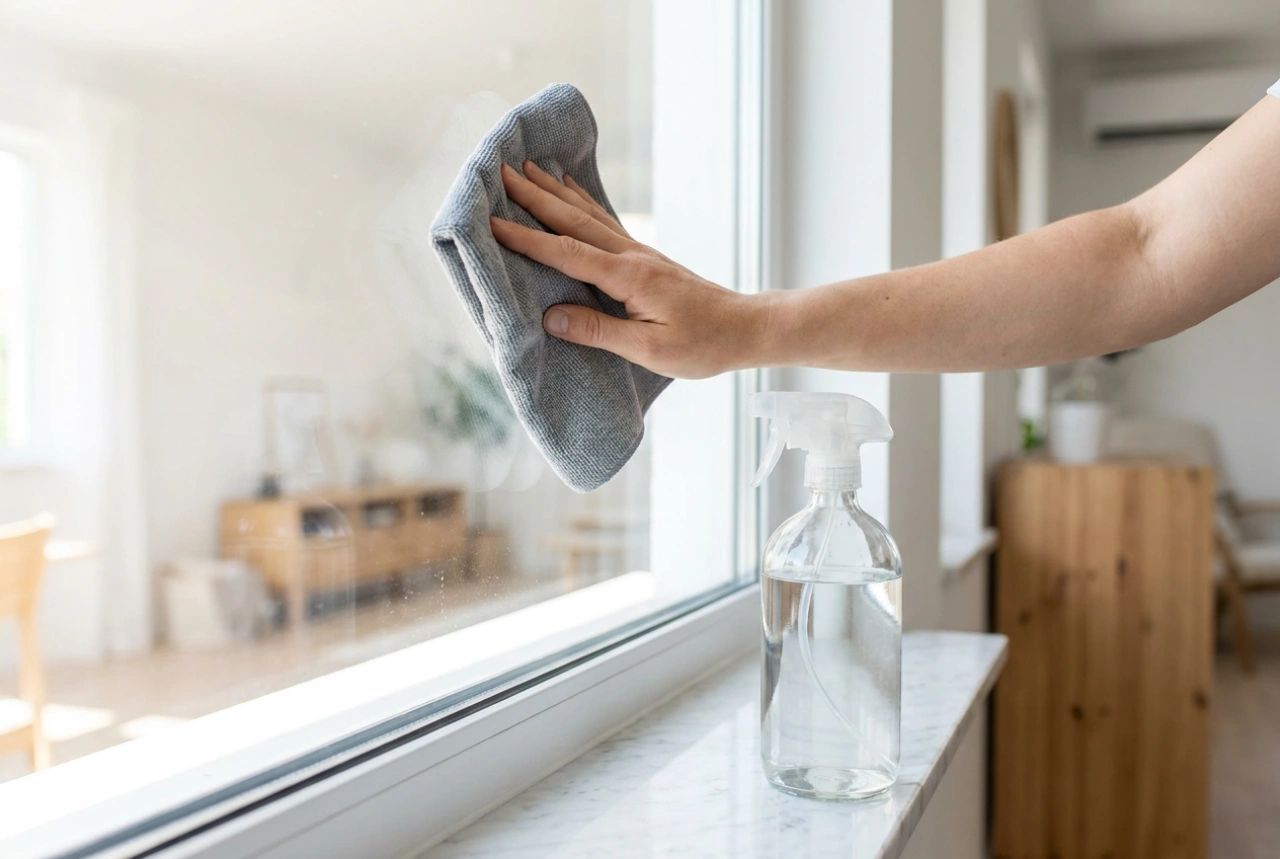
Prepare a mild solution of warm water and a neutral surfactant, such as a concentrated dishwashing liquid or generic potassium-based soap. Mist the solution lightly onto the surface. Instead of wiping immediately, allow a dwell time of one to two minutes. This gives the surfactant molecules time to orient themselves and encapsulate the grease layer.
3. Mechanical Action and Drying
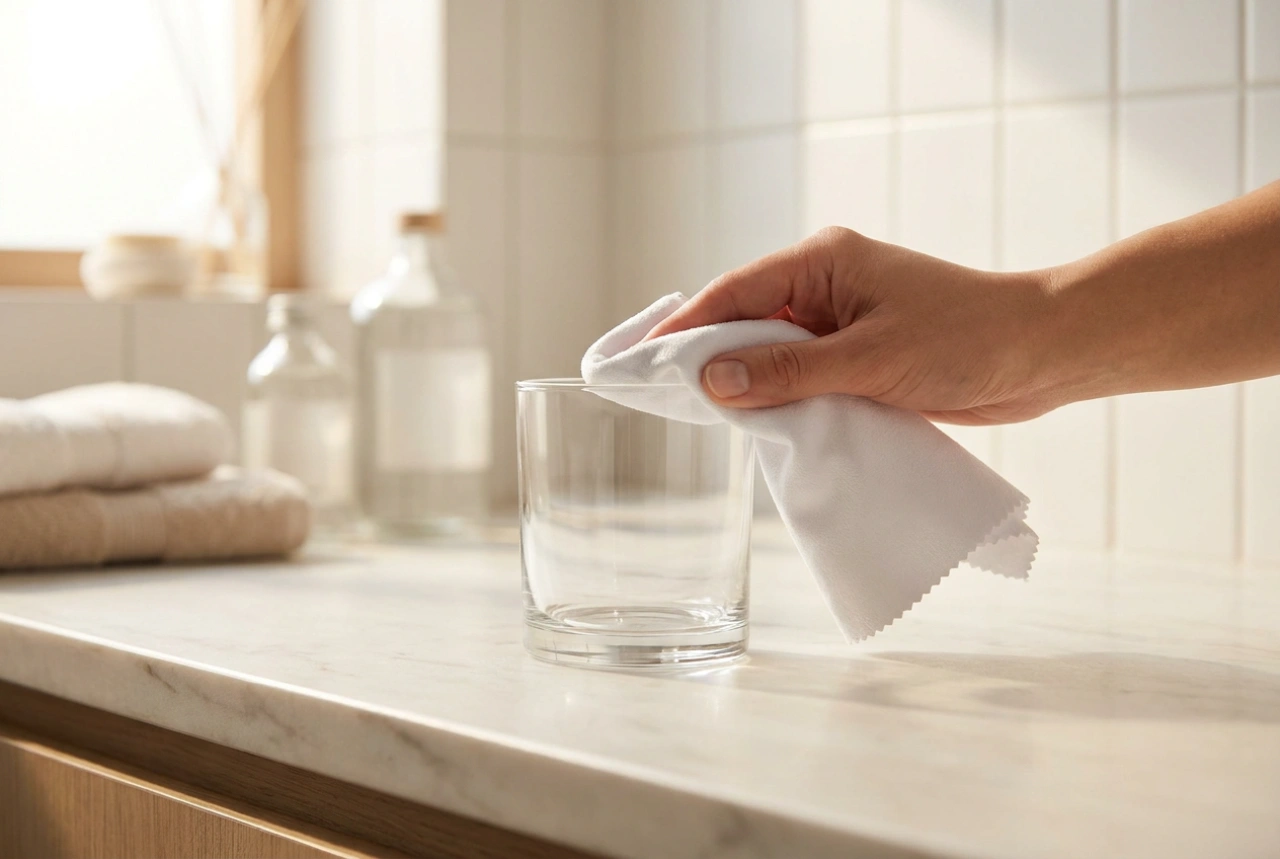
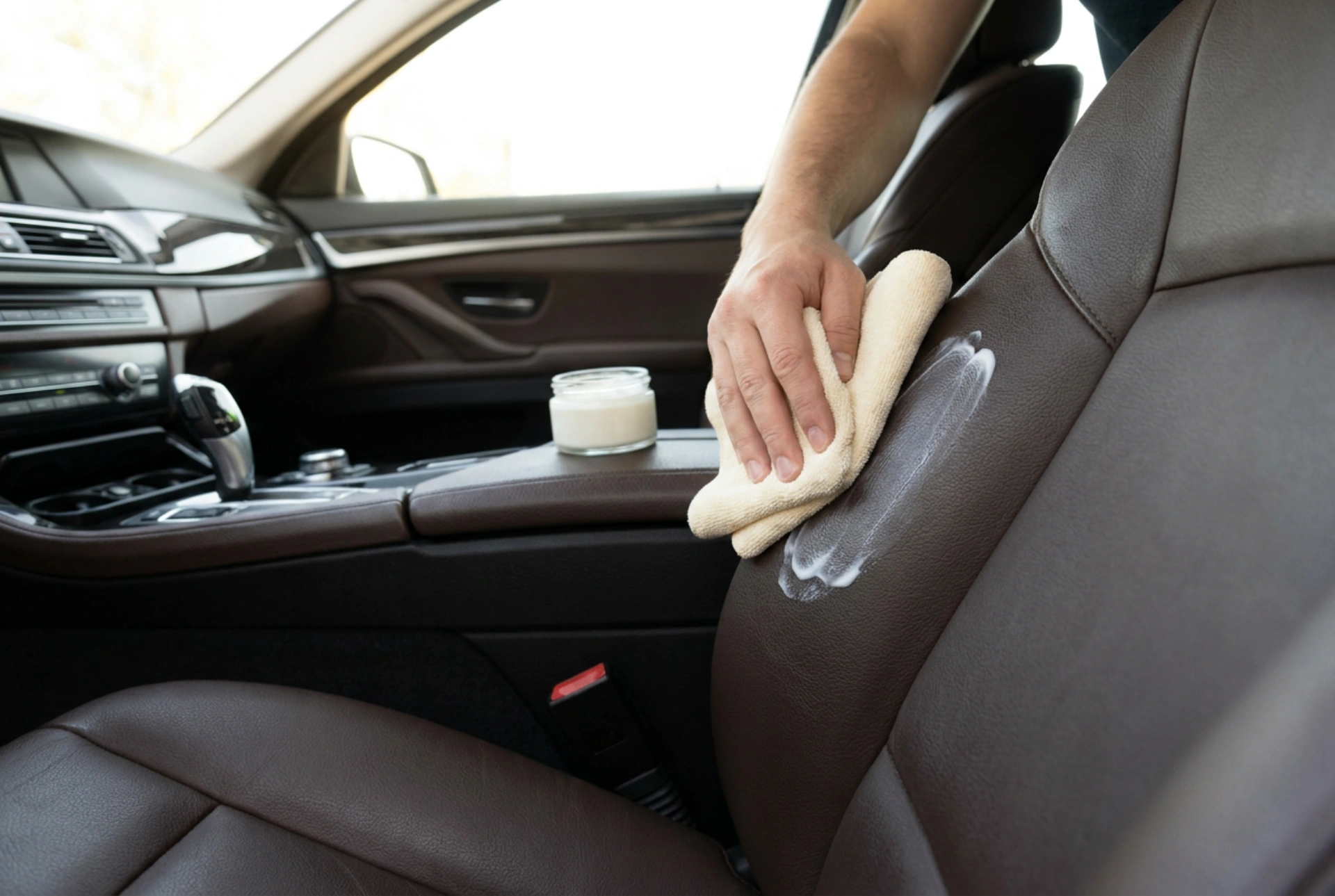
Use a clean, high-density microfiber cloth. Microfiber is essential because its split polyester-nylon fibres create a capillary action that traps grease within the cloth rather than just smearing it across the surface. Wipe gently in straight lines. If cleaning wood, always follow the direction of the grain. Immediately follow with a second, dry microfiber cloth to remove all residual moisture and suspended grease, preventing water spot formation and protecting the edges from swelling.