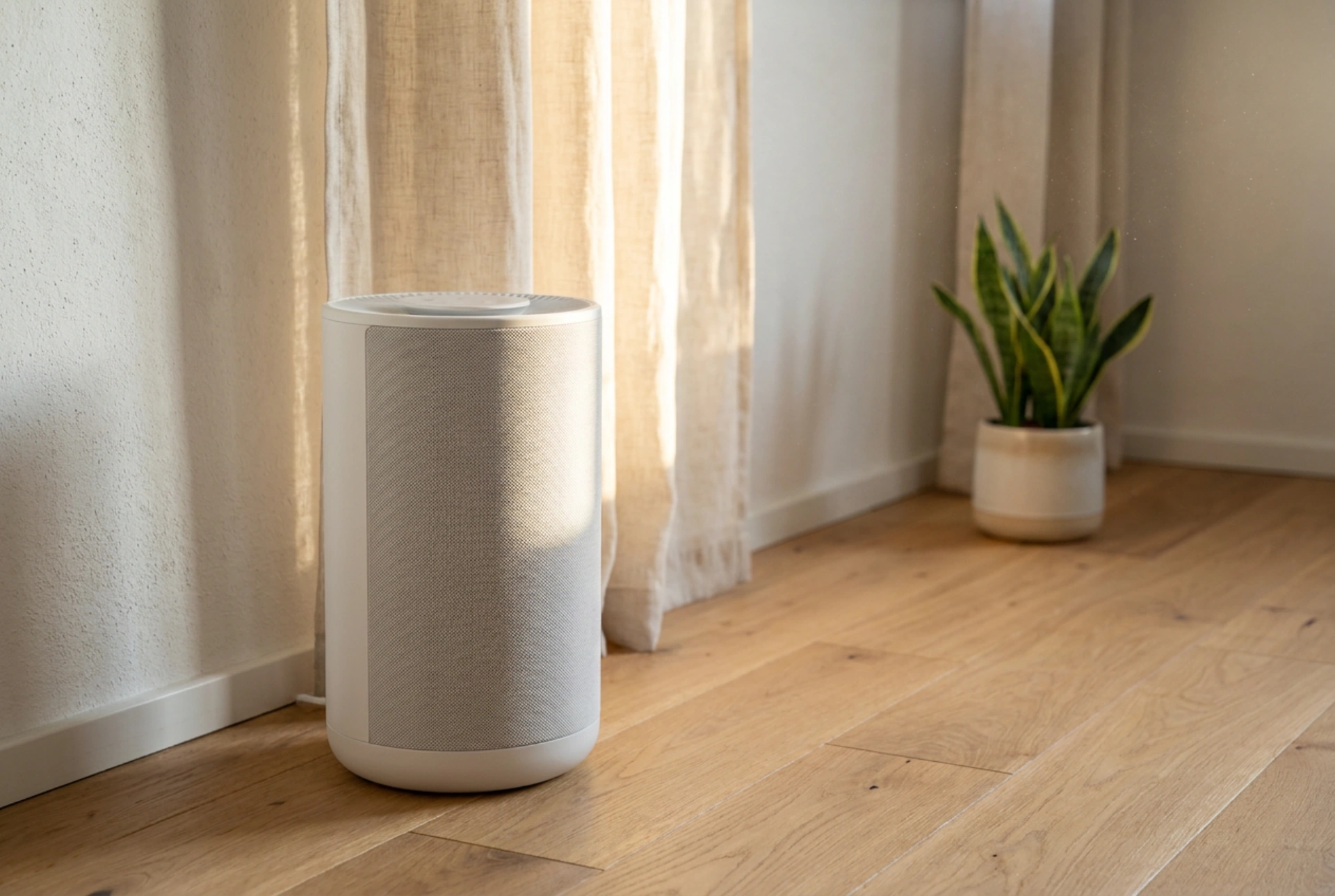


Air purifiers are highly effective at capturing airborne particles, but they cannot magically remove dust that has already settled on your furniture, floors, or carpets. Understanding the physics of airflow and particle deposition is key to maximising your device's dust-reduction capabilities and keeping your indoor environment cleaner for longer.
The Physics of Dust and Filtration
Dust is not a single substance; it is a complex mixture of organic and inorganic matter, including dead skin cells, pet dander, textile fibres, soil particles, and pollen. These particles vary significantly in size, typically ranging from 0.5 to over 100 micrometres in diameter. While heavier particles settle quickly onto surfaces due to gravity, lighter particles remain suspended in the air for hours, drifting with minor thermal currents.
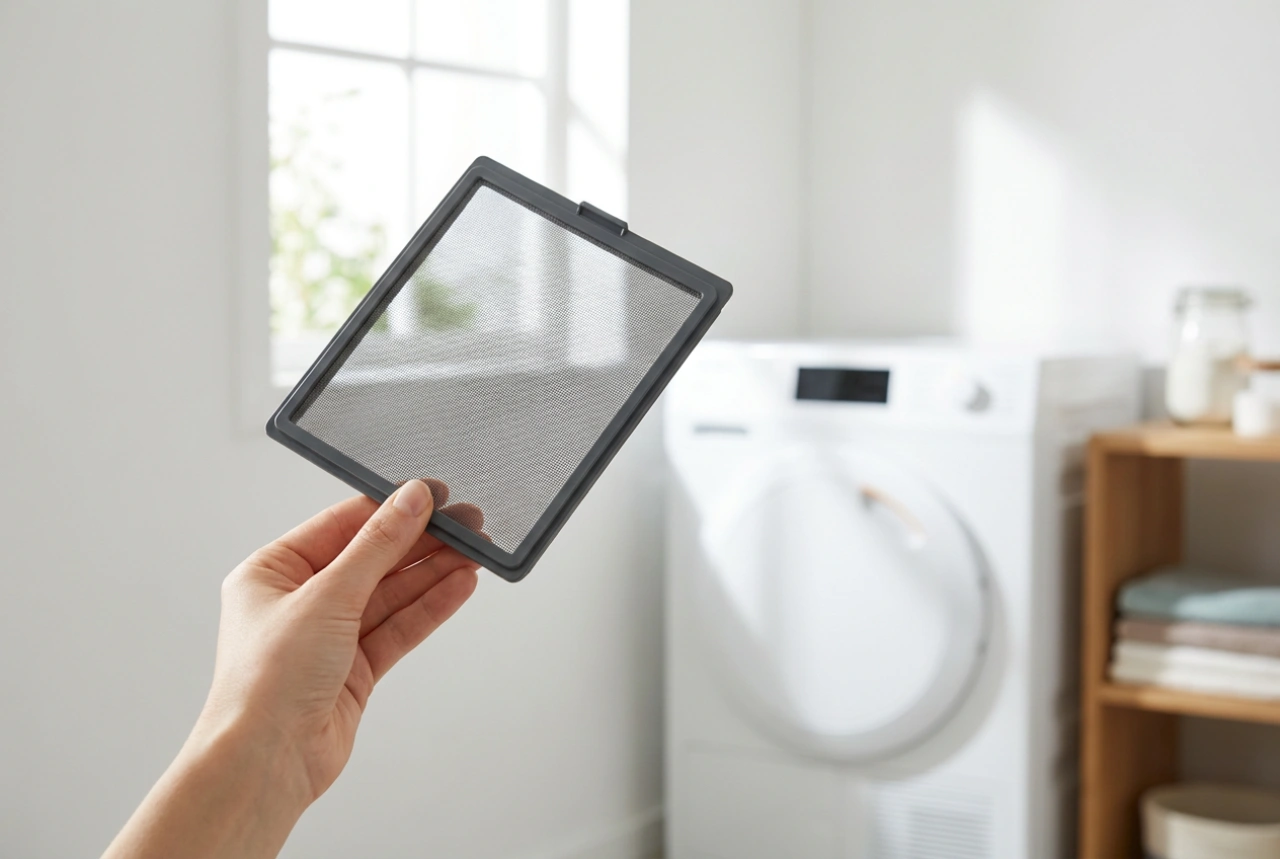
An air purifier tackles these airborne particles using a mechanical filtration system, most commonly featuring a High-Efficiency Particulate Air (HEPA) filter. A true HEPA filter works through three primary physical mechanisms to trap particles of different sizes:
- Interception: Medium-sized particles following the airflow come close enough to a filter fibre to touch and become trapped.
- Inertial Impaction: Larger particles, possessing more momentum, cannot adjust to the rapid changes in airflow direction near fibres and collide directly with them.
- Diffusion: The smallest particles (under 0.1 micrometres) move in an erratic, zigzag path (Brownian motion) due to collisions with gas molecules, making them highly likely to hit and stick to a filter fibre.
Because these mechanisms only apply to particles actively moving through the filter medium, the purifier has no influence on dust that has already settled. Gravity wins the race against the machine’s airflow if the dust falls to the floor before reaching the intake grill.
Strategic Placement and Fluid Dynamics
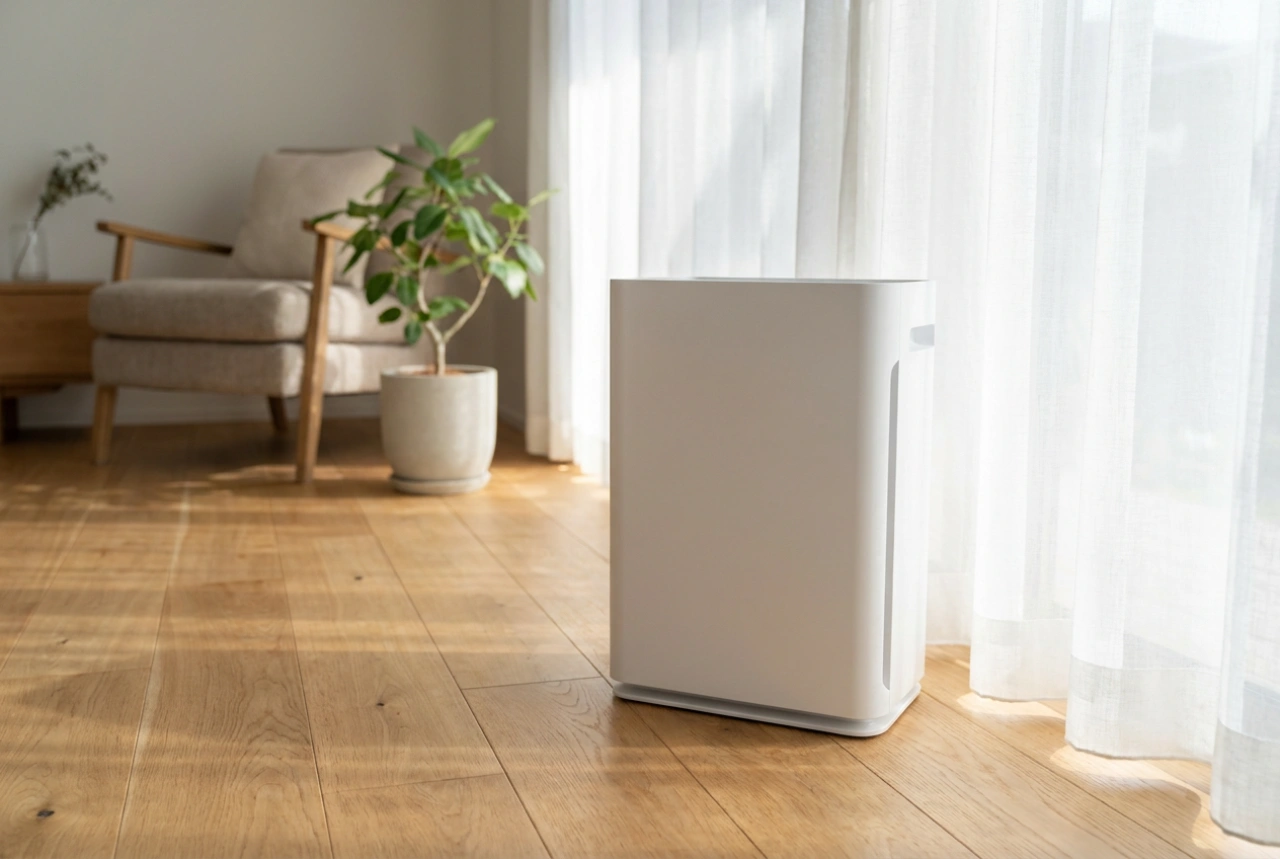
To help an air purifier capture dust before it settles, you must optimise the fluid dynamics of the room. Air purifiers rely on creating a continuous air exchange loop, drawing contaminated air in and pushing clean air out to establish a circular flow pattern.
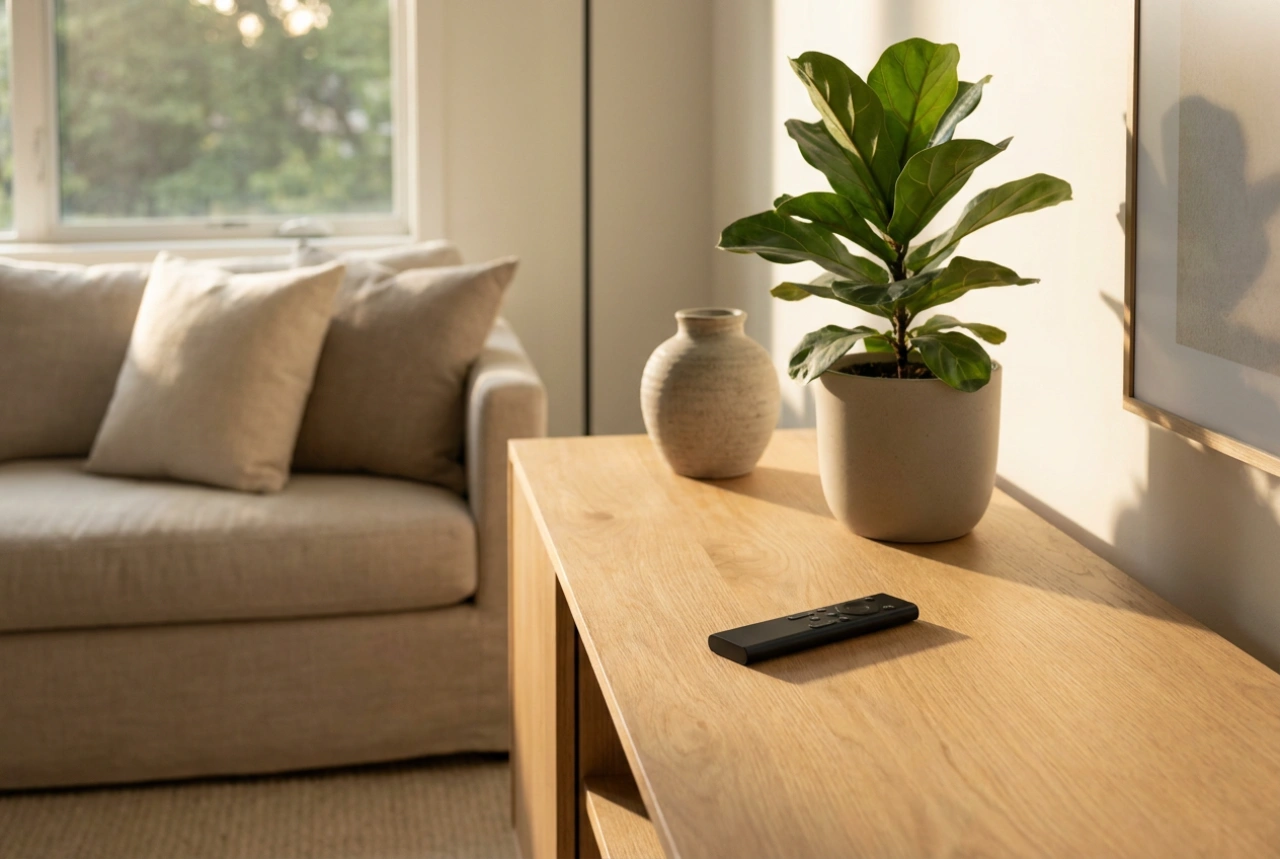
For maximum dust collection, place the unit in areas where air circulation is naturally high or where dust generation is concentrated. Position the purifier at least 30 to 50 centimetres away from walls, heavy drapes, and furniture. Placing a purifier too close to a wall restricts the intake of air, creating a localized dead zone where air stagnates and dust settles rapidly. Elevating the unit slightly (for example, on a sturdy side table) can also improve the capture rate of medium-weight particles that float at breathing and living level before falling to the floor.
Synergistic Cleaning Methods to Support the Purifier
To achieve a truly dust-free home, you must coordinate your manual cleaning routine with the operation of your air purifier. Since the purifier can only trap what is airborne, your goal should be to safely suspend settled dust into the path of the purifier's airflow without letting it resettle elsewhere.
When dusting, avoid dry feather dusters, which merely launch particles back into the air where they will drift and settle again later. Instead, use slightly damp microfibre cloths. Microfibre works via electrostatic attraction and capillary action, pulling dust into the tiny crevices of the synthetic fibres and trapping it there. For high surfaces, work from top to bottom. If any fine dust does escape into the air during this process, run your air purifier on its highest speed setting during and for one hour after cleaning to catch the newly airborne particles before they sink.
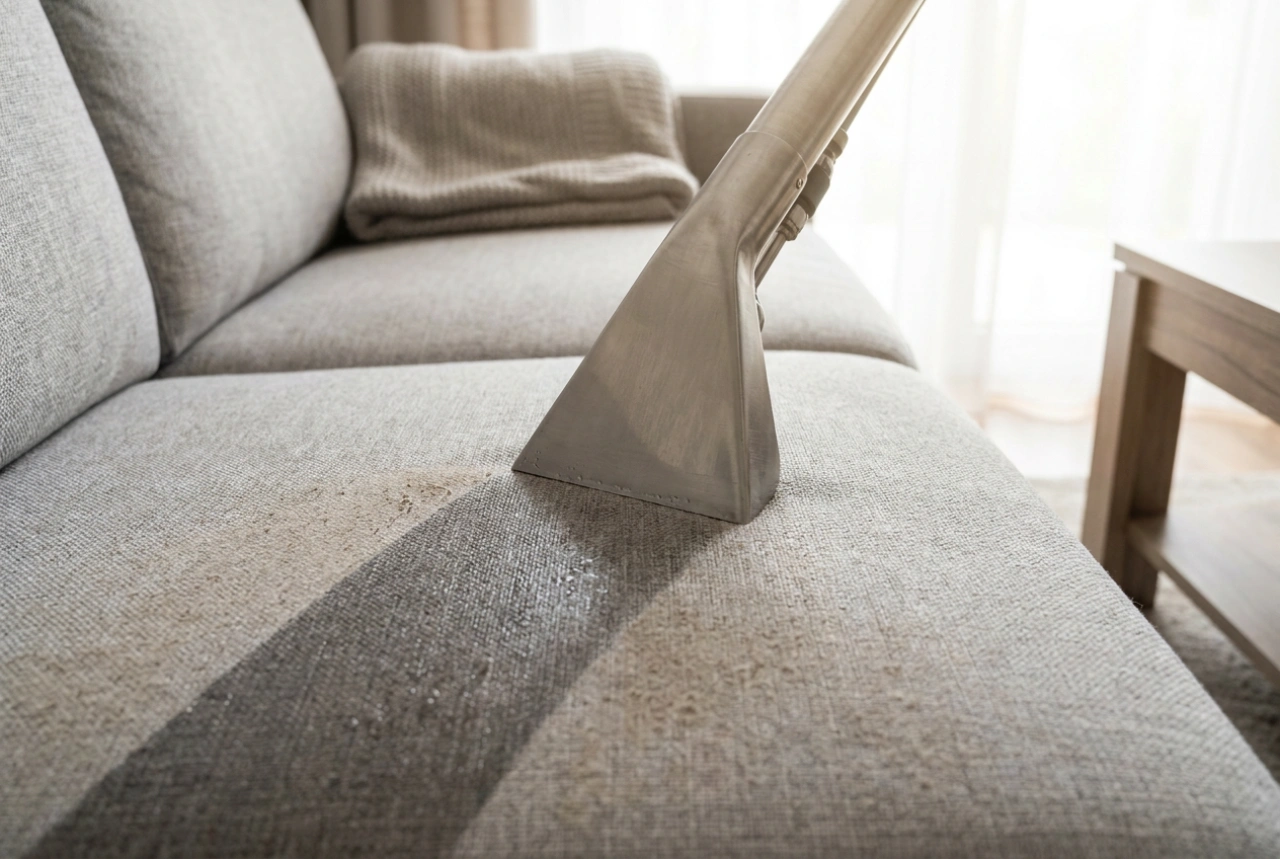
Vacuuming is another critical step. Ensure your vacuum cleaner features a sealed filtration system with a post-motor HEPA filter. Standard vacuums often blow fine dust back out through their exhaust ports, dispersing it into the room. Vacuuming with a high-quality sealed unit removes the heavy dust reservoir from carpets and upholstery, preventing it from being kicked up by foot traffic.
Managing Humidity and Static Electricity
The behaviour of dust is heavily influenced by indoor relative humidity. In dry environments (below 40% relative humidity), static electricity builds up on surfaces and particles. Static charges cause dust particles to repel one another, keeping them suspended in the air longer or causing them to cling stubbornly to electronics, walls, and furniture, making them harder to vacuum or filter.
Maintaining an indoor relative humidity level between 40% and 55% helps neutralise static charges. In this optimal range, dust particles tend to agglomerate—binding together into larger, slightly heavier clumps. While this makes them settle faster, it also makes them much easier to capture with microfibre cloths and high-quality vacuum cleaners, preventing fine dust from continuously circulating through your breathing zone.