

Maximising the storage capacity of a compact fridge-freezer requires an understanding of thermodynamic principles and chemical preservation rather than simply stacking items where they fit. By strategically placing food according to temperature zones and managing air circulation, you can significantly extend shelf life and eliminate wasted space.
Thermodynamic Zoning and Air Circulation
A refrigerator does not maintain a uniform temperature throughout its interior. Because cold air is denser than warm air, it naturally sinks, creating distinct microclimates. Understanding these temperature zones is crucial for food safety and space efficiency.
- The Bottom Shelf (Coldest Zone): Located directly above the crisper drawers, this area maintains the lowest temperature. It is the ideal microclimate for raw meat, poultry, and fish. Storing these highly perishable proteins here not only slows bacterial replication but also prevents cross-contamination from potential drips.
- The Middle and Upper Shelves (Moderate Zone): These shelves experience highly stable temperatures. Place dairy products, eggs, deli meats, and pre-prepared leftovers here. Keeping these items at a consistent temperature prevents premature protein degradation and fat separation.
- The Fridge Door (Warmest Zone): Subject to constant thermal fluctuations whenever the door is opened, this zone should never house highly perishable items like milk or eggs. Instead, utilise this space for high-acid or high-salt products, such as mustard, pickles, and preserves, which naturally resist microbial growth despite temperature shifts.
Managing Humidity and Ethylene Gas
Many compact fridges feature a single crisper drawer, which can lead to rapid spoilage if loaded incorrectly. The key factor here is managing moisture and ethylene—a natural plant hormone emitted by certain fruits that accelerates ripening and decay in surrounding produce.
To prevent premature rotting, separate ethylene producers (such as apples, pears, and tomatoes) from ethylene-sensitive items (like leafy greens, broccoli, and carrots). If space is limited to a single drawer, store ethylene-sensitive greens in sealed, reusable bags containing a clean dry cloth to absorb excess transpired moisture. This prevents water from pooling on the plant cells, which would otherwise invite fungal and bacterial growth.
Geometric Efficiency: Material Selection and Stacking
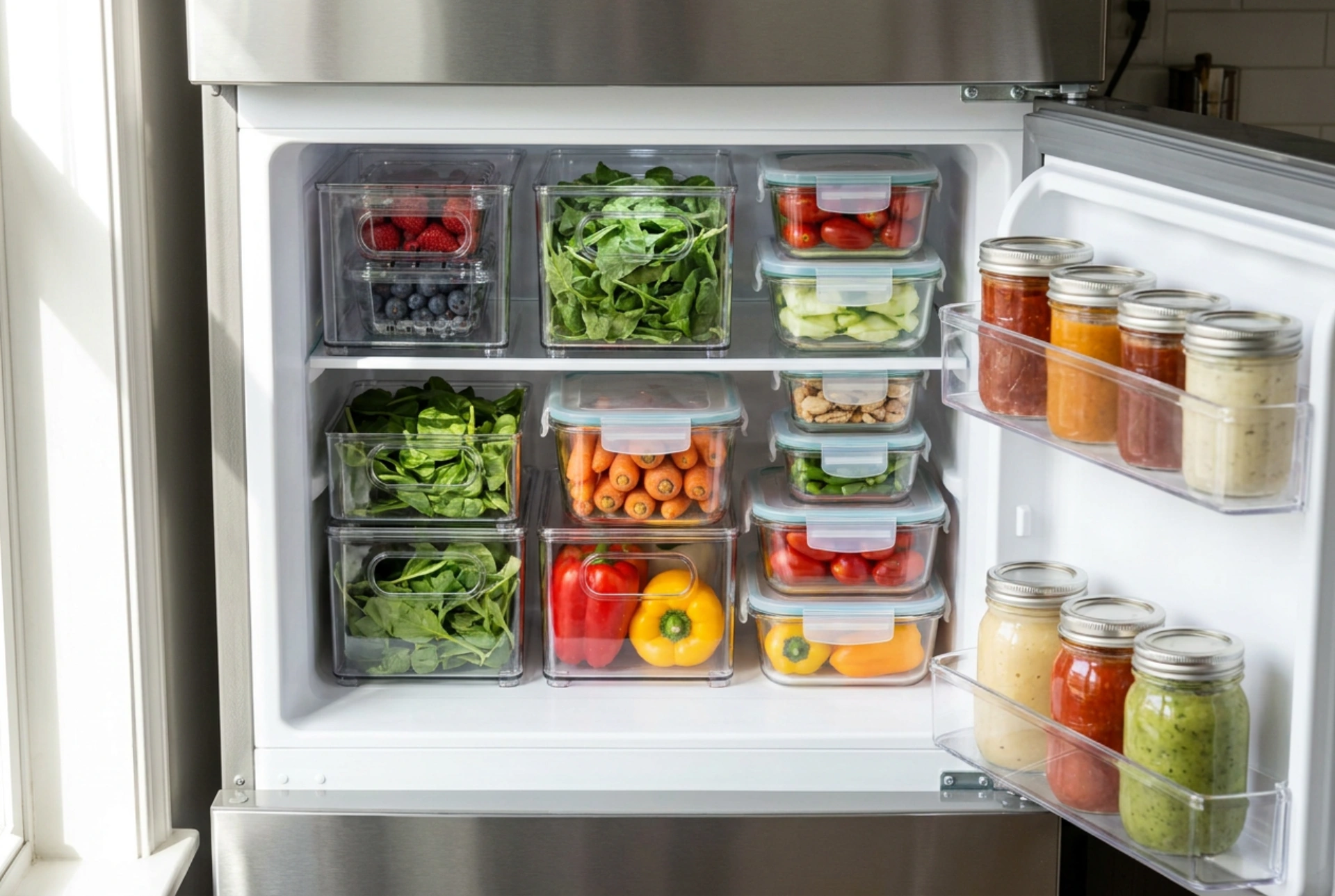
To reclaim lost space, move away from round containers. Round geometry leaves unused void spaces in corners, reducing shelf efficiency by up to 25 percent. Transitioning to square or rectangular modular containers allows you to utilise every square centimetre of the shelf.
The material of your containers also plays a role in temperature stability. Tempered glass is highly recommended over soft plastics. Glass has a higher thermal mass, meaning it absorbs and retains cold energy far better. When the fridge door is opened, glass containers help maintain the internal ambient temperature, reducing the workload on the compressor. Furthermore, glass is non-porous and resistant to chemical degradation from acidic foods, ensuring a hygienic environment.
Optimising the Freezer and Preventing Sublimation
Freezer burn is not a chemical reaction but a physical process called sublimation, where water molecules migrate from the food to the colder air, leaving dry, cellularly damaged patches on the surface. In a small freezer, avoiding this requires eliminating air pockets.
Always repackage bulk items into tightly wrapped, moisture-vapour-resistant materials, removing as much air as possible before sealing. Store flat items vertically—like files in a cabinet—rather than horizontally. This vertical file system allows you to identify contents instantly without holding the door open. Minimising the duration of open-door events prevents warm, humid room air from entering and condensing into frost on the evaporator coils, maintaining the mechanical efficiency of your appliance.