

Cleaning a refrigerator with a large, fully stocked freezer requires a strategic approach to temperature control and thermal insulation to prevent food spoilage. By understanding the physics of thermodynamics and utilizing targeted household chemistry, you can sanitize both compartments efficiently without compromising the safety of your frozen goods.
The Physics of Thermal Preservation: Protecting the Cold Chain
To clean a refrigerator without allowing the freezer's contents to thaw, you must exploit the principles of thermal mass and conduction. Frozen food items possess a high thermal mass, meaning they resist temperature changes because of the latent heat of fusion required to transition ice back into water. When packed tightly together, frozen items insulate each other, drastically slowing down the rate of ambient heat transfer.
Before opening the freezer door, prepare a temporary thermal barrier. A heavy-duty cooler is ideal, but if one is unavailable, a thick cardboard box lined with layers of clean newspaper or towels works exceptionally well. Cellulose-based materials contain thousands of microscopic air pockets that act as excellent insulators, minimizing conductive heat transfer. Group the frozen items tightly inside this insulated container to minimize their exposed surface area, and seal the top to prevent convective air currents from carrying warm air inside.
The Chemistry of Safe Cleaning: Breaking Down Organic Residues
Inside a refrigerator, spills and odors are primarily composed of lipids, proteins, and organic acids. Utilizing highly scented commercial detergents or chlorine bleach is not recommended; food-contact surfaces can absorb volatile organic compounds (VOCs), which then transfer to your food. Furthermore, strong acids or harsh solvents can degrade the high-impact polystyrene (HIPS) liner of the refrigerator.
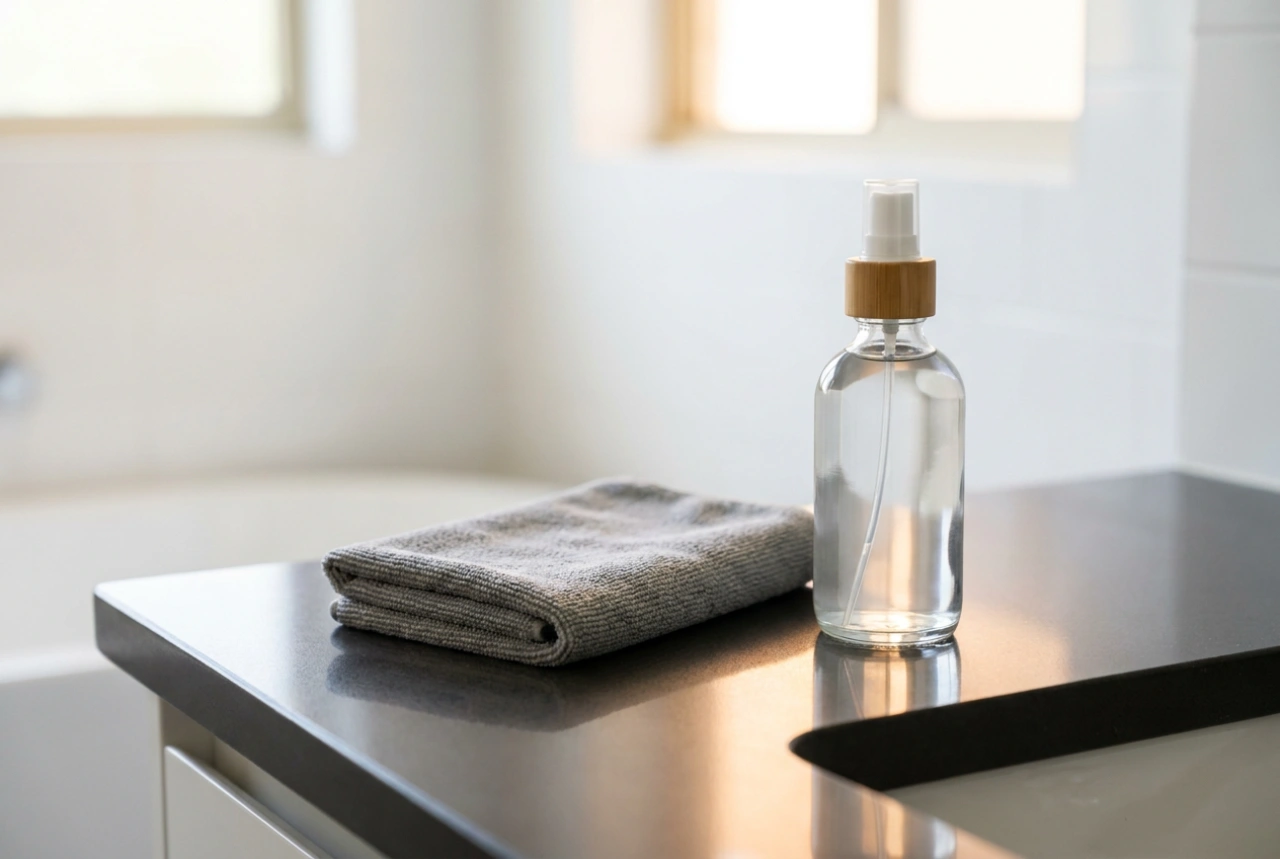
Instead, employ household chemistry to safely dissolve grime. A mild solution of sodium bicarbonate (baking soda) dissolved in lukewarm water is highly effective. Sodium bicarbonate is a weak alkaline salt (pH around 8.3). It acts as a gentle surfactant, saponifying fatty acids and neutralizing acidic odor molecules, such as the butyric acid found in spoiled dairy, turning them into odorless salts. For stubborn, greasy spots, a drop of neutral dishwashing liquid (which utilizes synthetic surfactants with hydrophilic heads and lipophilic tails) will emulsify lipids, allowing them to be wiped away easily.
To disinfect surfaces rapidly without leaving residue, use a 70% isopropyl alcohol solution. Isopropyl alcohol denatures proteins in microbial cell walls. The 30% water content is crucial as it slows evaporation, allowing the alcohol to penetrate the cell membrane before evaporating completely. Because alcohol evaporates quickly, it is ideal for cold environments where water-based cleaners might linger and freeze.
The Order of Operations: Efficiency and Speed
The key to preventing food defrosting is minimizing the time the appliance doors remain open. Follow a precise sequence of actions to optimize the process:
- Phase 1: Preparation and Extraction: Prepare your cleaning solutions and microfiber cloths beforehand. Empty the refrigerator compartment first, placing perishable dairy and meats into the thermal container along with the frozen goods. Leave the freezer door shut during this phase.
- Phase 2: Mechanical Cleaning: Remove all detachable glass shelves and drawers. Do not wash cold glass with hot water; the sudden temperature differential causes thermal stress, leading to microscopic fractures or immediate shattering. Allow the glass to adjust to room temperature before cleaning with lukewarm water.
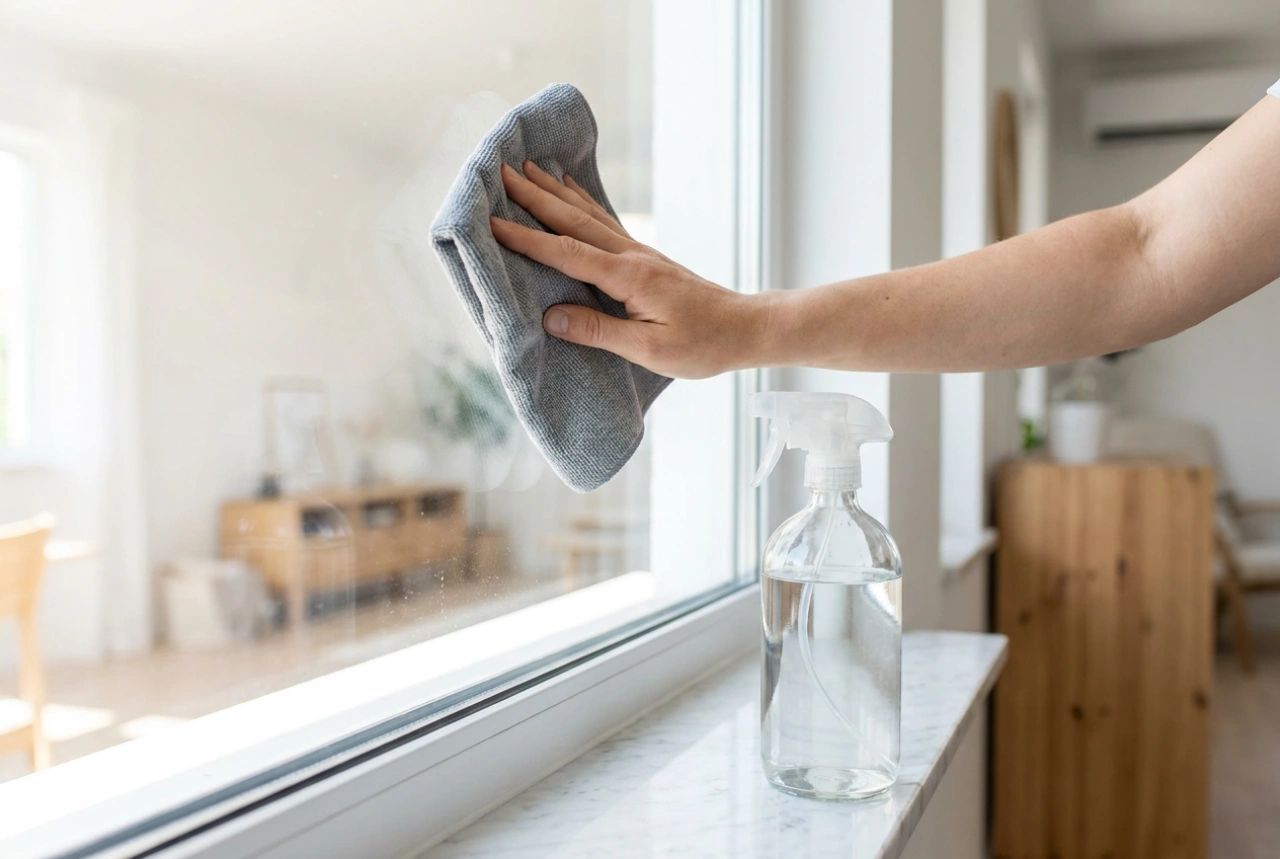
- Phase 3: Surface Decontamination: Wipe down the internal walls using a microfiber cloth. Microfiber utilizes microscopic wedge-shaped polyester and nylon fibers that physically grab and trap microscopic debris through capillary action and static electricity, requiring less moisture and effort.
- Phase 4: Swift Freezer Maintenance: If the freezer compartment itself needs cleaning, work rapidly. Pull out one drawer at a time, wipe the interior walls quickly with the isopropyl alcohol solution (which has a lower freezing point and will not freeze on contact), dry immediately, and return the drawer.
Moisture Management: Preventing Immediate Frost Formation
Any moisture left behind on the interior walls of either compartment will undergo deposition—transitioning directly from water vapor or liquid into ice. This ice layer acts as an unwanted thermal insulator on the evaporator coils, forcing the compressor to work harder, consuming more electricity, and reducing the lifespan of the appliance.
Ensure every surface, corner, and seal gasket is thoroughly dried using a dry, high-pile waffle-weave microfiber cloth, which has a superior absorption capacity. Pay special attention to the magnetic door gaskets; moisture trapped here can freeze, causing the seal to stick and tear when the door is next opened, which would permanently compromise the appliance's thermal seal.