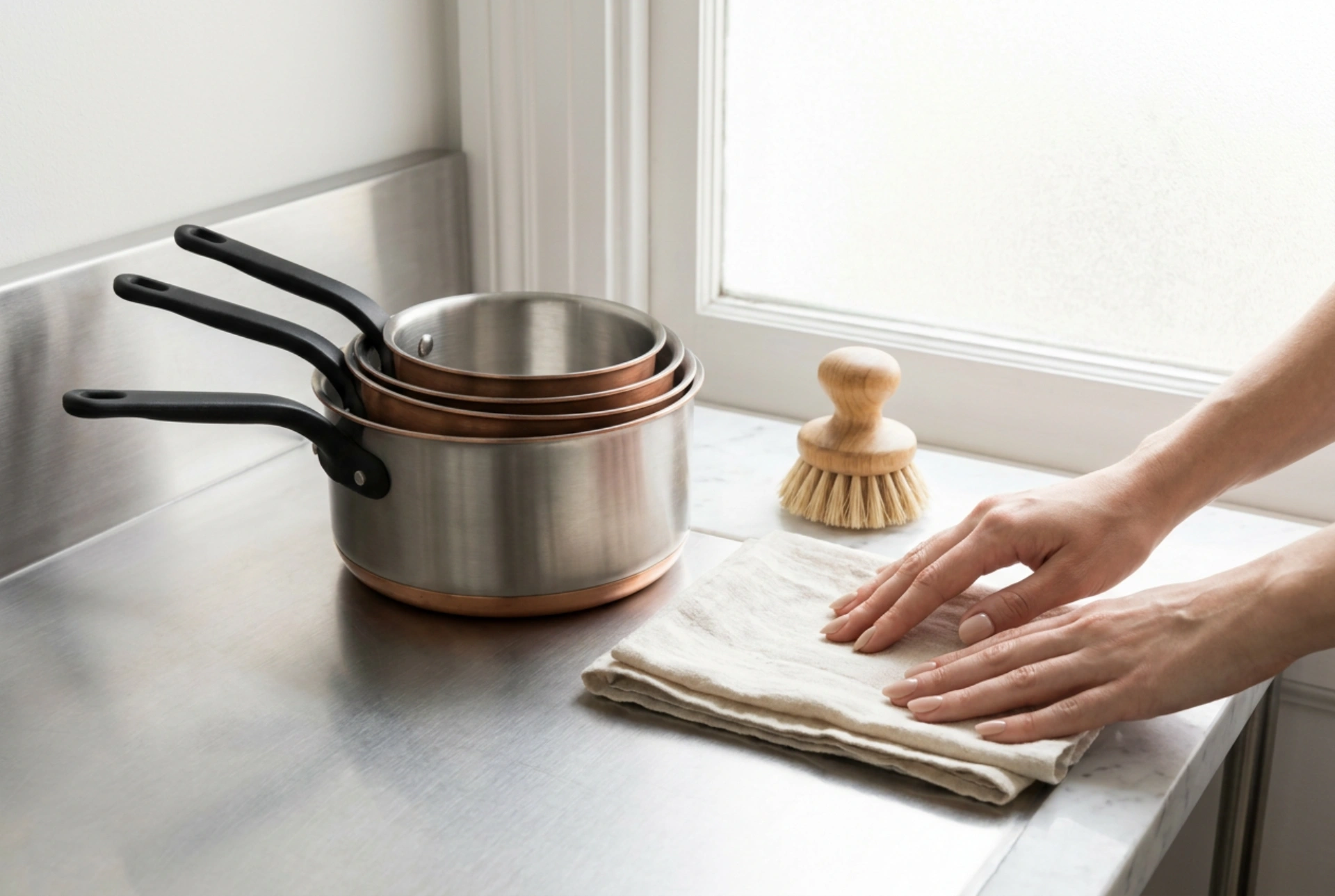


Restoring the pristine, highly conductive base of a frying pan is essential not only for kitchen hygiene but also for maintaining optimal thermal efficiency on your hob. Accumulated carbonised grease and microscopic warping directly hinder heat transfer, resulting in uneven cooking temperatures and wasted energy.
The Chemistry of Carbonised Grease on Pan Bases
When oils and cooking fats escape over the rim of a pan, they migrate to the high-heat zone of the base. Exposed to temperatures exceeding their smoke points, these lipids undergo polymerization. This chemical reaction links individual fat molecules into long, stubborn chains, creating a tough, varnish-like coating that resists standard dish soaps. To break these polymer chains, you must employ chemical agents that target their specific molecular structure.
Alkaline compounds, such as sodium bicarbonate (baking soda) or sodium carbonate (washing soda), are highly effective here. When mixed with water, these compounds create a mild alkaline solution that initiates hydrolysis, breaking down the ester bonds in the polymerized fats. For severe build-up, combining sodium bicarbonate with hydrogen peroxide creates a powerful oxidizing paste. The oxygen bubbles physically lift the loosened organic matter from the metallic surface, significantly reducing the manual scrubbing required.
Safe and Effective Cleaning Protocols
To clean the base of your pan without degrading the underlying metal, follow a structured chemical-mechanical approach:
- The Thermal Acid Bath: For stainless steel or copper-bottomed pans showing heavy discolouration and light carbon buildup, acidity is key. Submerge the base of the pan in a warm solution of water and citric acid or white vinegar (acetic acid). The acid dissolves the thin layer of metallic oxides that cause rainbow-like discolouration, exposing the bright metal beneath.
- The Alkaline Paste Application: Mix sodium bicarbonate with a small amount of water to form a thick, paste-like consistency. Apply this generously to the blackened areas of the pan base. Let it sit for at least thirty minutes to allow the alkaline hydrolysis to work.
- Controlled Mechanical Agitation: Avoid using coarse steel wool, which creates deep micro-scratches on copper, aluminium, and even stainless steel. These microscopic scratches actually provide a larger surface area for future grease to bond with, accelerating carbon build-up. Instead, use a non-scratch polymer scouring pad or a wooden scraper to gently dislodge the softened residue.
The Physics of Warping: Why Pan Bases Distort
A perfectly flat pan base is critical for induction and ceramic hobs, where heat transfer relies on direct physical contact. Warping is caused by thermal stress. Metals expand when heated and contract when cooled. If a pan is subjected to rapid temperature changes—such as placing a hot pan directly under a cold tap—the metal undergoes thermal shock. Because different parts of the pan cool at different rates, internal stresses buckle the metal, permanently warping the base.
Multi-clad pans, which layer different metals like aluminium and stainless steel to exploit their respective thermal properties, are particularly vulnerable. Aluminium expands at a faster rate than stainless steel. When heated too rapidly, the uneven expansion rates can cause the layers to shear or bow, permanently ruining the flat profile of the pan.
Maintaining a Perfectly Flat Contact Surface
Preventing thermal deformation is far easier than trying to correct a warped base. To preserve the flat profile of your cookware, implement these thermal management habits:
- Gradual Preheating: Always heat your pans gradually on medium or low settings before raising the temperature. This allows the heat to distribute evenly across the entire surface, preventing localized hot spots that induce warping.
- Controlled Cooling: Allow pans to cool completely to room temperature before exposing them to water. Never deglaze the exterior base of a hot pan.
- The Flatness Test: To check if your pan base is still flat, place a metal ruler edge-on across the bottom of the cold pan. Shine a light behind the ruler; if light passes through the centre, the pan has warped. Alternatively, pour a tiny amount of water on the base of an inverted pan to see if it pools evenly or runs off to one side.