

Removing stubborn labels from glass jars often ends in a sticky, scratched mess, but understanding the chemistry of adhesives allows you to dissolve the bond cleanly without resorting to harsh acetone or abrasive scraping.
Understanding the Science of Adhesive Bonds
Most commercial jar labels use pressure-sensitive adhesives (PSAs), which rely on viscoelastic properties to stick to glass. These adhesives are typically made of acrylic polymers or synthetic rubber. Unlike reactive glues that cure and harden, PSAs remain in a highly viscous, semi-solid state. They form physical bonds by flowing into the microscopic imperfections of the glass surface. To remove them without damaging the glass, you must disrupt this intermolecular grip. This can be achieved by changing the temperature to alter the adhesive's viscosity, or by using chemical solvents that share a similar molecular structure to the glue, allowing them to dissolve or weaken the polymer chains.
The Lipophilic Strategy: Dissolving Glue with Oil
One of the most effective and gentle methods to tackle rubber-based adhesives is utilizing the chemical principle of "like dissolves like." Since these adhesives are non-polar organic compounds, they are lipophilic, meaning they dissolve readily in fats and oils. Standard vegetable oils, such as rapeseed or sunflower oil, act as excellent non-polar solvents. When applied to the adhesive residue, the oil molecules penetrate the polymer matrix, swelling and lubricating the chains. This weakens the cohesive strength of the glue, turning a sticky layer into a soft, easily wipeable paste. To apply this, saturate the adhesive layer with a thin coat of oil, let it sit for 15 to 20 minutes to allow penetration, and then gently wipe the residue away with a dry linen cloth.
The Thermal Method: Lowering Viscosity
Heat is a powerful physical tool for weakening adhesive bonds. As temperature increases, the kinetic energy of the adhesive molecules rises, making the polymer chain structures much more fluid and less cohesive. This process reduces the shear strength of the glue. Placing the jar in a warm water bath (around 50 to 60 degrees Celsius) or using a hair dryer on a medium setting can soften the adhesive sufficiently to let the label peel off in one clean motion. Crucially, avoid thermal shock: do not plunge a cold glass jar into boiling water, as the rapid, uneven expansion of the glass silica structure can cause structural failure and cracking.
The Alkaline and Surfactant Synergy: Baking Soda and Soap
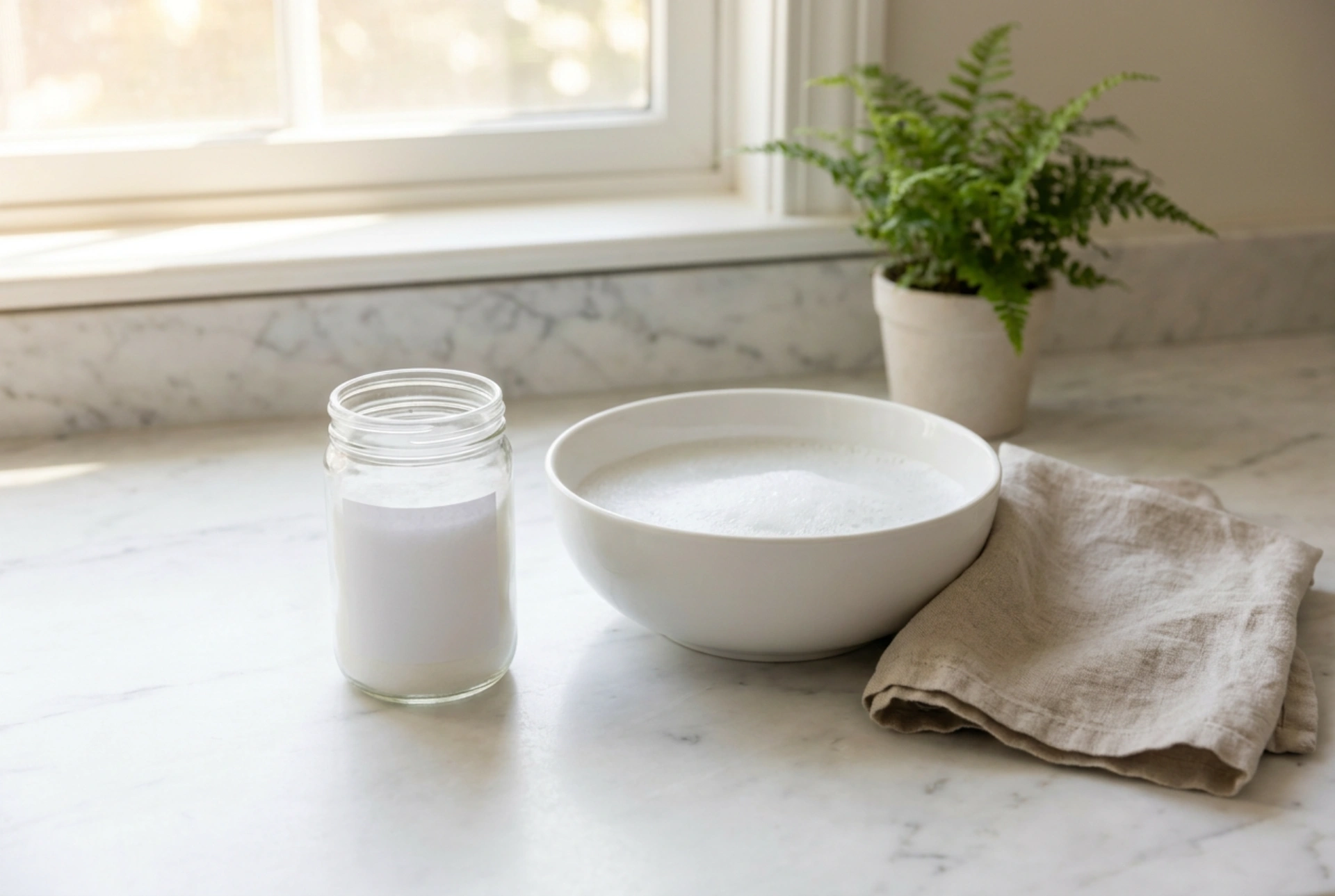
For acrylic-based adhesives that resist oil, a combination of sodium bicarbonate (baking soda) and surfactants (dishwashing liquid) works exceptionally well. Sodium bicarbonate is a mild alkali. When mixed with water, it creates a slightly basic solution that helps break down acidic polymer chains in acrylic glues. Additionally, its physical structure acts as an ultra-mild, non-scratching abrasive. When combined with surfactants, which lower the surface tension of water and encapsulate hydrophobic dirt particles, the adhesive is emulsified. Mix equal parts baking soda and liquid soap into a thick paste, apply it to the label residue, let it sit for 10 minutes, and gently rub in a circular motion with a soft cloth before rinsing with warm water.
Step-by-Step Removal Process
- Step 1: Soften the paper. Soak the jar in warm water for 5 minutes to saturate and peel away the paper backing, exposing the underlying adhesive.
- Step 2: Apply the solvent. Select either vegetable oil (for rubber-based glues) or a baking soda and soap paste (for acrylic-based glues) and apply it directly to the sticky residue.
- Step 3: Allow chemical contact time. Let the mixture sit undisturbed for 15 minutes to allow the molecules to penetrate and break the adhesive bonds.
- Step 4: Wipe clean. Use a dry, soft cloth to lift the softened adhesive. Work from the edges inward to prevent spreading the residue.
- Step 5: Final degreasing. Wash the glass with warm water and standard washing-up liquid to remove any remaining oil or alkali paste, leaving a crystal-clear, smooth surface.