

Effective maintenance of an automatic or manual espresso machine relies on understanding the chemistry of dairy lipids, proteins, and mineral precipitation. Regular cleaning prevents bacterial growth in the milk circuit and ensures stable thermal conduction during the brewing process, preserving both the mechanical integrity of the appliance and the quality of the extraction.
The Chemistry of Milk Residue: Why Water is Not Enough
Milk is a complex emulsion of lipids (fats), proteins (mainly casein and whey), and carbohydrates (lactose) suspended in water. When milk is texturized with steam, temperatures reach between 60°C and 65°C. At this threshold, whey proteins denature, unfolding their molecular chains and forming strong adhesive bonds with the internal surfaces of the steam wand or milk frother circuits. Meanwhile, the hydrophobic fats adhere to these protein layers, creating a resilient, waterproof film.
Flushing the system with cold or hot water alone cannot dissolve this lipid-protein matrix. Water cannot emulsify the fats, and heat can actually cook the remaining proteins further, hardening the residue. To break this bond, you must use a dedicated alkaline or surfactant-based cleaner. These solutions work through saponification and emulsification: they break the peptide bonds of the proteins and encapsulate the hydrophobic fat molecules, allowing them to be easily rinsed away with clean water.
The Milk Circuit Maintenance Protocol
To keep the milk system hygienic and functional, follow a strict chemical and physical cleaning sequence. After every frothing session, a quick steam purge is essential to blow out immediate residue, but a daily deep clean is required if the system is used regularly.
- Dilution and Temperature: Mix your cleaning agent with lukewarm water (around 40°C). Water that is too hot can cause proteins to coagulate inside the narrow tubes before the surfactant can break them down.
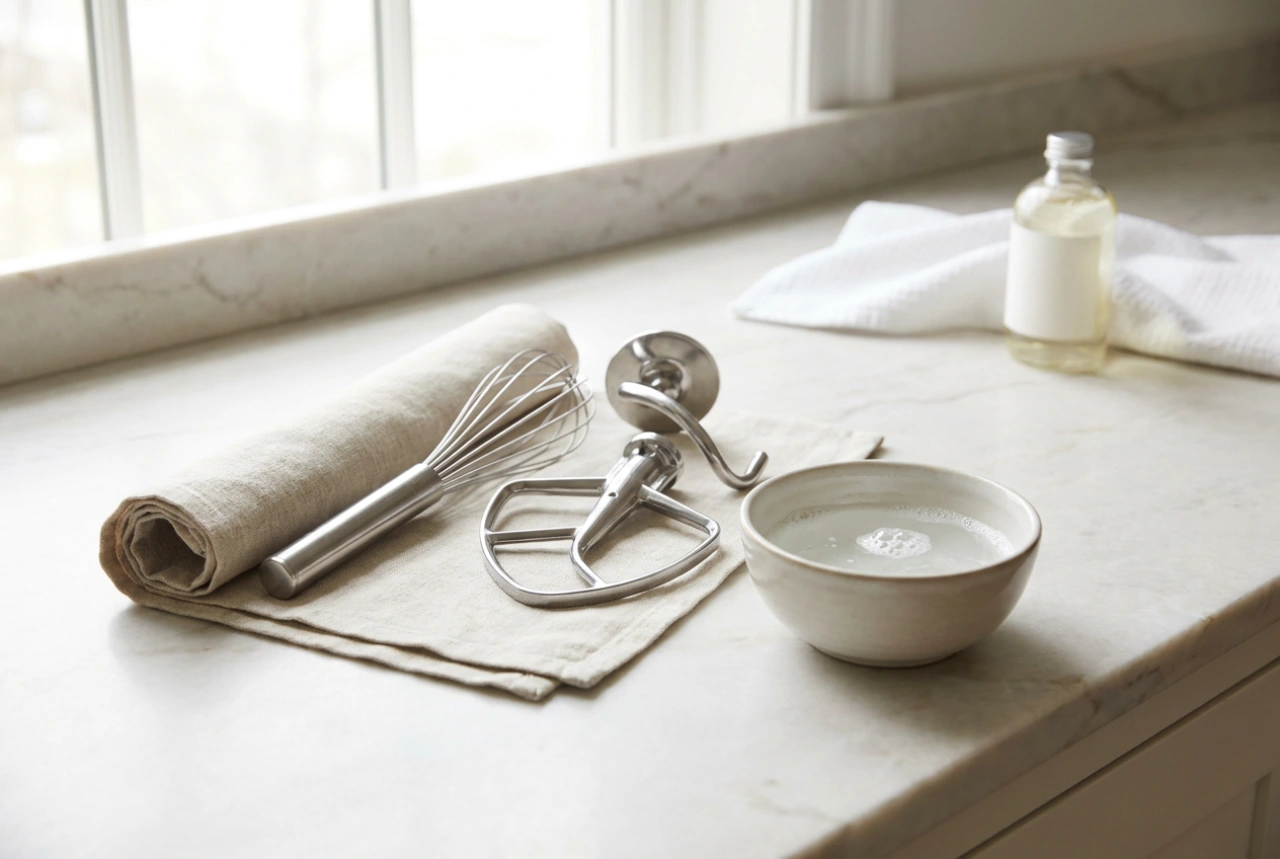
- Disassembly: Remove the frothing nozzle, casing, and suction tubes. Immerse these components in the prepared solution for 15 to 30 minutes to allow the surfactants to fully penetrate the lipid layers.
- Mechanical Cleansing: Use fine, soft-bristled brushes specifically sized for micro-tubes. Avoid metal needles or harsh abrasives, as they can scratch the silicone and plastic pathways, creating microscopic crevices where bacteria can multiply even faster.
- Rinsing: Flush the entire system with clean, cold water to remove any chemical surfactant residues, ensuring no alkaline taste alters your next beverage.
Demystifying Limescale: The Physics of Descaling
Water contains dissolved minerals, primarily calcium and magnesium hydrogen carbonates. When water is heated inside the boiler or thermoblock of a coffee machine, a chemical decomposition occurs. The soluble hydrogen carbonates convert into insoluble calcium carbonate (limescale), carbon dioxide, and water. This precipitate adheres directly to the heating elements and internal pipe walls.
Limescale acts as an extremely effective thermal insulator. As the scale layer thickens, the heat transfer from the heating element to the water is severely compromised. This leads to fluctuating brewing temperatures—often resulting in sour, under-extracted coffee—and forces the heating element to work longer, eventually causing thermal failure. Furthermore, scale restricts the narrow water channels, reducing water pressure and disrupting the precise fluid dynamics required for proper espresso extraction.
Selecting the Right Descaling Acid
Descaling is a simple acid-base neutralization reaction where a mild acid reacts with the alkaline calcium carbonate to form a highly soluble salt and carbon dioxide gas. However, choosing the correct acid is vital for the longevity of the machine's internal metallurgy:
- Lactic Acid: Excellent for modern machines. It is highly effective at dissolving calcium carbonate while remaining gentle on copper, brass, and aluminum boiler walls.
- Citric Acid: A common organic acid that works well, but must be used with caution in very hot systems, as it can sometimes form calcium citrate precipitates if the concentration is too high or the temperature is extreme.
- Sulfamic Acid: Highly efficient and fast-acting, often used in professional descaling powders because it dissolves scale without causing pitting corrosion on stainless steel.
Avoid using household white vinegar (acetic acid). Acetic acid is highly aggressive toward elastomeric seals and rubber O-rings inside the machine, leading to premature leaks. It also leaves a persistent, highly volatile residue that is extremely difficult to flush out, altering the flavor profile of the coffee for weeks.
Degreasing the Brew Group: Removing Coffee Oils
Roasted coffee beans contain natural lipids and diterpenes. During extraction under high pressure, these oils coat the shower screen, portafilter, and brew group. Over time, exposure to oxygen and heat causes these trapped oils to oxidize and turn rancid, introducing a bitter, acrid taste to the espresso.
To eliminate these oxidized lipids, you must use an oxygen-based bleaching agent, typically sodium percarbonate. When dissolved in hot water (above 80°C), sodium percarbonate releases active oxygen and sodium carbonate. This combination acts as a powerful degreaser and oxidizer, breaking down the stubborn polymer chains of the baked-on coffee oils. For machines equipped with a three-way solenoid valve, perform a backflushing cycle with a blind filter basket, followed by several clear-water flushes to ensure the pressure release pathway is completely free of chemical residue.