

Operating an air purifier with an ionizer requires understanding how airborne particles behave when subjected to electrostatic charges. Proper placement and targeted usage patterns ensure optimal particle precipitation and filtration efficiency without accumulating static charge on surrounding surfaces.
The Physics of Ionisation and Filtration
To maximise the efficiency of an ionizing air purifier, one must understand the underlying electrostatic principles. An ionizer functions by generating a high-voltage electric field—typically via a corona discharge needle—which transfers electrons to passing gas molecules. This process creates negative ions (anions) that disperse into the room. When these ions collide with airborne particulates such as dust, pollen, or pet dander, they transfer their negative charge to these pollutants.
According to Coulomb's law, oppositely charged bodies attract, while similarly charged bodies repel. In a typical indoor environment, neutral airborne particles that acquire a negative charge undergo two distinct phenomena:
- Agglomeration: Charged particles attract neutral or positively charged particles in the air, clumping together to form larger, heavier masses. These enlarged aggregates are far more easily captured by the mechanical fibers of a True HEPA (High-Efficiency Particulate Air) filter.
- Precipitation: If the particles do not pass through a physical filter immediately, their electrostatic charge draws them toward grounded, neutral surfaces such as walls, floors, and furniture, pulling them out of the breathing zone.
Strategic Placement for Fluid Dynamics
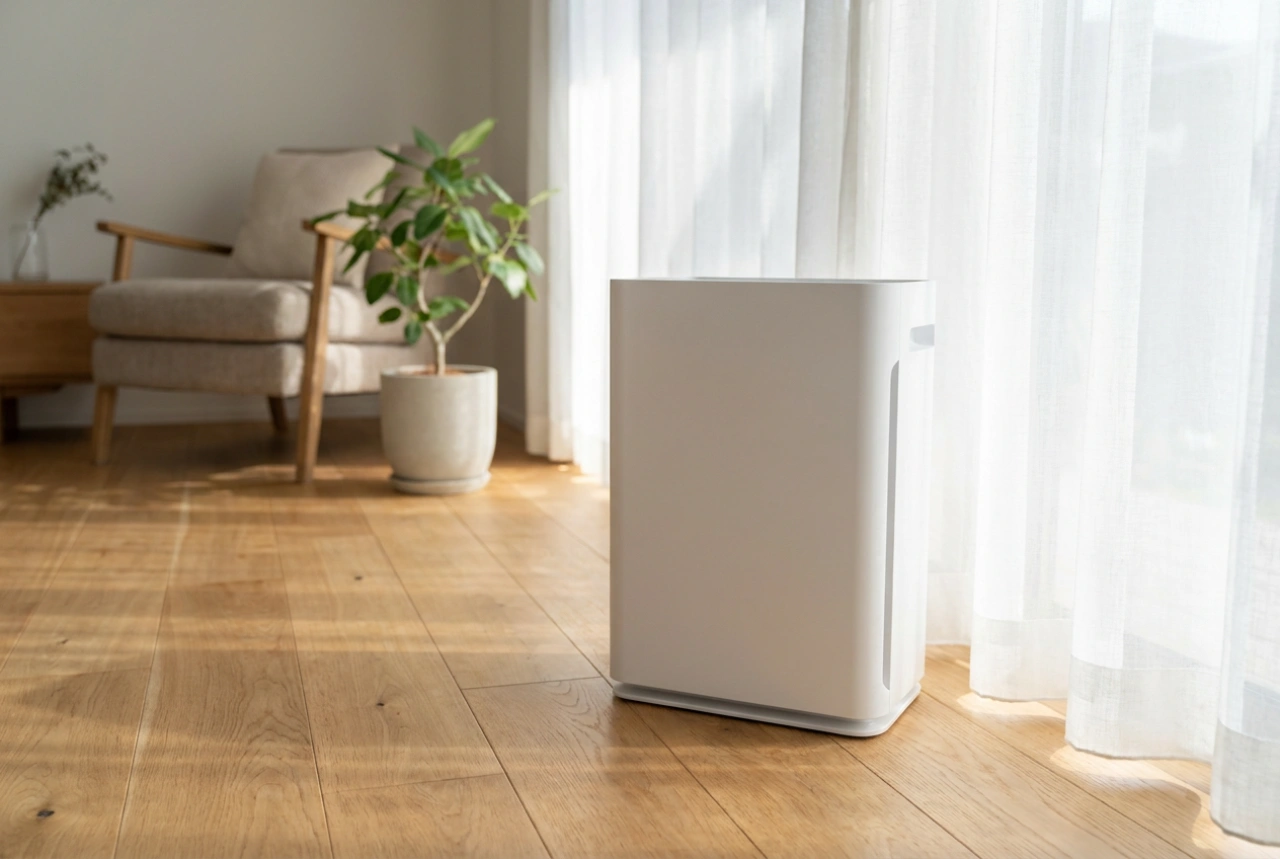
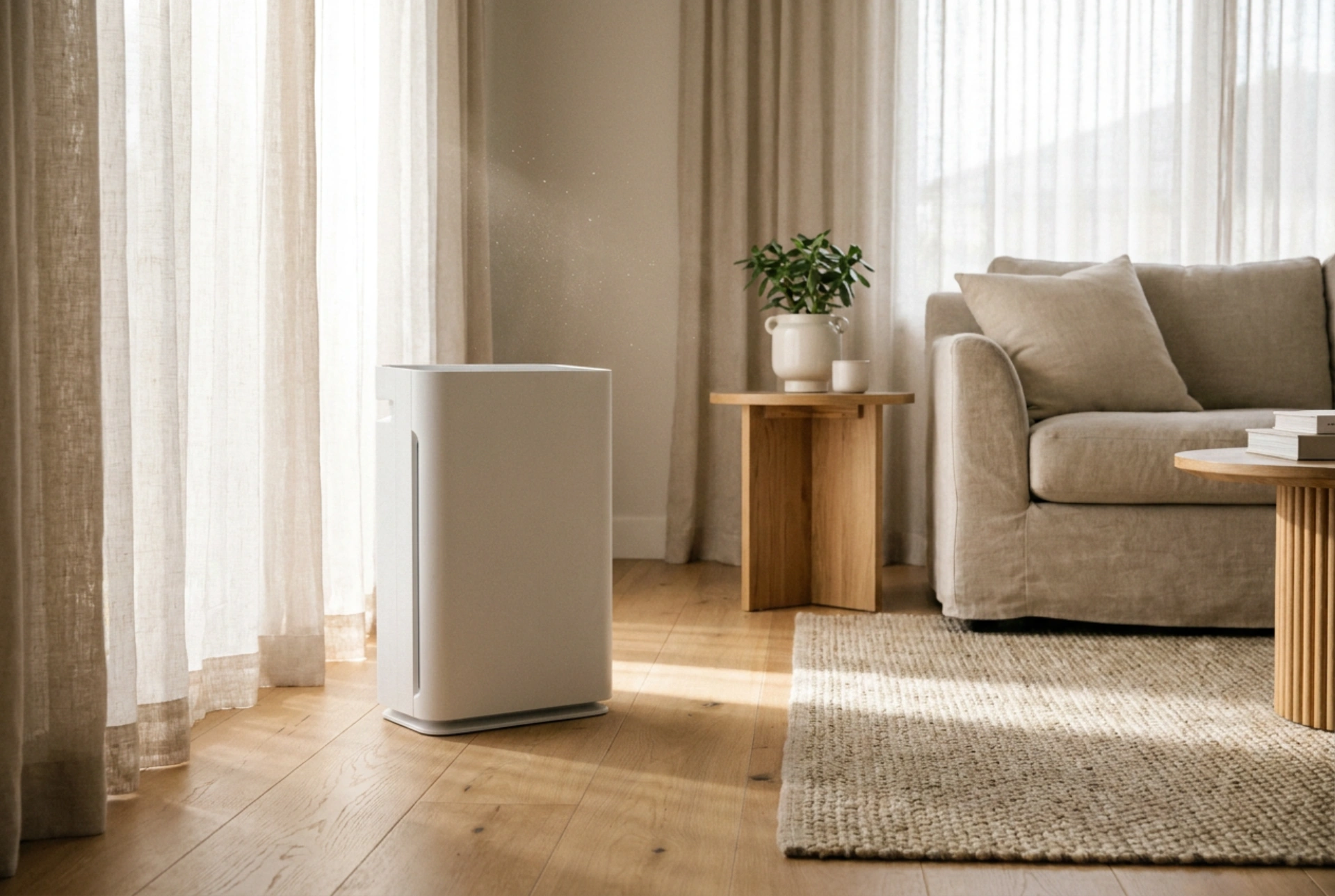
Airflow patterns dictate how effectively an ionizer-purifier treats a room. Placing the device in a corner or directly against a wall creates aerodynamic dead zones, reducing the air exchange rate. To maintain optimal fluid dynamics, position the unit at least 50 centimetres away from walls, heavy drapes, and large furniture. This clearance allows the intake grilles to pull in air from a 360-degree radius and ensures the unimpeded projection of ions into the room volume.
Furthermore, height placement should align with the physical properties of the target pollutants. Heavy allergens like pollen and dust mites settle quickly and are best captured by a unit positioned on or near the floor. Conversely, lighter particulates like tobacco smoke and combustion byproducts remain suspended at head height, making a tabletop or shelf placement more effective for immediate extraction.
Managing Ozone and Electrostatic Deposition
A critical chemical consideration of electrical ionisation is the potential generation of ozone (O3) as a chemical byproduct. When high-voltage electrodes split stable oxygen molecules (O2), highly reactive oxygen atoms can bind with remaining O2 molecules. To mitigate ozone accumulation, the purifier should be run in well-ventilated rooms, or the ionisation function should be operated cyclically rather than continuously.
To prevent the "black wall effect"—where precipitated, charged dust clings permanently to walls and ceilings—combine ionisation with continuous low-speed mechanical filtration. This ensures that charged particles are drawn into the physical filter media before they have a chance to bond electrostatically with the surrounding drywall or plaster surfaces.
Electrode and Filter Maintenance
The efficiency of corona discharge decays rapidly as airborne grease, dust, and microscopic debris coat the ionizing needle. Over time, this insulation layer reduces the voltage differential, halting ion production. Every four to six weeks, disconnect the device from its power source and locate the ionizing pin—typically a small, sharp metallic needle near the outlet. Using a cotton swab dampened with high-purity isopropyl alcohol, gently wipe the tip of the needle to dissolve accumulated residues, allowing it to dry completely before restarting.
Simultaneously, mechanical filters must be inspected. A saturated HEPA filter increases aerodynamic resistance, which strains the fan motor and reduces the clean air delivery rate. Vacuum the pre-filter monthly to remove coarse lint, and replace the main HEPA element according to the manufacturer's pressure-differential guidelines to maintain a constant, clean airstream.