

Maintaining a kitchen sink equipped with a waste disposal unit requires more than just running water during operation. Over time, microscopic food particles, fats, and starch adhere to the grinding chamber, the impellers, and the rubber splash guard, creating a breeding ground for anaerobic bacteria that produce foul odors.
The Biophysics of Disposal Odors
To eliminate odors permanently, one must understand their source. The interior of a waste disposer is a dark, humid environment highly conducive to bacterial colonization. When organic matter is pulverized, a fine mist of proteins, lipids, and carbohydrates is thrown against the upper walls of the chamber and the underside of the rubber splash guard. As bacteria decompose these residues, they release volatile organic compounds (VOCs) such as hydrogen sulfide and organic amines. Standard rinsing only clears the bottom of the chamber, leaving these upper residues to rot. Therefore, effective maintenance must combine physical abrasion to dislodge biofilm with chemical neutralization to eliminate volatile odor molecules.
Mechanical Scrubbing with Cryogenic Friction
Unlike standard knives, waste disposers use blunt impellers and centrifugal force to push waste against a stationary grind ring. Because there are no sharp blades to dull, utilizing hard, abrasive materials is an excellent way to clean the internal components. Introducing a mixture of ice cubes and coarse sodium chloride (rock salt) into the unit achieves a powerful scrubbing effect. The physical impact of the hard ice crystals shears off stubborn organic deposits from the spinning plate and stationary ring. Furthermore, the extreme cold of the ice temporarily solidifies any viscous fats or grease clinging to the walls, making them brittle and easier to fracture and flush away. As the ice melts, the saline solution creates a high-density scouring slurry that cleans hard-to-reach crevices.
The Chemistry of Acid-Base Deodorization
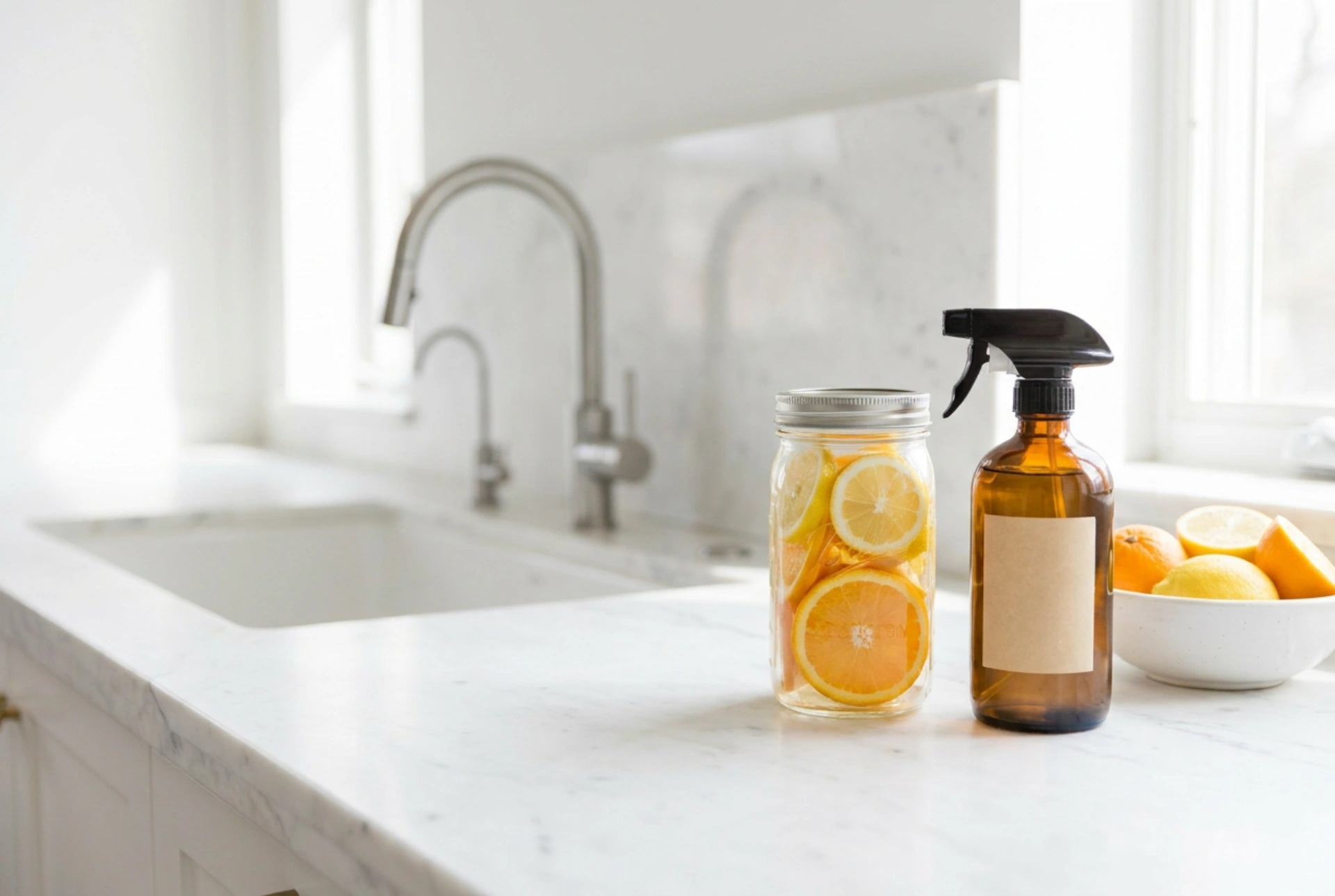
For chemical neutralization, a dual-action approach using sodium bicarbonate (baking soda) and weak acetic acid (white vinegar) or citric acid is highly effective. This classic reaction serves a dual scientific purpose in a waste disposer:
- Mechanical Lifting: The reaction between sodium bicarbonate and acid rapidly generates carbon dioxide gas (CO2). This effervescent action creates a dense foam that expands upward, reaching the underside of the splash guard and the top of the grinding chamber to physically lift loosened particles.
- pH Neutralization: Odor-causing molecules have different pH properties. Alkaline odors (such as those from fish or decaying proteins) are neutralized by the acidic vinegar, while acidic odors (such as rancid organic fats and butyric acid) are neutralized by the alkaline sodium bicarbonate, converting volatile smelly compounds into odorless salts.
To execute this, pour half a cup of sodium bicarbonate down the drain, followed by a cup of vinegar. Allow the foam to work for ten minutes before flushing.
Thermal Management: The Cold Water Rule
A common operational mistake is using warm or hot water while grinding food waste. Hot water liquefies animal fats and vegetable oils, allowing them to coat the grinding mechanism and flow into the drainage pipes. Once the water cools further down the line, these fats solidify, creating thick barriers that trap other organic waste and cause severe blockages and persistent sour smells. Always operate the disposer with a strong flow of cold water. Cold water ensures that lipids remain solid and granular, allowing the impellers to chop them into micro-particles that suspend easily in the water stream and flow smoothly through the plumbing system without sticking.
Deep Cleaning the Splash Guard
The rubber baffle or splash guard at the sink neck is the primary source of silent odors. Because it sits above the active grinding zone, it is rarely cleaned by the spinning action of the disposer. To clean it, switch off the electrical power supply to ensure absolute safety. Using a firm-bristled brush dipped in a solution of warm water and oxygen bleach, scrub the underside of the rubber folds thoroughly. This mechanical scrubbing removes the black slime (biofilm) that accumulates in the folds, while the oxygen bleach oxidizes organic pigments and sterilizes the surface without damaging the elastomer material.