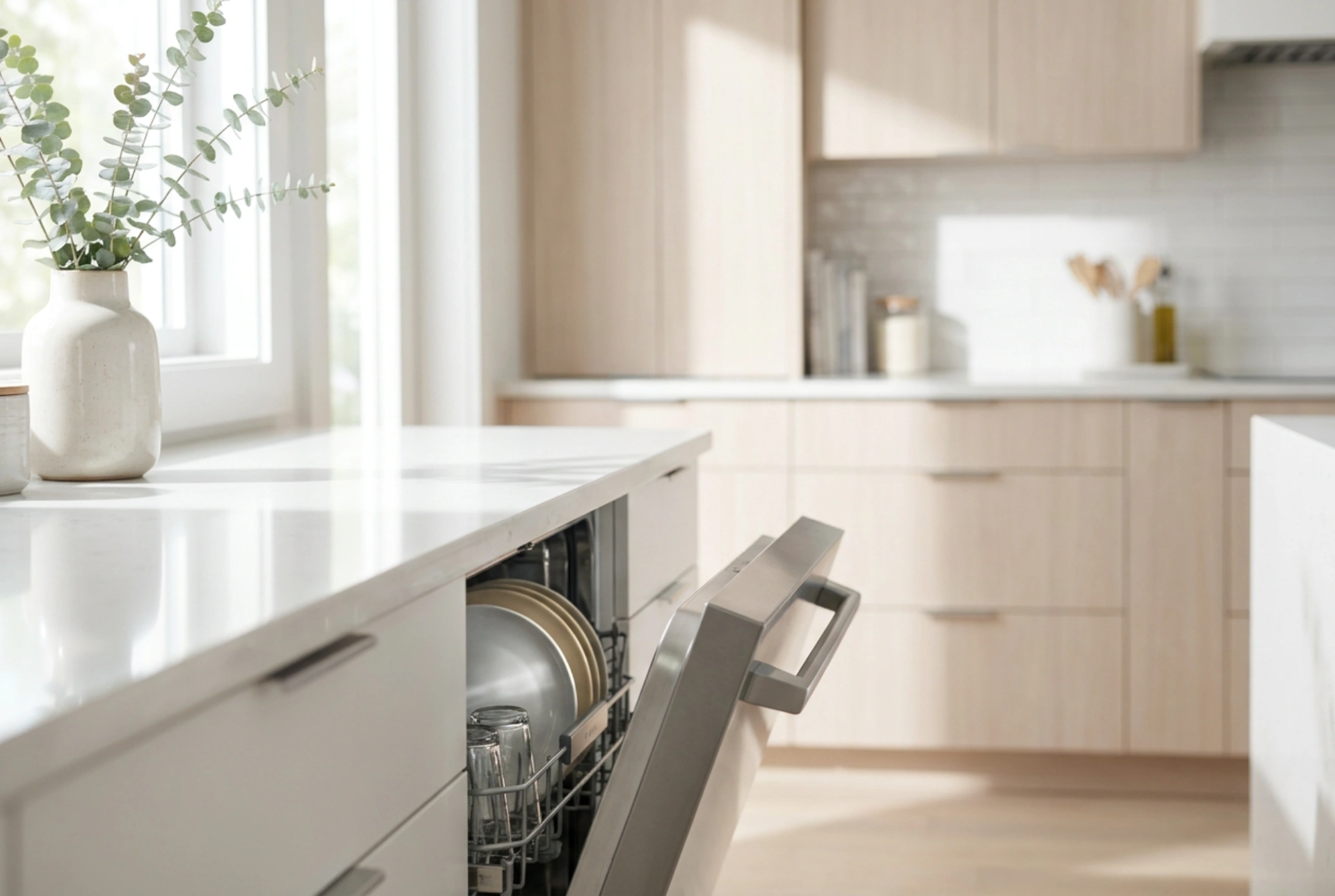


Over time, grease, limescale, and detergent residues accumulate in the hidden components of your dishwasher, compromising its efficiency and hygiene. Utilising a specialised liquid dishwasher cleaner restores optimal performance by chemically breaking down these stubborn deposits through a controlled, high-temperature cycle.
The Chemistry of Dishwasher Contamination
To understand why a dedicated cleaning cycle is necessary, one must look at the nature of dishwasher buildup. During regular cycles, the appliance tackles two main types of waste: organic fats and inorganic minerals. Food residues contain lipids that solidify when they cool, sticking to the plastic pipes and stainless steel walls. Simultaneously, tap water contains dissolved calcium and magnesium ions. When heated, these ions precipitate as calcium carbonate (limescale), creating a chalky, porous layer that traps grease and bacteria.
Standard dishwasher detergents are alkaline, designed to emulsify fats and break down proteins. However, they are highly inefficient at dissolving alkaline limescale. Specialised dishwasher cleaners utilise a dual-phase formula. They contain organic acids, such as citric acid or lactic acid, which chemically react with calcium carbonate to form water-soluble salts. Additionally, they incorporate non-ionic surfactants that penetrate and emulsify the stubborn lipid layers, allowing them to be washed away during the rinse phase.
Pre-Cleaning: Clearing the Physical Barriers
Before introducing the chemical cleaner, physical obstructions must be removed to ensure the solution can circulate freely through every nozzle and drain pipe. Skipping this step reduces the efficacy of the cleaner, as the chemical agents will be wasted on large debris instead of internal buildup.
- Clean the Filter: Remove the mesh filter at the bottom of the tub. Rinse it under warm water, using a soft brush to remove organic slime and trapped food particles.
- Inspect the Spray Arms: Pull out the spray arms and inspect the water nozzles. Mineral deposits often clog these tiny openings, disrupting the water spray pattern. Use a toothpick or small needle to gently clear any blockages.
- Wipe the Door Seal: The rubber gasket around the door does not get reached by the pressurised water during a cycle. Wipe this area manually using a damp cloth and a mild citric acid solution to eliminate mold and grease.
The Step-by-Step Cleaning Process
Executing the cleaning cycle correctly requires precise temperature control and proper placement of the cleaning agent to ensure it releases at the optimal moment.
1. Empty the Appliance Completely
Never run a cleaning cycle with dishes, cutlery, or standard dishwasher detergent inside. The highly acidic nature of the cleaner can tarnish metal utensils, etch glassware, and the alkaline detergents would neutralise the acidic cleaning agent, rendering both useless.
2. Prepare the Bottle
Most liquid cleaners feature a wax plug under the cap. Do not remove the plastic cap entirely; instead, peel off the protective sticker covering the wax seal. This wax plug is engineered to melt only when the water inside the dishwasher reaches a specific temperature (usually around 55°C to 60°C). This ensures the chemical formula is released during the main wash cycle rather than being wasted during the initial pre-rinse phase.
3. Secure Bottle Placement
Place the bottle upside down in the lower plate rack, secured within the cutlery basket or between the tines. It must remain stable and upright throughout the cycle to prevent the liquid from spilling out prematurely before the wax plug melts. Ensure the spray arms can rotate freely without striking the bottle.
4. Select the High-Temperature Cycle
Select a heavy-duty, intensive, or pots-and-pans cycle with a minimum temperature of 60°C (140°F). The heat is critical: it melts the wax plug to release the formula, accelerates the chemical reaction between the acid and the limescale, and liquefies solidified grease deposits so the surfactants can wash them away.
Maintaining Long-Term Efficiency
Once the cycle is complete, the interior of your machine should exhibit a pristine, metallic sheen. To maintain this state, repeat this process every one to two months, depending on local water hardness. Additionally, always ensure the dishwasher salt reservoir is filled to regenerate the internal water softener, which physically prevents mineral ions from bonding to the heating elements and internal plumbing in the first place.