

Maintaining a portable bottle warmer during travel requires a basic understanding of heat transfer materials and mineral deposition. Proper hygiene and descaling prevent bacterial growth and protect the heating element from premature thermal stress.
The Science of Limescale: Why Scale Forms on Heating Elements
Portable bottle warmers typically utilise a stainless steel heating plate—often made from high-grade 304 or 316 stainless steel due to its corrosion resistance. When water is heated, the dissolved calcium and magnesium hydrogencarbonates naturally present in tap water undergo a chemical reaction. Thermal decomposition converts these soluble compounds into insoluble calcium carbonate, commonly known as limescale.
This scale forms an insulating layer directly over the heating plate. Because calcium carbonate has a much lower thermal conductivity than stainless steel, the heating element must work significantly harder to transfer thermal energy to the liquid. This increases energy consumption, rapidly depleting the device's lithium-ion battery, and can cause localized overheating, which degrades the internal electronic components. To prevent this, always use distilled or purified water when heating on the go, as these lack the mineral ions that initiate precipitation.
On-the-Go Descaling: Safe Chemical Reactions
If mineral buildup occurs during travel, mechanical scrubbing with abrasive pads must be avoided, as it creates microscopic scratches on the steel surface. These micro-scratches provide ideal anchorage points for both future mineral crystals and bacterial biofilms. Instead, employ a gentle chemical dissolution method using weak organic acids.
- Citric Acid Solution: Dissolve one teaspoon of anhydrous citric acid powder in warm water, pour it into the heating chamber, and let it sit for 15 minutes. The citric acid reacts with calcium carbonate to form highly soluble calcium citrate, which easily rinses away.
- Acetic Acid (White Vinegar): A 1:1 mixture of white vinegar and water can also be used. Acetic acid breaks down the mineral bonds, converting them into soluble calcium acetate.
Always perform a thorough rinse with potable water after descaling to remove any residual acid, which could otherwise degrade the food-grade silicone seals or alter the taste of the subsequent feeds.
Hygiene and Bacterial Control in Confined Spaces
The combination of warmth, residual moisture, and organic milk sugars creates an ideal breeding ground for pathogens such as Cronobacter sakazakii or Salmonella. When traveling, access to running water and sterilising equipment may be limited, making systematic manual sanitisation crucial.
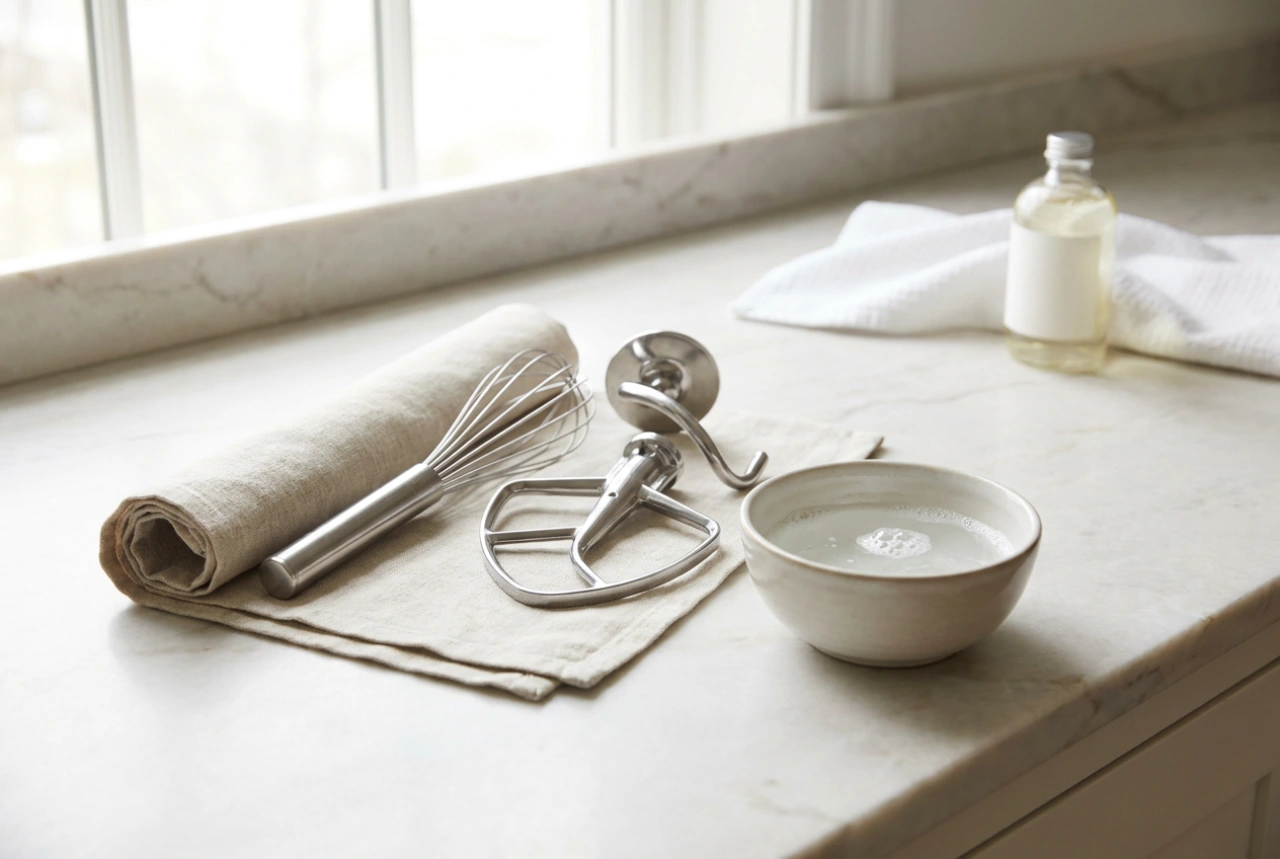
Immediately after use, the heating surface must be wiped clean to prevent milk proteins and fats from baking onto the surface. Use a damp, lint-free microfibre cloth to remove residues. For sanitisation, apply a food-safe, alcohol-free sanitising spray that relies on weak concentrations of hypochlorous acid or hydrogen peroxide. These compounds destroy bacterial cell walls through oxidation without leaving harmful chemical residues or damaging the metallic and silicone components of the warmer.
Battery Care and Thermal Management
The portable nature of these devices relies on high-energy-density lithium-ion batteries. These cells are highly sensitive to thermal environments. Storing a bottle warmer in a hot car trunk or under direct sunlight accelerates chemical degradation within the battery cells, leading to a permanent loss of charge capacity.
To maximise battery lifespan and ensure safety, adhere to the following principles:
- Avoid Deep Discharge: Do not let the battery drain completely to 0%. Recharge the device when it falls below 20% to reduce stress on the electrodes.
- Cool Before Packing: Never place a freshly used, warm device directly into a tightly packed, insulated diaper bag. The lack of air circulation traps residual heat, raising the ambient temperature around the battery pack and accelerating thermal aging.
- Protect the Charging Port: Ensure the USB-C or proprietary charging port remains free from lint, dust, and moisture. Use a silicone port cover when the device is not connected to a power source to prevent short circuits caused by conductive debris.
A Daily Travel Maintenance Routine
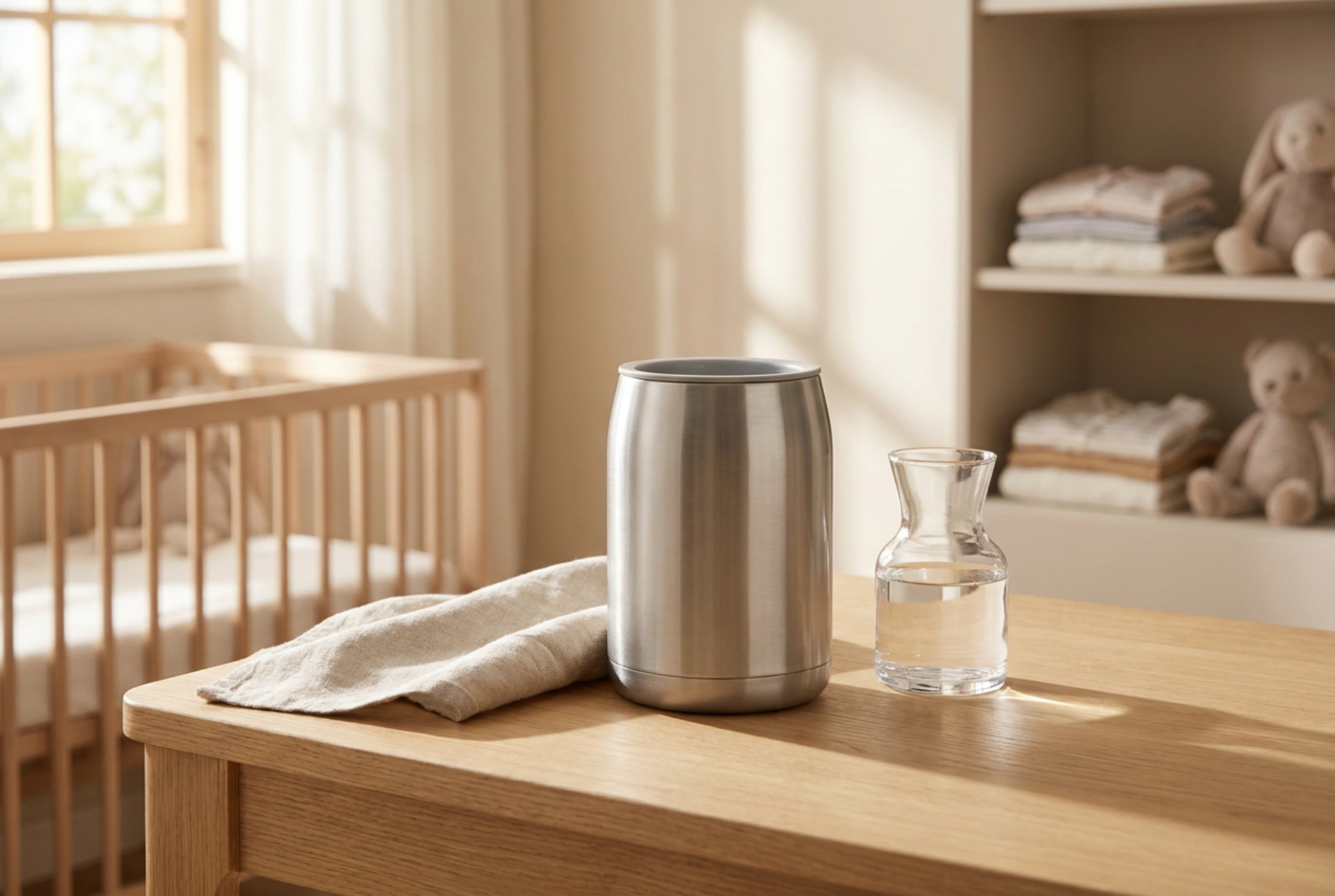
To ensure consistent operation, establish a simple end-of-day routine. At the end of each travel day, empty any residual water or liquid from the heating chamber. Wipe the stainless steel surface with a clean cloth dampened with purified water, then dry it completely with a clean paper towel. Leave the protective cap off for at least ten minutes to allow any residual moisture to evaporate naturally, preventing the formation of musty odours. Store the clean, dry device in a dedicated, breathable compartment within your luggage, away from sharp objects that could puncture the silicone seals or damage the control interface.